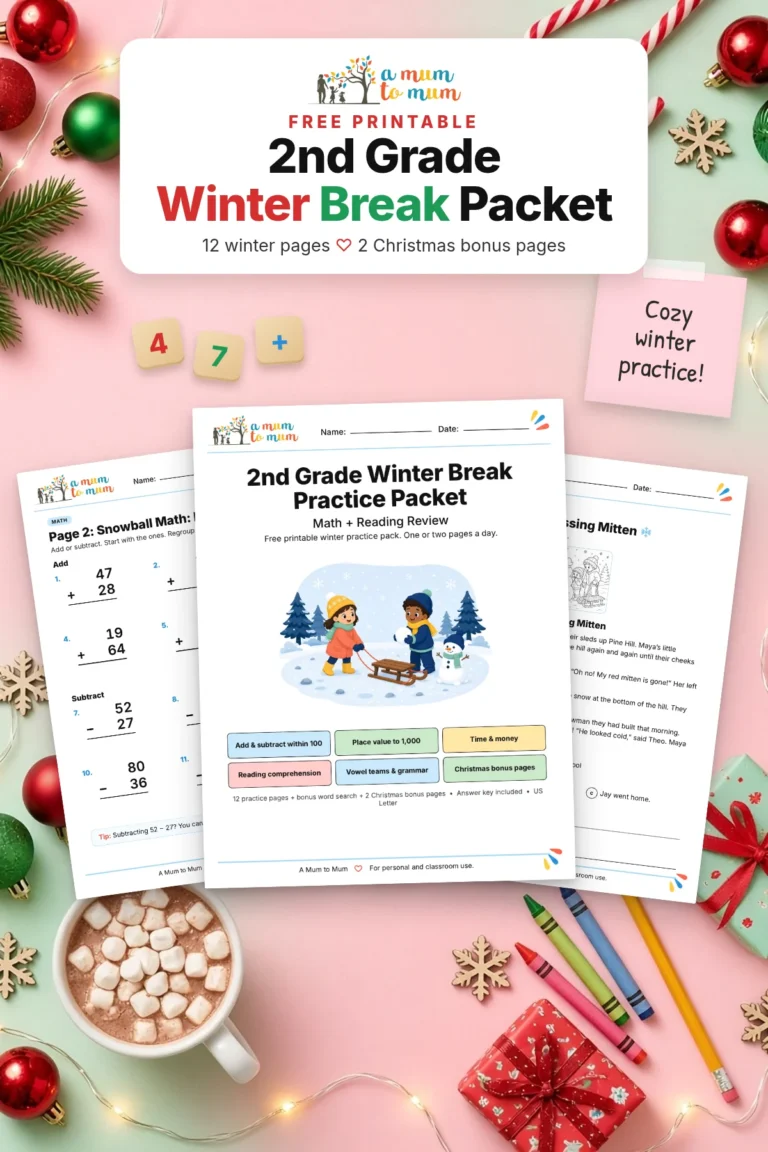
Kindergarten Readiness Assessment: A 10-Minute At-Home Check (Free Printable)
Kindergarten feels close, and you may be wondering where your child is right now. This free kindergarten readiness assessment is a 10-minute check you can do at the kitchen table. It is made of ten short missions that feel like a game, a parent script and a simple score sheet, so you can see what to play with next.
This is a practice run you can do at home, at your own pace, not a school screening. If you want the big picture first, start with what kindergarten readiness really means.
One honest note before you print: this is an informal at-home check, not a medical, developmental or learning test, and it does not replace anything your school or pediatrician does.
Quick Look
- Ages: about 4 to 6, the year before or the summer before kindergarten
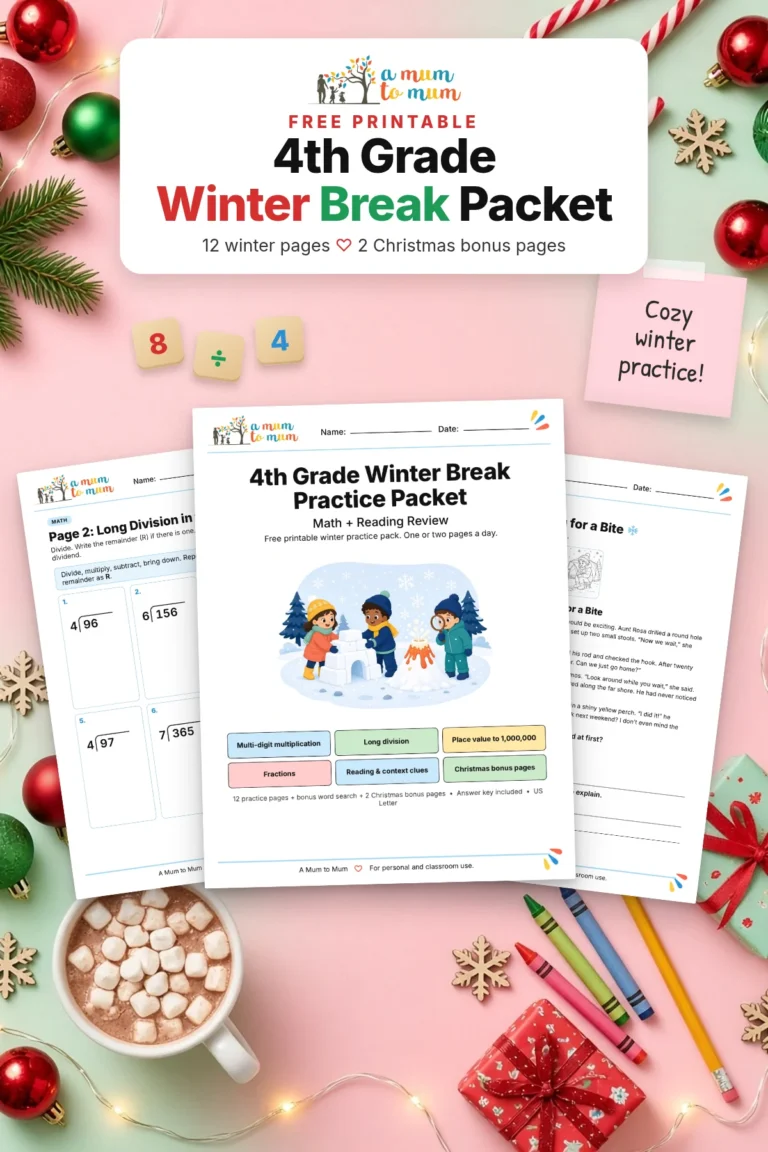
- What you get: 13-page printable PDF: how-to page, parent script and score sheet, 10 child missions, a results page and a certificate
- Time: about 10 minutes of missions, best done in one or two short sittings
- You need: a pencil, crayons and child-safe scissors
- Remember: it is a snapshot, not a score; screenings differ by district
- Format: printable PDF, US Letter, easy on the ink
What’s Included in the Free Kindergarten Readiness Assessment
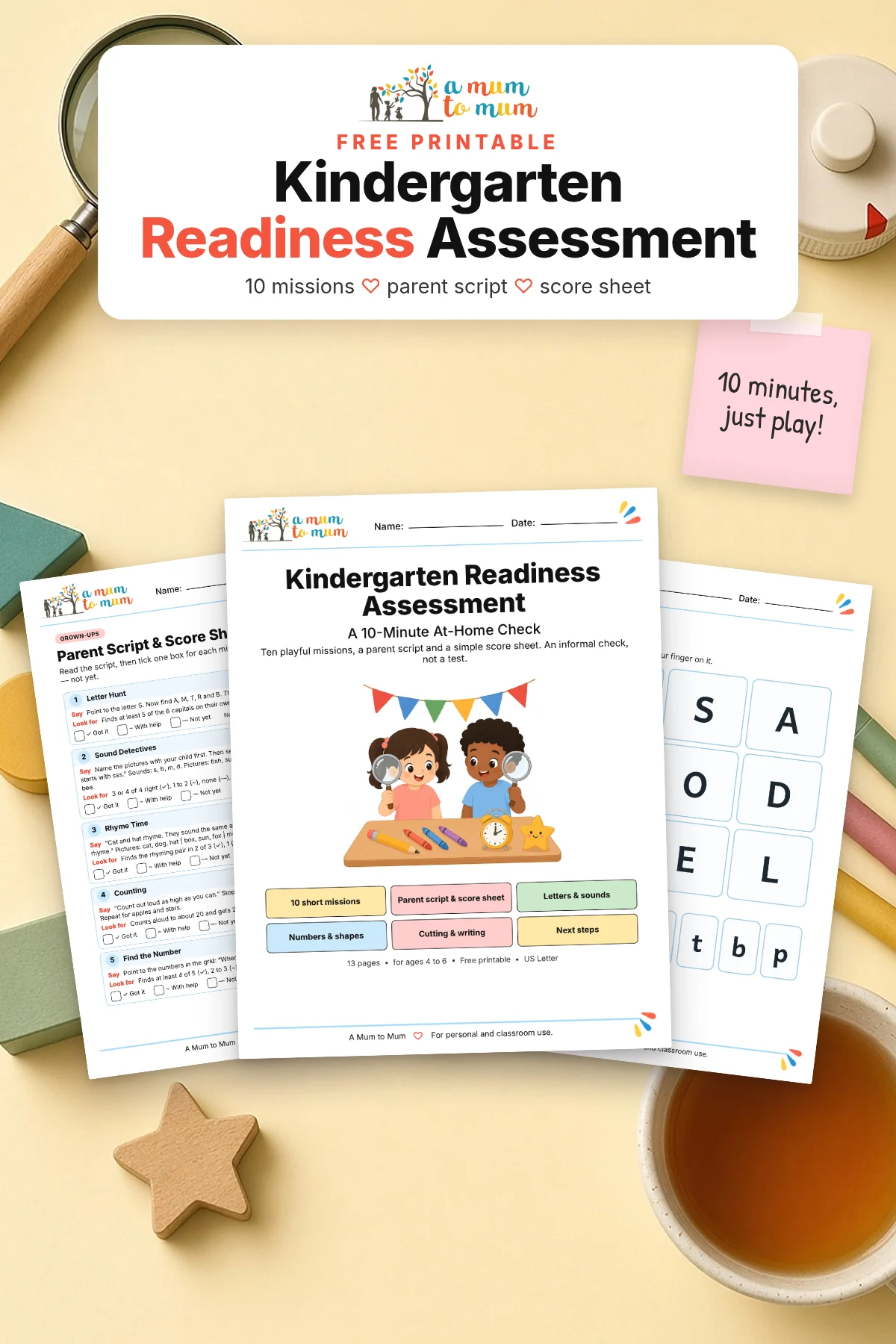
- How to run the check (1 page): six steps, plus a clear note on what this check is and is not.
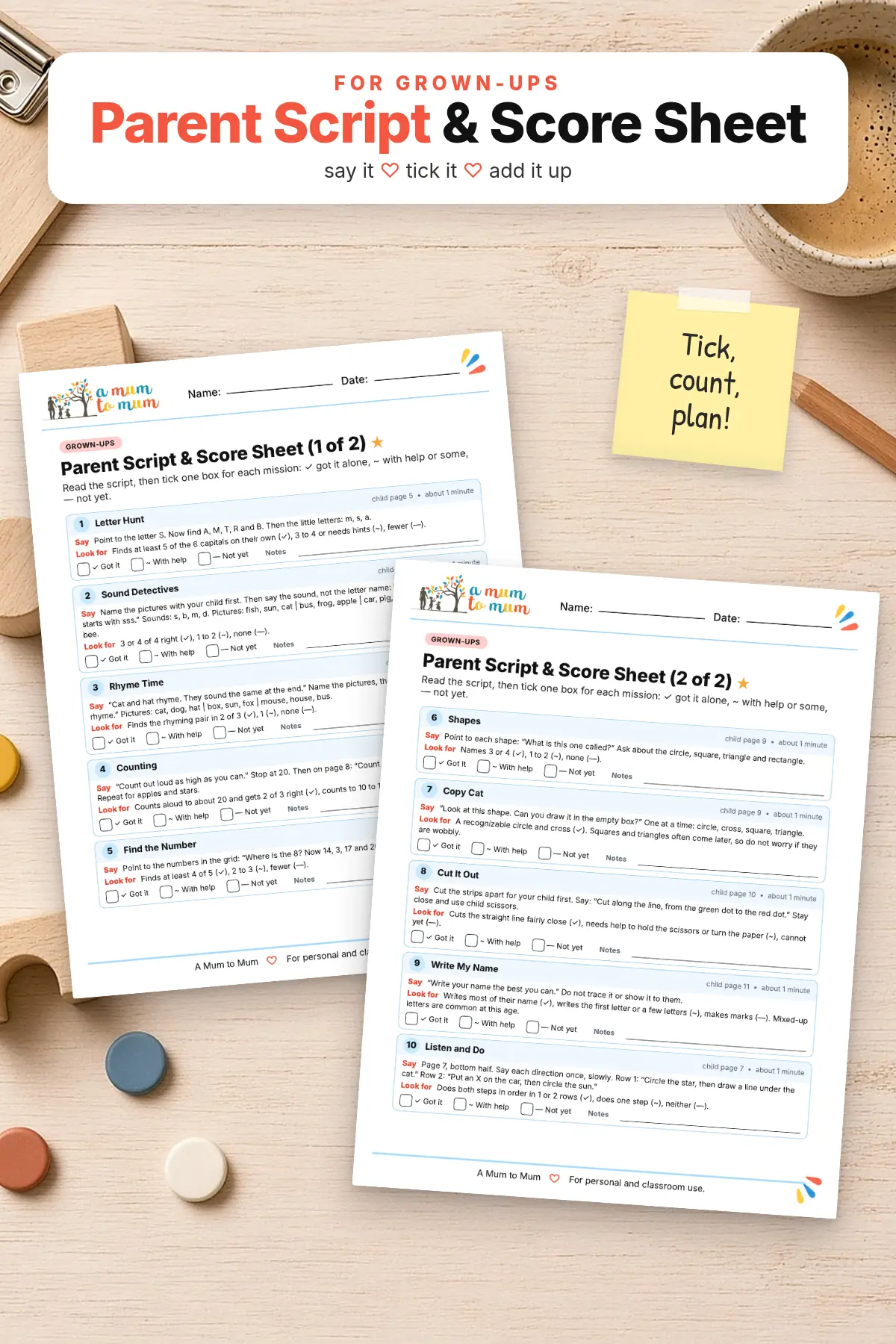
- Parent script and score sheet (2 pages): what to say for each mission, what to look for, and three boxes to tick: got it, with help, not yet.
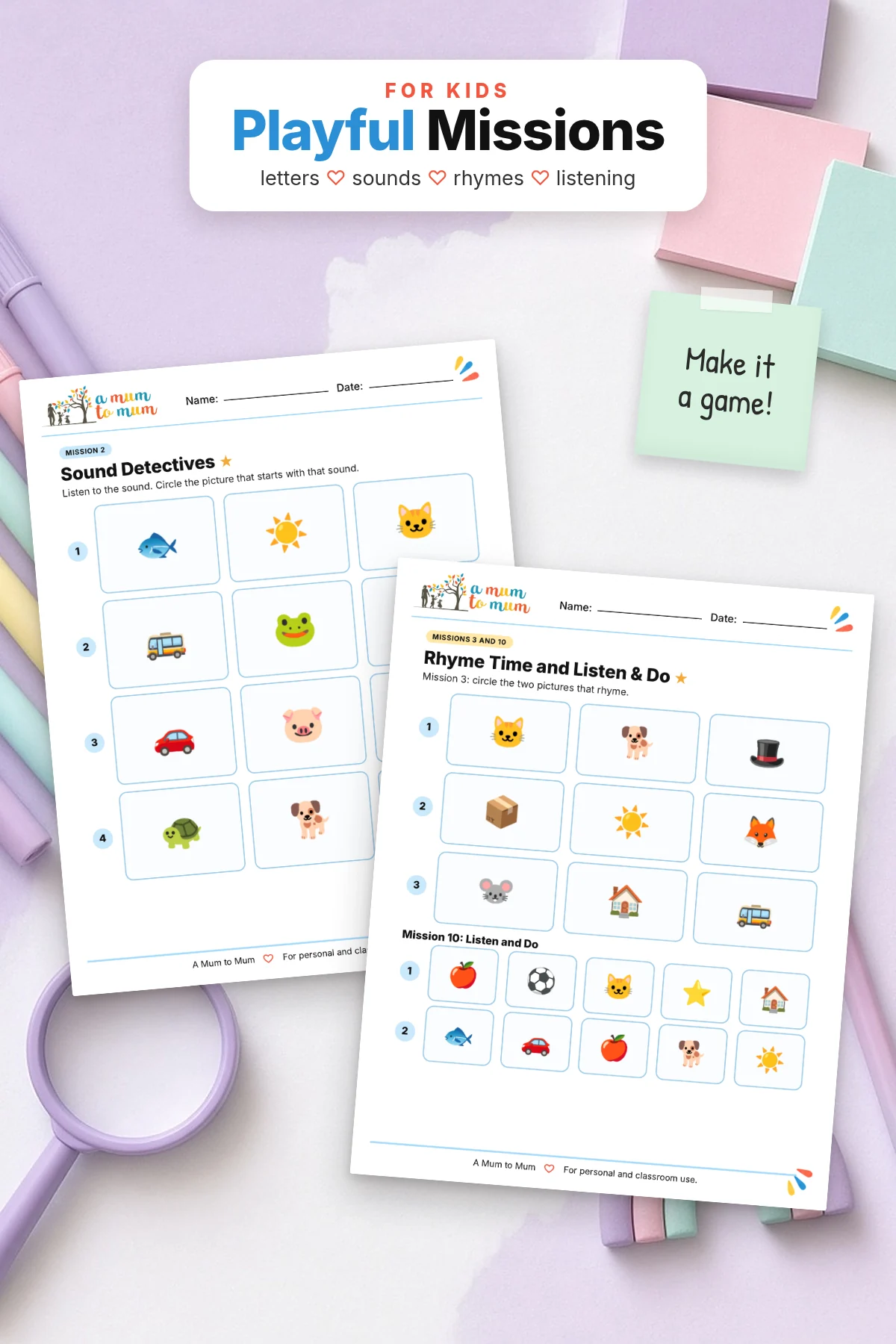
- Ten missions for your child (7 pages): letters, sounds, rhymes, counting, numbers, shapes, copying shapes, cutting, writing a name and listening to two-step directions.
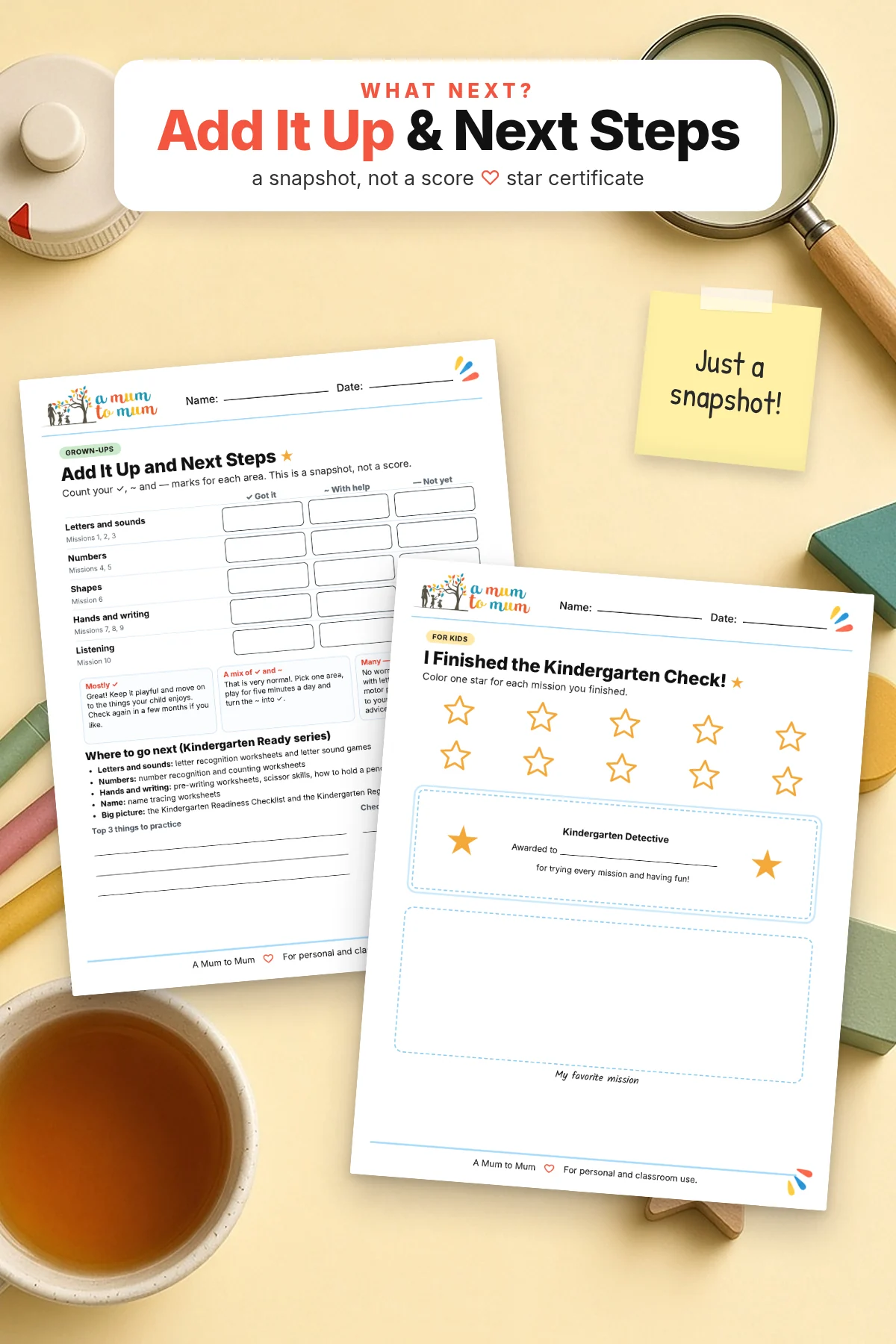
- Add it up and next steps (1 page): count your ticks by area, then pick one or two things to practice.
- Certificate (1 page): a “Kindergarten Detective” card and stars to color, so your child ends on a win.
- Cover (1 page).
How to Run the 10-Minute Check
- Step 1. Choose a calm moment, not right before dinner or nap time.
- Step 2. Sit side by side with a pencil, crayons and child-safe scissors, and keep the grown-up pages (3 and 4) on your side.
- Step 3. Say it is a game: “We are kindergarten detectives today. Ten missions!”
- Step 4. Read the script for each mission and let your child try alone first. Give help only if they are stuck, and tick “with help” if you do.
- Step 5. Keep it short. If your child is tired, stop and finish another day. A happy child is more useful to you than a finished page.
- Step 6. Do not correct or quiz. Cheer for the effort and move on.
The 10 Missions in a Nutshell
- Letter Hunt: find a few capital and lowercase letters. If letters are brand new, when children usually recognize letters may put your mind at ease.
- Sound Detectives: say the first sound of a picture, such as “sss” for sun.
- Rhyme Time: circle the two pictures that rhyme, like cat and hat.
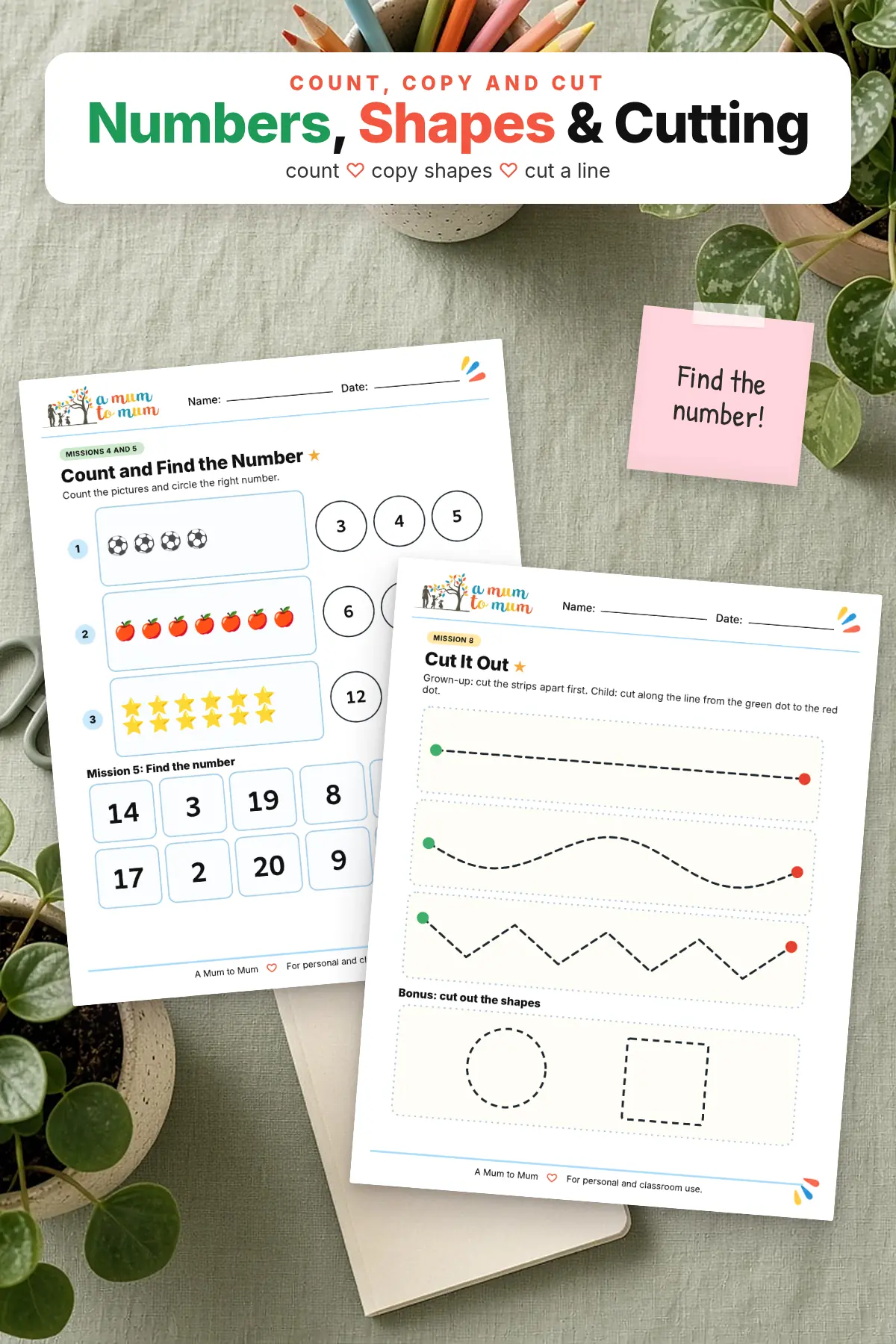
- Counting and Find the Number: count out loud, count pictures and spot numbers up to 20. For more practice, try my tracing numbers 1 to 10 page.
- Shapes and Copy Cat: name shapes and copy a circle, a cross, a square and a triangle in an empty box.
- Cut It Out: cut along a straight, curved and zigzag line. Scissor skills practice helps if this one is wobbly.
- Write My Name: write your name the best you can, with no tracing and no help.
- Listen and Do: follow two directions in order, such as “circle the star, then draw a line under the cat.”
Why This Is Not a Test
You may see the words readiness test or kindergarten screening online, and they can mean different things. Many districts do a short kindergarten screening around registration or the first weeks of school, and what it covers and when it happens varies by district. Its purpose is usually to get to know each child, not to keep anyone out.
This check is different. It is just you and your child, at your own pace. We never took these learning times seriously, and I never got angry. It was our play time together, and both of my girls never even realized we were learning. It was always pure fun. One tip: always make sure your kid isn’t hungry while you’re doing any learning. They won’t be cranky.
If anything worries you, such as speech, hearing, vision, attention or movement, please talk to your child’s pediatrician or teacher. For easy conversation starters to use with your child, see my questions to ask a toddler or preschooler, and the 5 most important toddler milestones is a helpful look back at early development.
How to Read the Results
After the missions, use page 12 to count your ticks in five areas: letters and sounds, numbers, shapes, hands and writing, and listening. There is no pass or fail, and these are only a few of the things that matter in kindergarten.
- Mostly “got it”: great! Keep things playful and check again in a few months if you like.
- A mix of “got it” and “with help”: very normal. Pick one area, play for five minutes a day and watch the “with help” boxes turn into ticks.
- Many “not yet”: no worries, there is time. Start with letters and sounds plus fine motor play, keep sessions short, and ask your child’s teacher for advice if you want it.
Also remember that mixed-up letters and wobbly shapes are common at this age, and squares and triangles often come later than circles.
What to Practice Next
Choose just one or two things from page 12 and write them in the “Top 3 things to practice” space. If names are the next step, my name tracing practice kit has dashed, single-line letters for your child to follow. If you are getting ready for the school year, the registration day kit covers documents, dates and questions, and the six skill areas in my readiness guide show what to work on and how. If letters and sounds came up as a “not yet” area, my letter recognition printables for ages 4 to 6 are an easy place to start.
Kindergarten Readiness Assessment FAQs
What is a kindergarten readiness assessment?
It is a short activity where an adult looks at what a child can already do, such as naming letters, counting, copying shapes and following directions. Schools sometimes use their own versions, and this printable is a friendly one for home. It is not a pass or fail.
What is a kindergarten screening?
It is a brief meeting or set of activities that many schools use around registration or the start of the year to see where a child is. What it includes and when it takes place depends on your district, so ask your school what yours does.
Is this a kindergarten readiness test?
Not in the official sense. It is an informal at-home check and a way to find games to play. It is not a medical, developmental or learning screening.
What age is this for?
It is made for children around 4 to 6, usually the year before kindergarten or the summer before it starts. Younger children may not be able to do many of the missions yet, and that is perfectly fine.
Do we need a readiness test before kindergarten?
Requirements differ by district, so your school is the best one to ask. A friendly check at home like this one is not a requirement. It just helps you decide what to play next.
What if my child cannot do some missions?
That is why it is a snapshot. Most children are still learning these skills, so pick one thing to practice for five minutes a day, check again later and keep it fun.
Is it free for classroom use?
Yes, the PDF is free for personal and classroom use.
Download the Free Kindergarten Readiness Assessment
Sign up below and you will get the Kindergarten Readiness Assessment PDF, plus the whole Kindergarten Ready series: free printables for names, letters, pre-writing, numbers and more, sent to your inbox over the coming weeks.
Get the Free Kindergarten Readiness Assessment
Enter your email and I’ll send you the 13-page 10-minute check, with a parent script, score sheet and kids’ missions. You’ll also get the whole Kindergarten Ready series: free printables for names, letters, pre-writing, numbers and more, sent to your inbox over the coming weeks. Unsubscribe any time.
Want to save this article for later?
Pin it!