Kindergarten Readiness Checklist: Free Printable Starter Kit (12 Pages)
A good kindergarten readiness checklist will not tell you your child is “ready” or “behind.” It shows you what to practice, in what order, and where you can simply relax.
When my kids started school, I realized things are not quite the same as when I was a kid. Nobody had to sit down and learn with me, and I don’t remember being stressed. Kids today have quite a challenge in front of them, and we need to help. A lot. That’s why getting ready on time makes perfect sense.
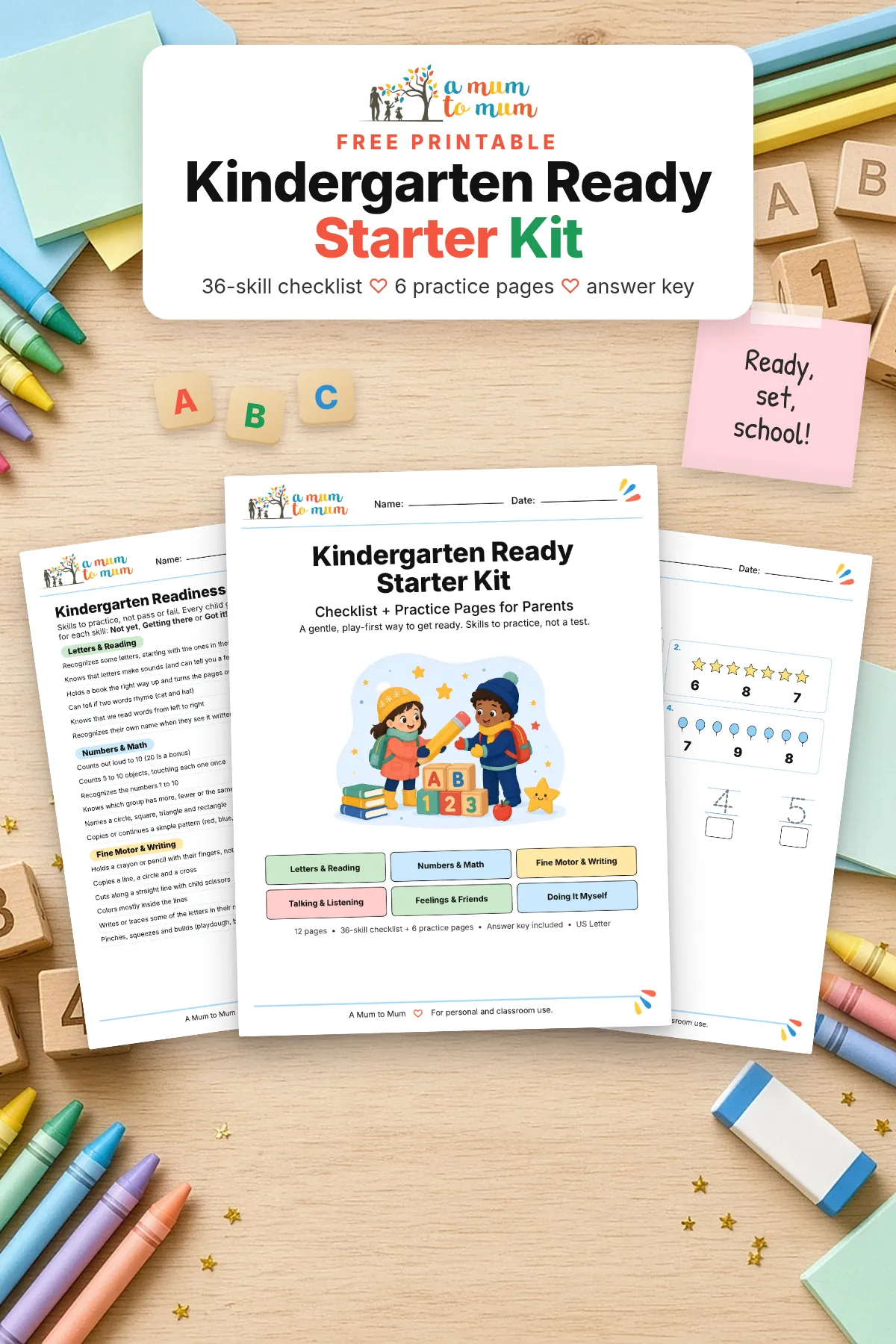
So I put it all in one free kit: a 36-skill checklist in six areas, a guide to what your ticks mean, a 4-week fridge plan and six practice pages you can start with tonight.
Quick Look
- Ages: about 4 to 6, a few months before kindergarten (or any time you are curious)
- What you get: 12-page printable PDF: checklist, how-to and results guide, 4-week fridge plan, 6 practice pages, answer key
- Skills: letters and reading, numbers and math, fine motor and writing, talking and listening, feelings and friends, doing it myself
- Time: 10 minutes for the checklist, then 10 minutes a day
- Mindset: skills to practice, not a pass-or-fail test
- Format: printable PDF, US Letter, easy on the ink
Why Getting Ready Early Makes Sense
Here is the part that surprised me: it was about 80% easier with my second-born. I guess they learn along the way with their older sibling. Or maybe I was simply more relaxed about it altogether.
Either way, the lesson is the same. You don’t need flashcards or a big plan. You need a few small, regular, playful things, started a little before the first day. I try to make every worksheet I create fun for the age, so it feels less like learning and more like a game. That is exactly how this kit works.
Kindergarten Readiness Checklist: 36 Skills in 6 Areas
Think of these as kindergarten readiness skills to practice, not a test. Almost every child has some of these down and is still working on the rest, and that is completely normal. Tick a skill when your child does it most of the time without help. The printable version has circles for “Not yet,” “Getting there” and “Got it!”
1. Letters and Reading
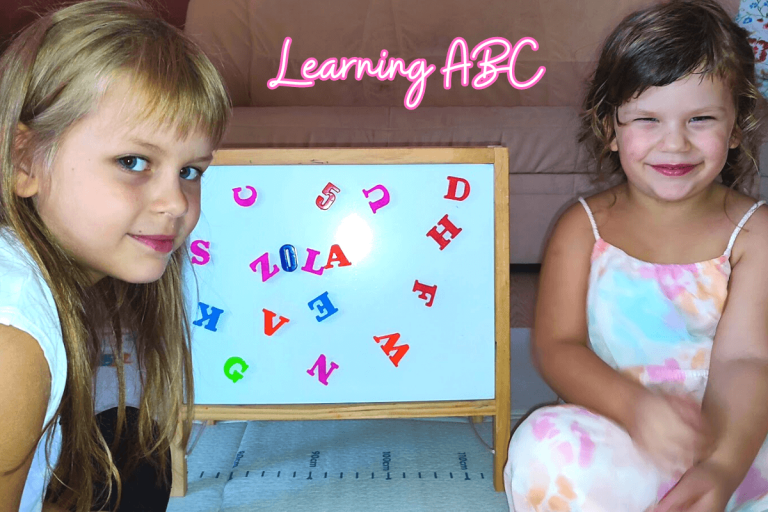
- Recognizes some letters, starting with the ones in their own name
- Knows that letters make sounds (and can tell you a few)
- Holds a book the right way up and turns the pages one by one
- Can tell if two words rhyme (cat and hat)
- Knows that we read words from left to right
- Recognizes their own name when they see it written
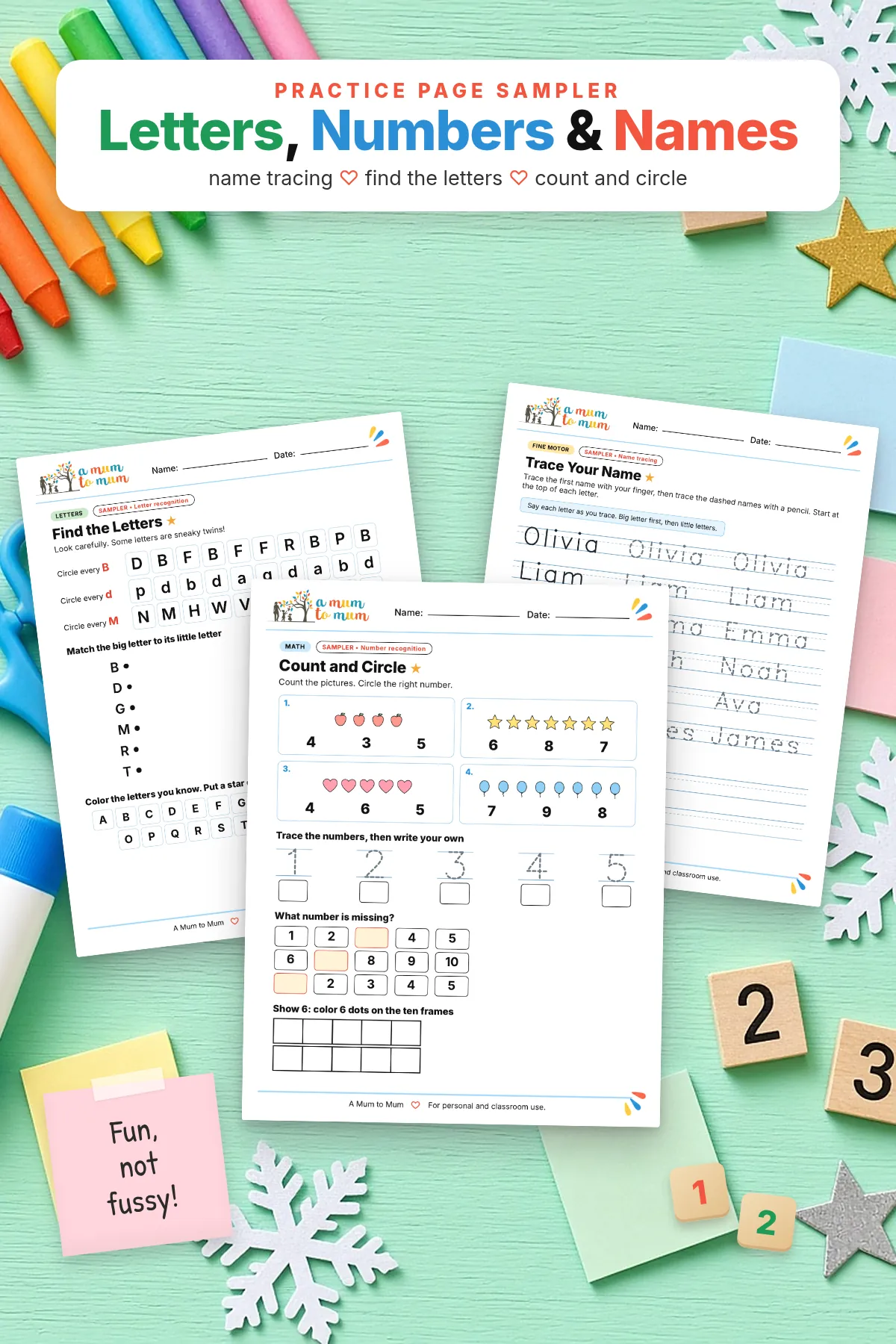
Most of this comes from reading together every day. If you are wondering when letters usually click, see when a child should recognize letters. Writing their own name is a lovely first step, so I made these name tracing worksheets with 36 popular names. For hands-on practice, my A to Z letter games turn the alphabet into find-it, color-it and match-it pages.
2. Numbers and Math
- Counts out loud to 10 (20 is a bonus)
- Counts 5 to 10 objects, touching each one once
- Recognizes the numbers 1 to 10
- Knows which group has more, fewer or the same
- Names a circle, square, triangle and rectangle
- Copies or continues a simple pattern (red, blue, red, blue)
Count real things first: stairs, grapes, socks. My kindergarten math activities and tracing numbers 1 to 10 are good next steps.
3. Fine Motor and Writing
- Holds a crayon or pencil with their fingers, not in a fist
- Copies a line, a circle and a cross
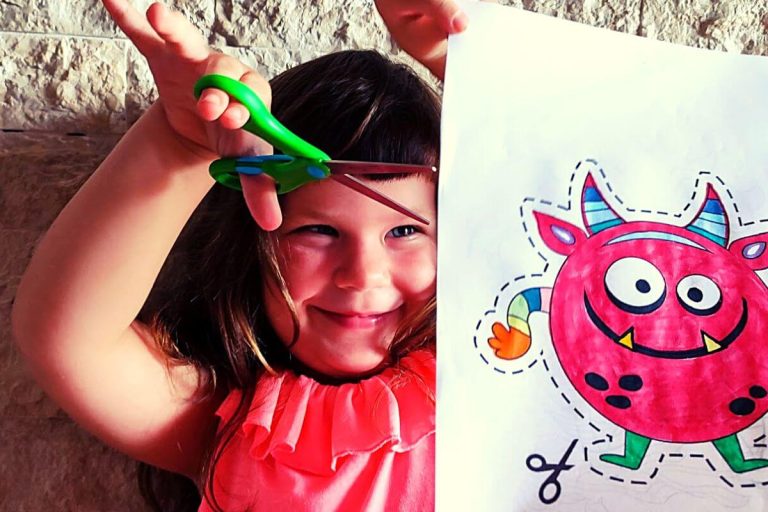
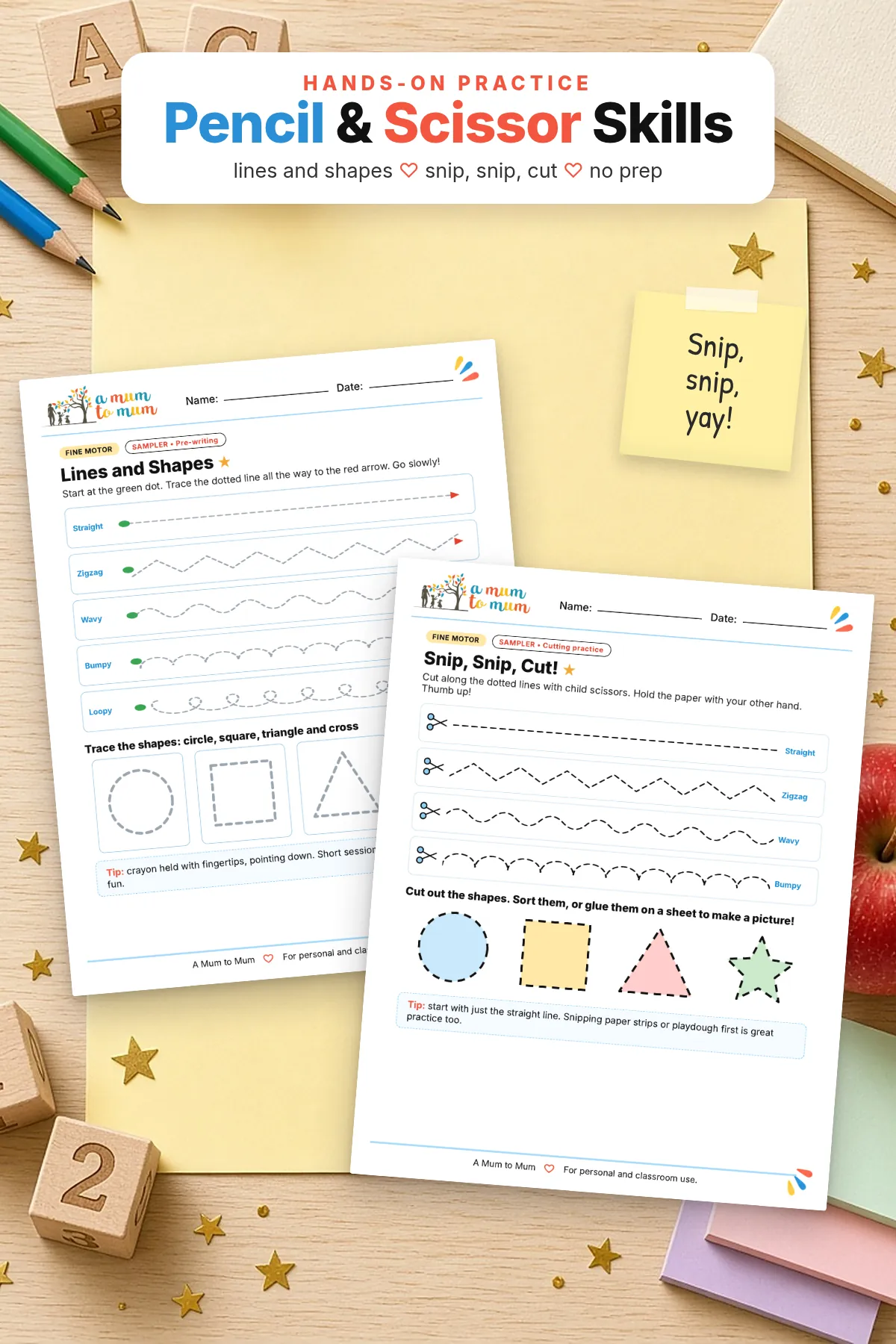
- Cuts along a straight line with child scissors
- Colors mostly inside the lines
- Writes or traces some of the letters in their name
- Pinches, squeezes and builds (playdough, blocks, LEGO, pegs)
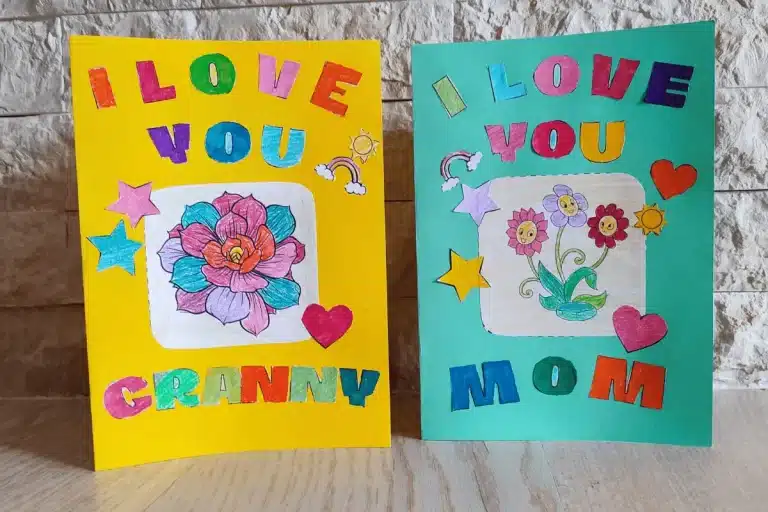
Strong little hands come before neat writing. Playdough, tongs, building blocks and cutting all count. These scissor skills worksheets are great for the cutting skill.
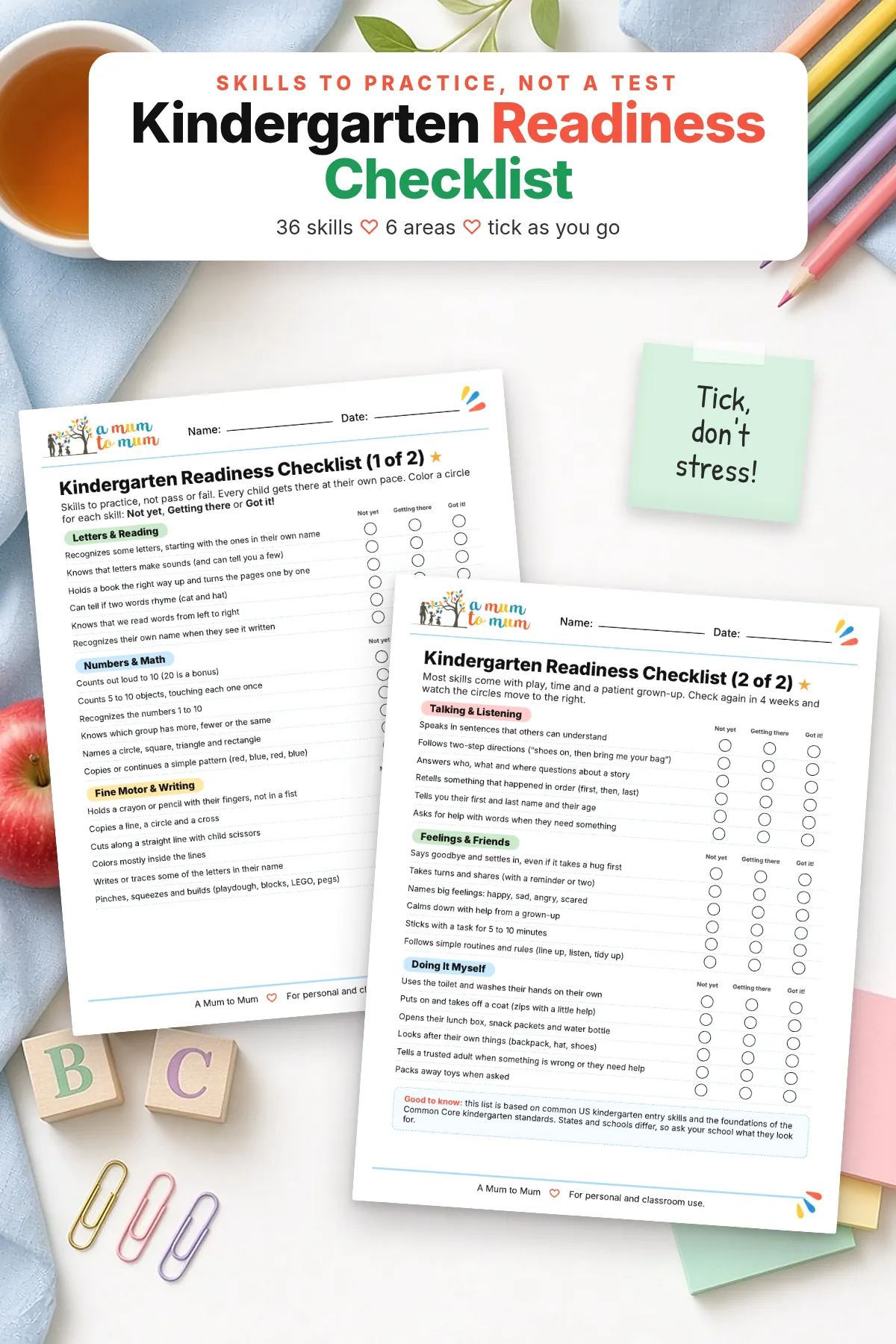
4. Talking and Listening
- Speaks in sentences that others can understand
- Follows two-step directions (“shoes on, then bring me your bag”)
- Answers who, what and where questions about a story
- Retells something that happened in order (first, then, last)
- Tells you their first and last name and their age
- Asks for help with words when they need something
Talk, talk and talk some more: at breakfast, in the car, at bath time. For easy conversation starters, try my questions to ask a preschooler. Not sure what is typical at each age? The 5 most important toddler milestones is a helpful look back.
5. Feelings and Friends
- Says goodbye and settles in, even if it takes a hug first
- Takes turns and shares (with a reminder or two)
- Names big feelings: happy, sad, angry, scared
- Calms down with help from a grown-up
- Sticks with a task for 5 to 10 minutes
- Follows simple routines and rules (line up, listen, tidy up)
Many teachers care as much about these as about letters. A simple routine helps, and my free daily routine chart for kids makes mornings smoother.
6. Doing It Myself
- Uses the toilet and washes their hands on their own
- Puts on and takes off a coat (zips with a little help)
- Opens their lunch box, snack packets and water bottle
- Looks after their own things (backpack, hat, shoes)
- Tells a trusted adult when something is wrong or they need help
- Packs away toys when asked
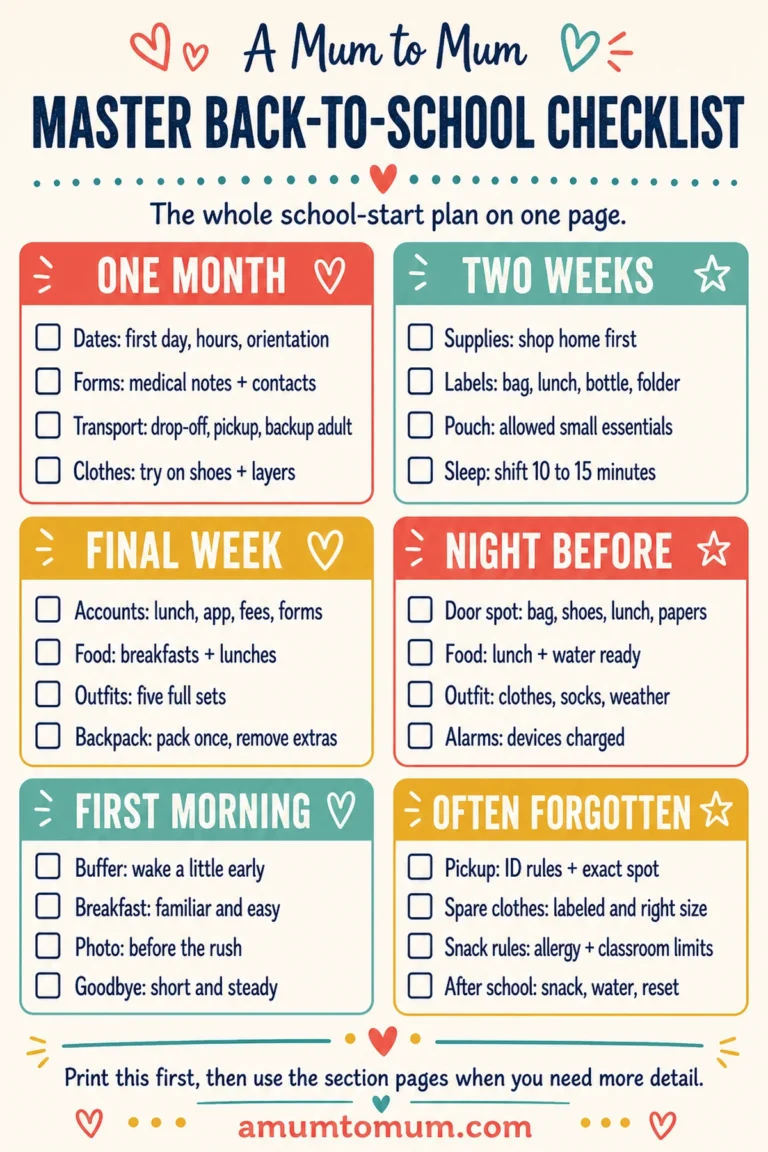
Let them zip, pack and open things on their own, even when it is slower. Labeled things come back home, so these free school name tags and labels are handy, and so is my back to school checklist.
How to Use the Checklist (10 Minutes)
- Sit down together, relaxed and with a snack. Read each skill out loud and let your child show you where you can.
- Color one circle per skill: Not yet, Getting there or Got it. There is no score and nothing to pass.
- Pick two areas with the most “Not yet” and start there, 5 to 10 minutes a day.
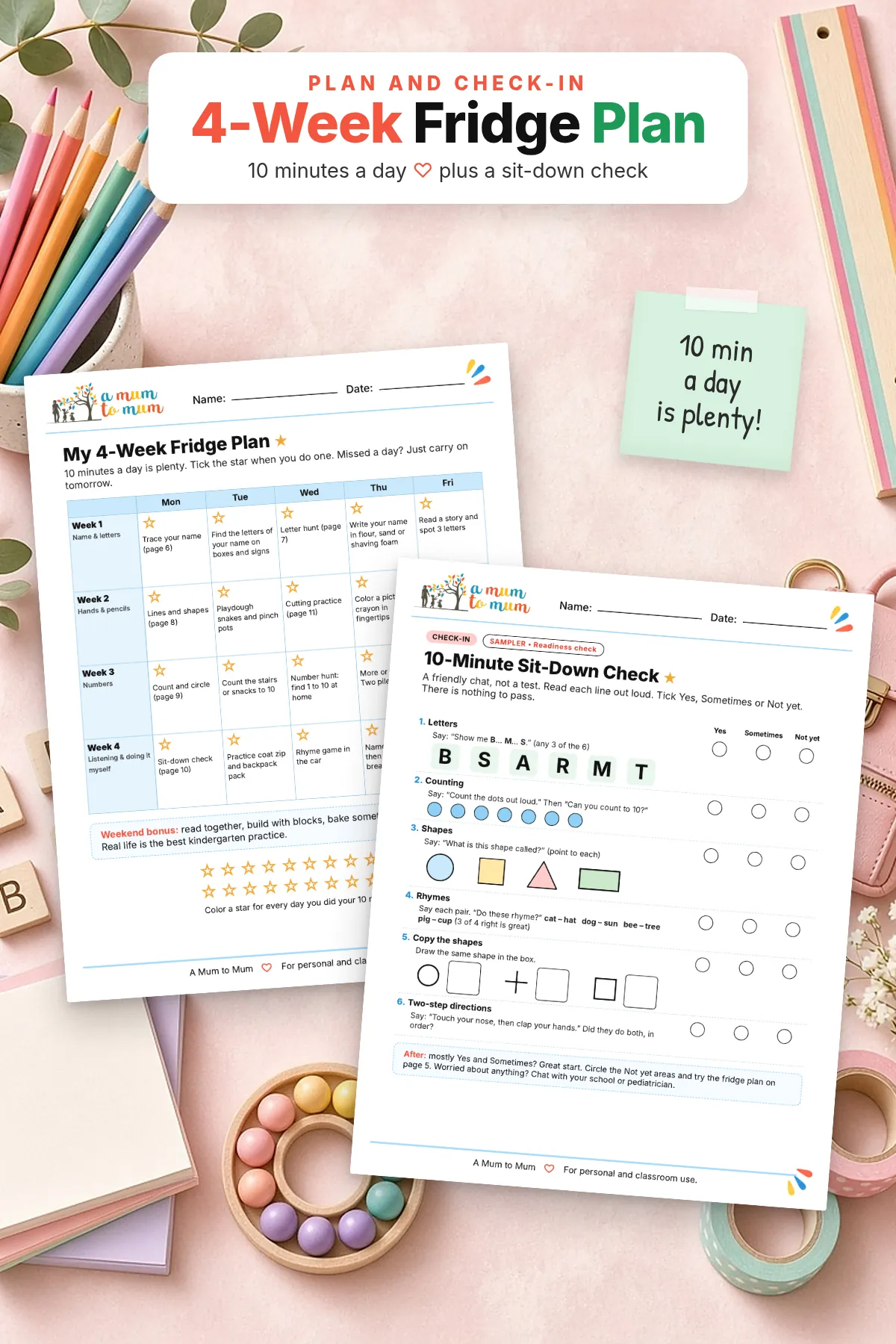
- Stick the fridge plan up, tick a star each day, and redo the checklist in 4 weeks. Watch the circles move to the right.
What If My Child Isn’t There Yet?
Take a breath. Kindergarten is where children learn most of this, and teachers expect a mix of skills in the room. Choose one or two things, keep it short and keep it fun. In the kit, the results guide gives you a first step for each area. A few examples:
- Letters & Reading: Spot the letters of their name on cereal boxes and street signs, then read one short story a day.
- Numbers & Math: Count real things: stairs, grapes, socks. Touch each one as you say the number.
- Fine Motor & Writing: Playdough snakes, tongs and pom-poms, then a few minutes of lines and shapes.
- Talking & Listening: Give one two-step job a day and ask “what happened first?” at bedtime.
If something worries you, such as speech, hearing, vision or movement, talk to your pediatrician or your child’s school. A printable can’t replace a professional, and it is not a medical or developmental test.
What’s Inside the Free Kindergarten Ready Starter Kit
- Readiness checklist (2 pages): 36 skills in 6 areas with three circles for each skill
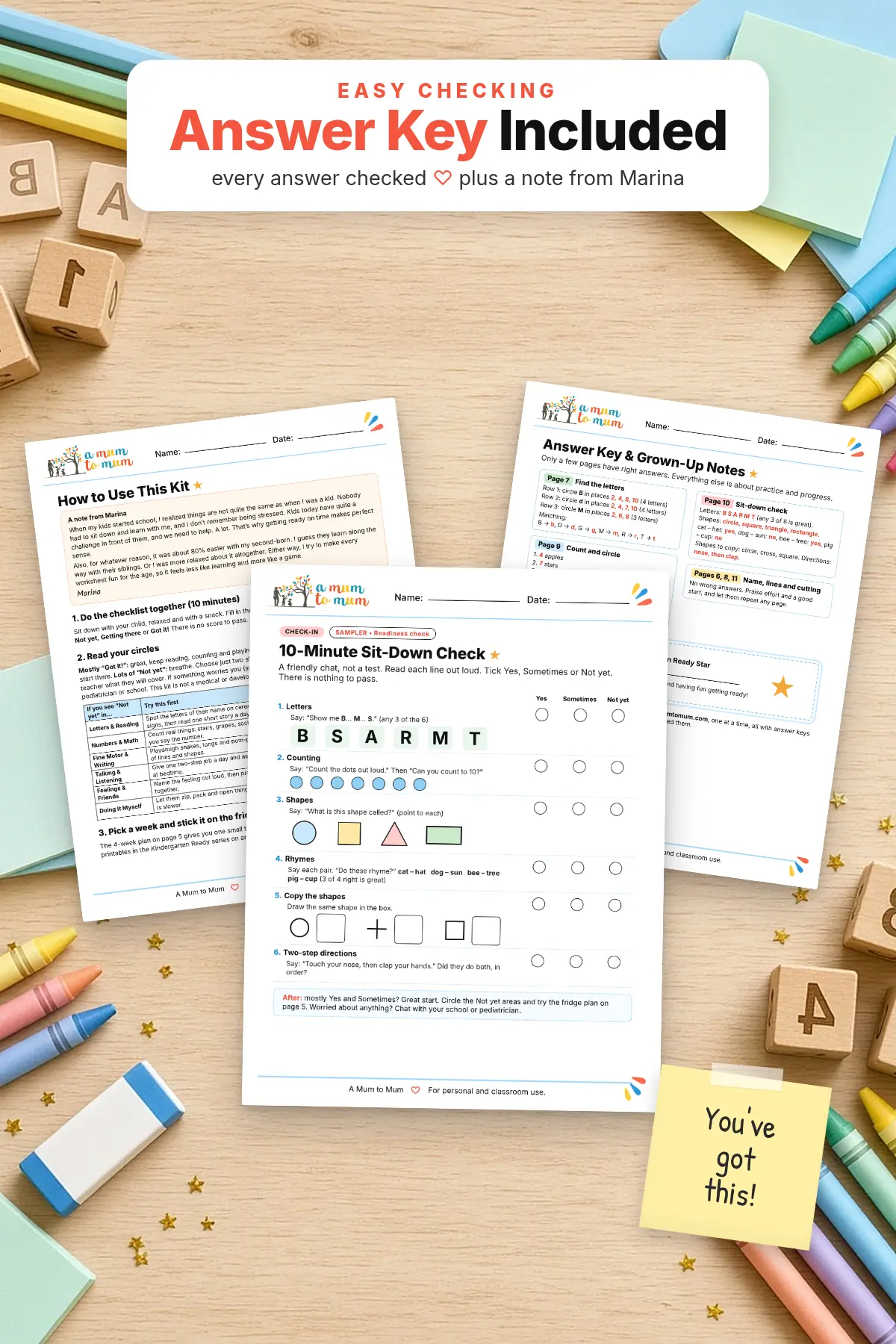
- How to use it and what your ticks mean (1 page): a note from me, plus a first step for each area
- 4-week fridge plan (1 page): one small thing a day and a star chart
- 6 practice pages: name tracing (with top US baby names), find the letters, lines and shapes, count and circle, a 10-minute sit-down check and cutting practice
- Answer key (1 page): answers for the pages that have them, plus a Kindergarten Ready Star to color and sign
The six practice pages are a taste of what is coming. More printables for every skill follow in the Kindergarten Ready series.
What Kindergarten Readiness Skills Are Based On
This checklist reflects common US kindergarten entry expectations and the foundations that the Common Core kindergarten standards build on. The skill areas connect like this:
- RF.K.1, RF.K.2, RF.K.3 (reading foundations): print concepts, rhyming, letters and sounds
- K.CC.A and K.CC.B (counting): counting aloud, one-to-one counting, writing and recognizing numbers
- K.CC.C.6 and K.G.A.2: comparing groups and naming shapes
- SL.K.1 to SL.K.6 (speaking and listening): following directions, answering questions, speaking clearly
- L.K.1a and W.K (writing): printing letters, starting with your own name
The feelings and self-help skills come from what kindergarten teachers typically look for on day one. States, districts and schools differ, and this is a friendly starting point, not an official screening. Ask your school what they look for.
Kindergarten Readiness Checklist FAQs
What should my child know before kindergarten?
Typically: some letters (often their name), counting to 10, a few shapes, holding a crayon or pencil, following two-step directions, taking turns and managing the toilet, hands and coat. No child has all of it, and that is fine.
What age is a child ready for kindergarten?
Most US states use a cutoff date, so a child must turn 5 by a certain date (often somewhere between July and early September). The exact date varies, so check with your school district. Being old enough is not the same as being ready, and ready does not mean perfect. Your school or district will have the exact date and the list of what to bring, and my kindergarten registration checklist has a place to write it down.
Is it normal if my child doesn’t know all their letters?
Yes. Kindergarten is where letters and sounds are taught. Knowing a few, especially the ones in their name, is a lovely head start. If you would like some gentle practice, try these free letter recognition worksheets.
Do we need a readiness test?
Many schools do a short screening or check-in around the start of kindergarten, but it varies. Ask your school what they use. The 10-minute sit-down check in the kit is a relaxed way to practice, not an official test. If you would like to try a longer check at the table, my 10-minute at-home check for kids has ten short missions and a parent script.
How long should we practice each day?
About 10 minutes is plenty. Stop while it is still fun, and count real life (cooking, stairs, shopping) as practice too.
Can I use the kit in a preschool or classroom?
Yes, the kit is free for personal and classroom use.
Download the Free Kindergarten Ready Starter Kit
Sign up below and you will get the Starter Kit PDF, plus the whole Kindergarten Ready series: free printables for name tracing, letters, pre-writing, numbers and more, sent to your inbox over the coming weeks.
Get the Free Kindergarten Ready Starter Kit
Enter your email and I’ll send you the 12-page Starter Kit now. You’ll also get the whole Kindergarten Ready series: free printables for name tracing, letters, pre-writing and numbers (plus the 10-minute check), sent to your inbox over the coming weeks. Unsubscribe any time.
Want to save this article for later?
Pin it!