Screen-Free After School Routine for Kids: Easy Reset Ideas
An after school routine does not have to be a strict timetable to help tired kids reset. For elementary-age children, it can be a flexible, screen-free pause after school, especially when they come home hungry, quiet, clingy, restless, loud, or ready to ask for a screen before the backpack hits the floor.
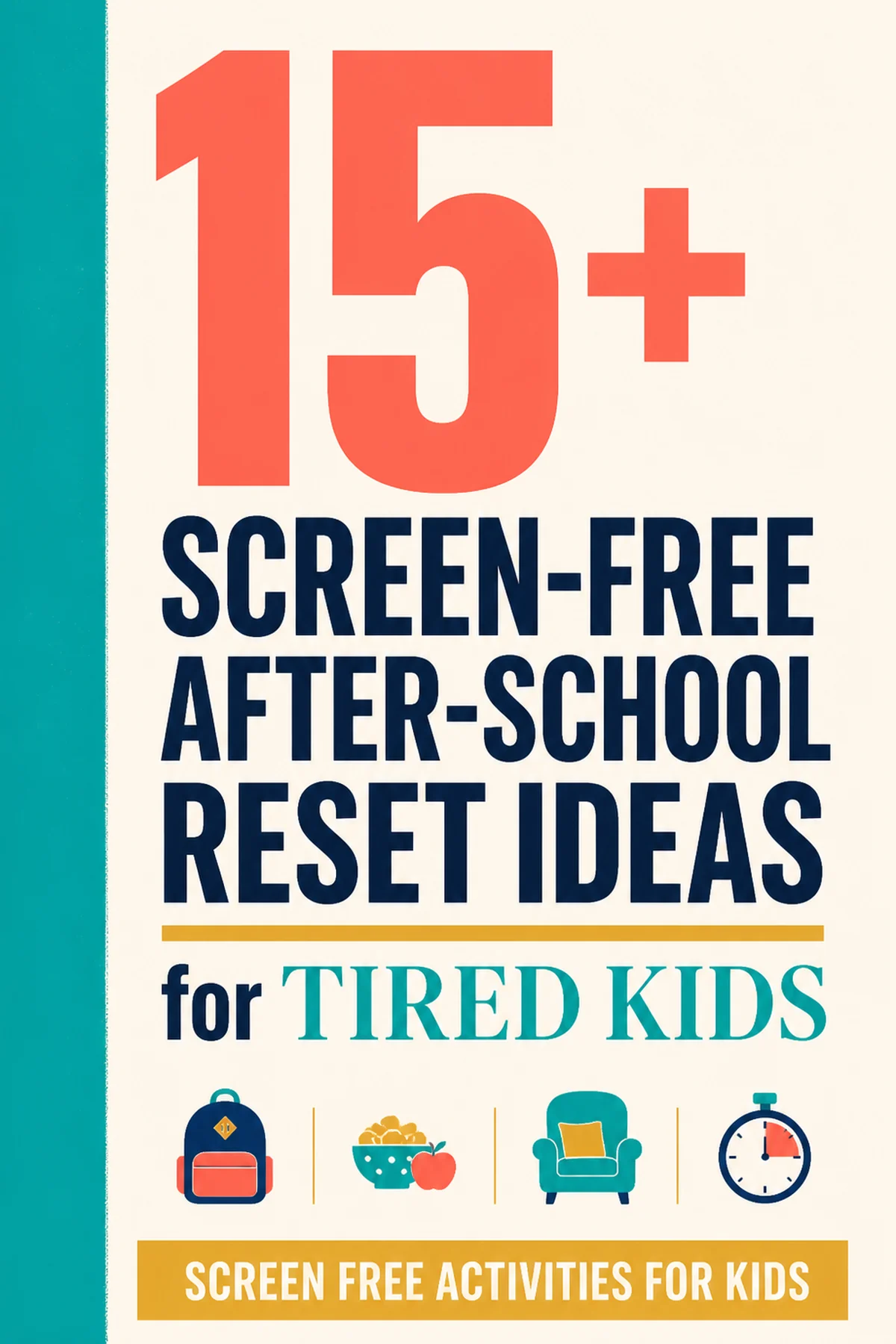
These screen-free activities for kids are grouped by what your child seems to need that day: quiet, movement, connection, creativity, or outdoor space. Choose one or two. Keep it easy. Let the after-school transition be a bridge, not another task.
Choose the Right Screen-Free After School Activity
Start by watching what your child does before you offer an after school activity. The goal is not to label the behavior. It is to make the next few minutes easier to begin.
| What you notice | Reset to try |
|---|---|
| Wants space or fewer questions | Quiet reset |
| Running, jumping, crashing, or pacing | Movement reset |
| Staying close or asking for attention | Connection reset |
| Reaching for paper, blocks, or craft materials | Creative reset |
| Heading toward the door or yard | Outdoor reset |
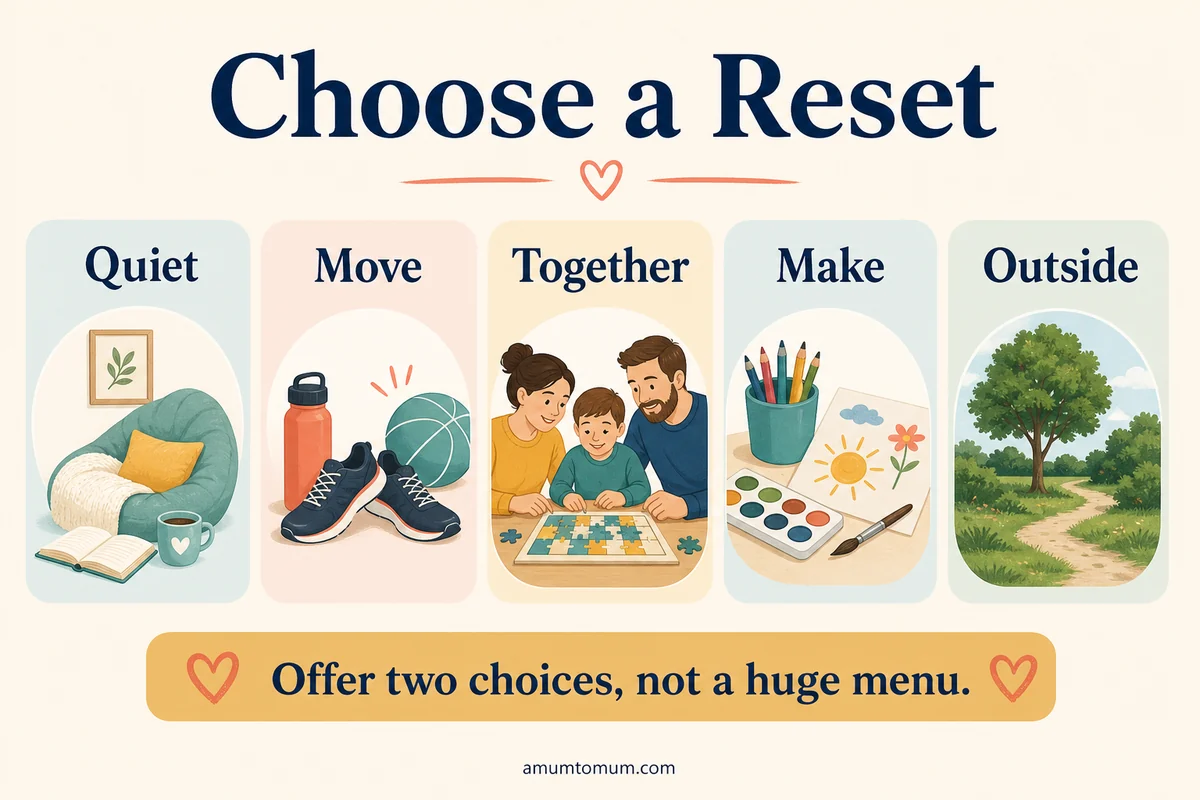
These are observations, not labels. Ask your child, or offer two simple options: "Do you want quiet time or outside time?" A huge menu can feel like one more decision after a long school day.
Low-prep activities work best here. They are familiar, easy to start, easy to stop, light on instructions, and not disguised homework. They should not need a big setup, a finished product, or constant adult help.
Why Some Children Need a Pause After School
A school day can ask a lot from a child: listening, waiting, sitting, moving between activities, social choices, noise, and concentration. Some children come home ready to talk. Others need food, space, movement, or familiar play before they can move into the rest of the afternoon.
I have seen this with both of my girls since preschool. They often need quiet time after school before they can answer questions or move into the next part of the day. I have learned to leave them alone for at least half an hour, keep the questions light, and let them reset first. Kids are different, and we have to notice what each child actually needs instead of expecting the same after-school mood from everyone.
That does not mean every child needs 30 minutes every day. You can start with 10 to 15 minutes and adjust from there. Some children are ready quickly, and others need closer to 30 minutes before homework, chores, or conversation feel possible.
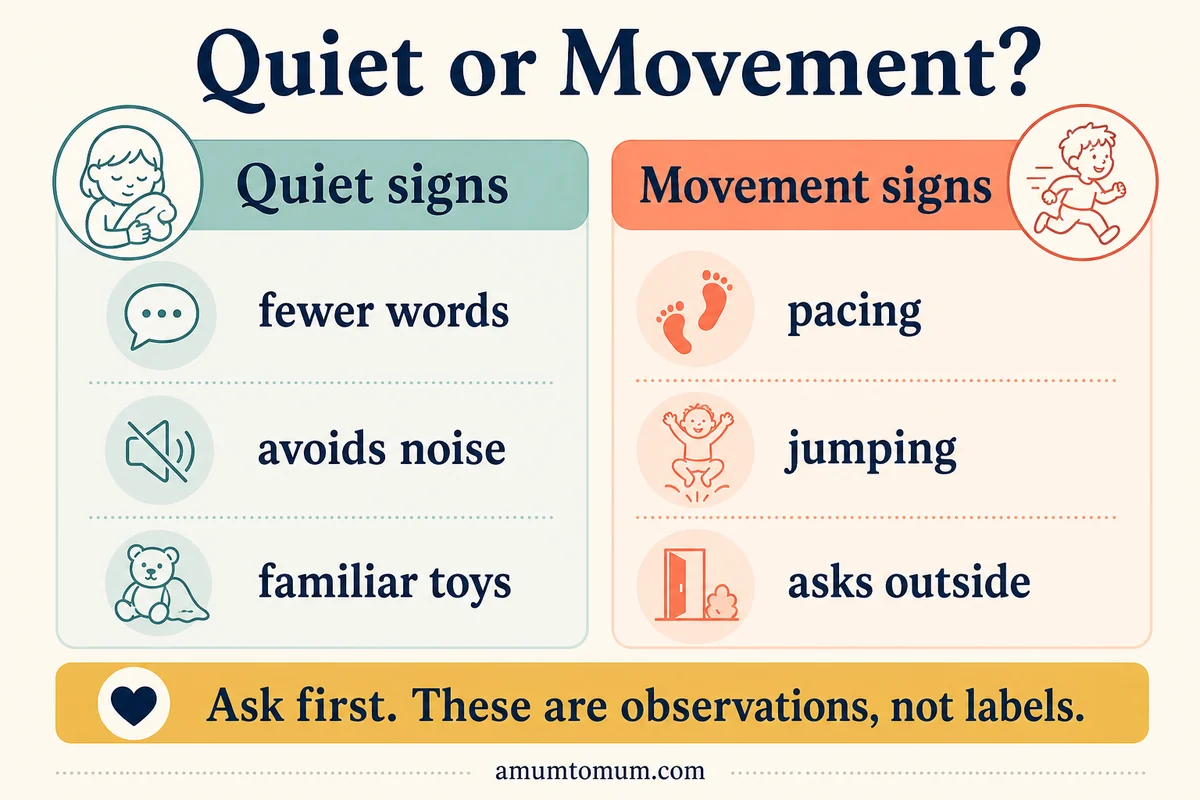
Signs your child may prefer quiet: they speak less than usual, go to a bedroom or corner, avoid extra noise, move slowly, or choose familiar books and toys.
Signs your child may prefer movement: they run through the house, jump, pace, talk loudly, struggle to sit for a snack, or ask to go outside.
If you are not sure, keep the choice small: "Would you like to draw or move your body?" or "Do you want company or a few minutes alone?"
If the after-school crash looks more intense for a younger child, you may also find these ideas for handling toddler meltdowns after daycare helpful.
Quiet After School Activities for Kids
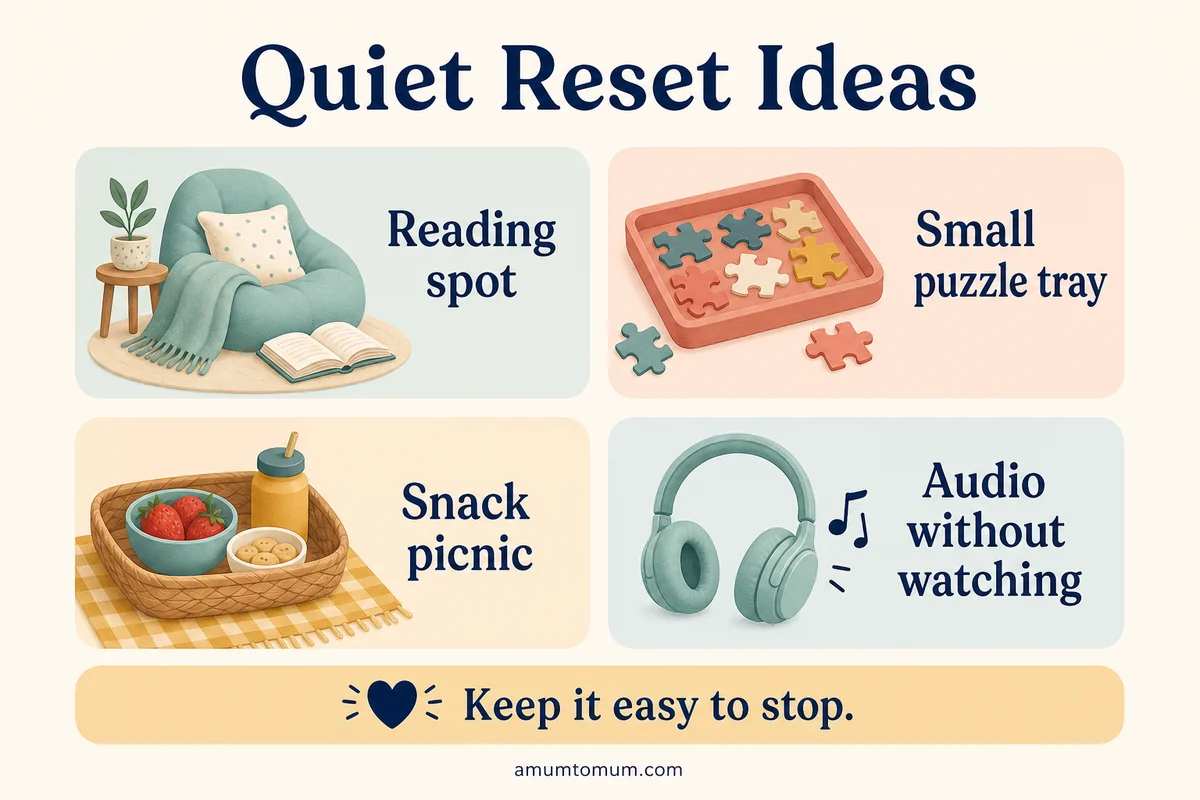
Quiet activities for kids work best when they do not require a report about the school day. They give the child a place to land and can become independent activities for kids who need fewer demands.
- Comfortable reading spot: Put a pillow or blanket near a familiar book, comic, magazine, or picture book. Skip the big fort unless your child starts it.
- Small puzzle tray: Set out a jigsaw puzzle, maze book, matching game, tangrams, or reusable activity book. Keep it small enough to stop easily.
- Quiet snack picnic: Put the snack on a blanket, porch step, or cozy corner. Sit nearby without asking lots of questions.
- Listen without watching: Try an audiobook, familiar story recording, calm music, or children's podcast. Families can decide how audio devices fit their own screen rules.
Movement Activities for Kids After School
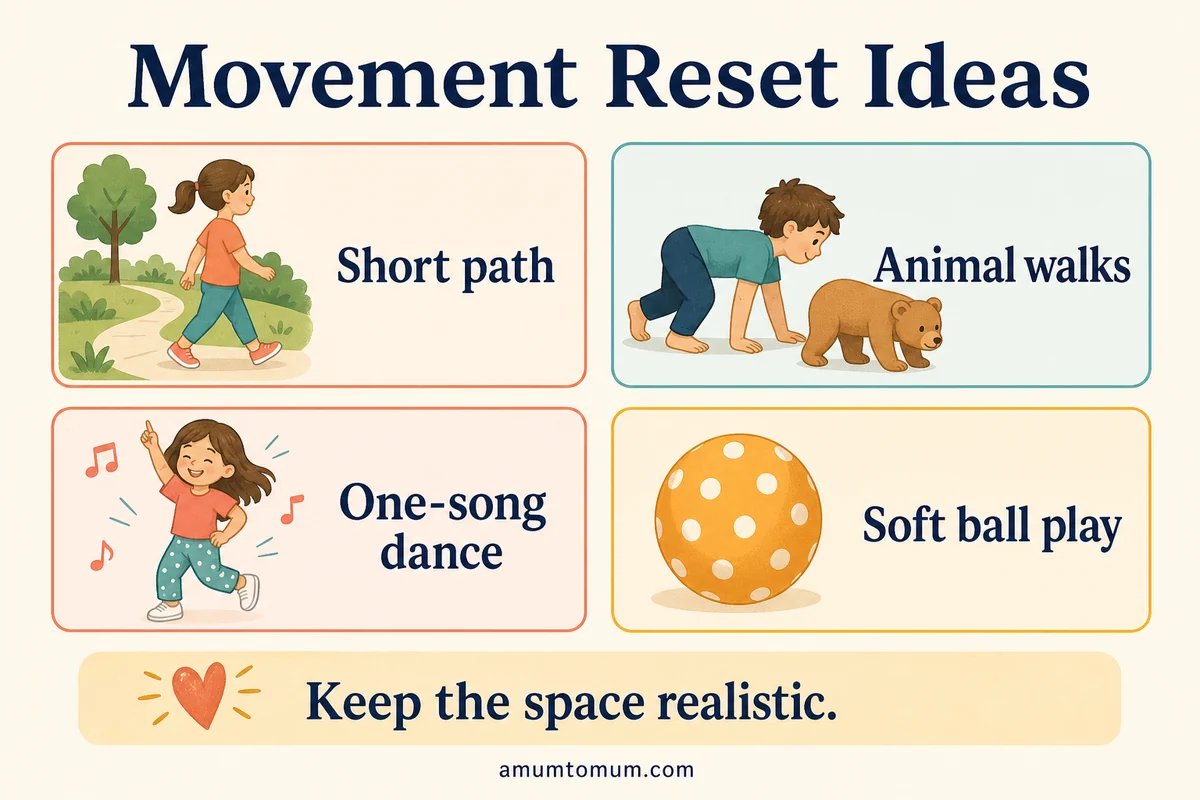
Movement activities for kids are useful when sitting still is the wrong first step. Keep them short, realistic for your space, and easy to end.
- Short movement path: Pick three actions, such as hop to the door, crawl under a chair, and toss socks into a basket.
- Wall pushes or animal walks: Try bear walks down the hallway, crab walks to the kitchen, or pushing both hands against a wall.
- One-song freeze dance: Play one familiar song. When it ends, your child can repeat it or move on.
- Balloon or soft ball play: Keep a balloon off the floor, roll a ball back and forth, or toss rolled socks into a laundry basket.
Gentle Ways to Reconnect
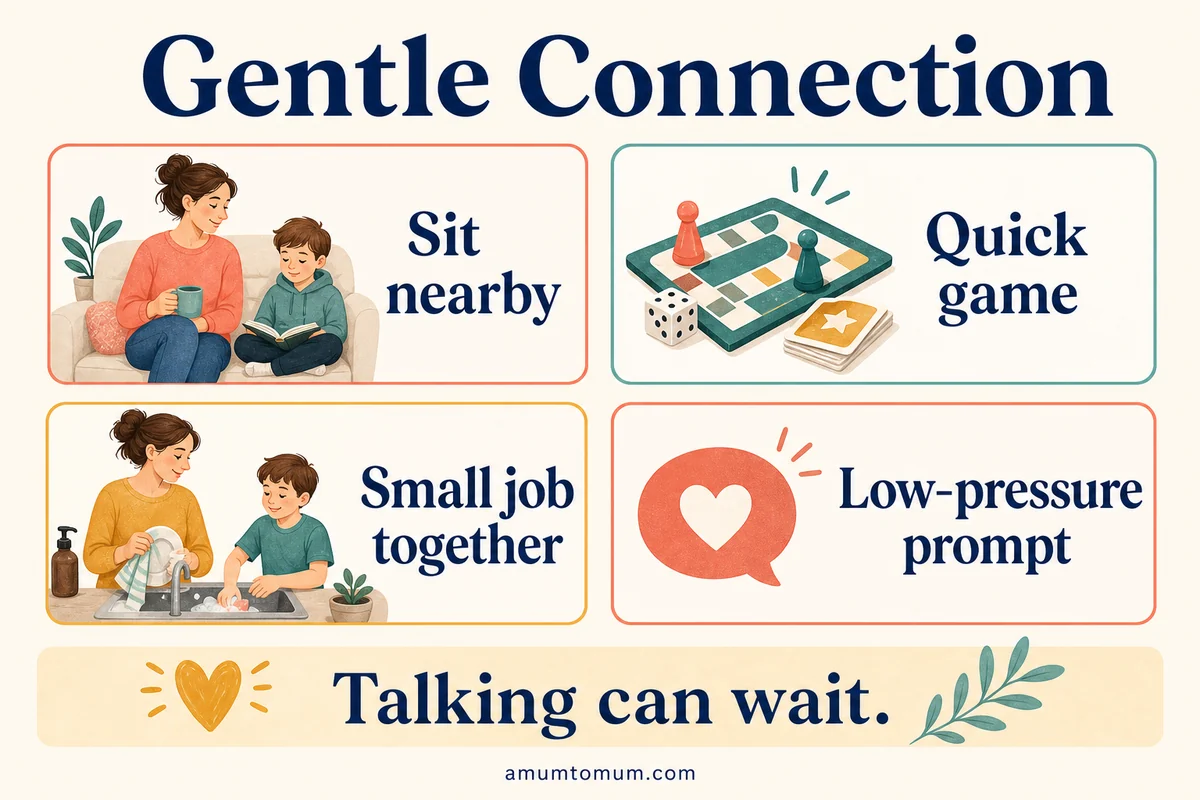
Some after school activities for kids do not need to look busy. Some children want closeness after school but not a full conversation. Connection can be quiet, short, and side by side.
- Sit together for a snack: Make your own drink or snack and sit nearby. Silence can count as connection.
- Play a three-minute game: Try tic-tac-toe, rock-paper-scissors, one round of cards, or a quick dice game.
- Do a tiny household job together: Feed a pet, water one plant, put fruit in a bowl, bring in the mail, or prepare the snack.
- Use a low-pressure prompt: Try "Do you want to tell me something now or later?" or "Would you rather talk, draw, or have quiet?"
Creative and Outdoor After School Activities
Creative activities for kids are most helpful here when there is no expected finished product. Outdoor activities for kids can be just as simple, even without a big garden.
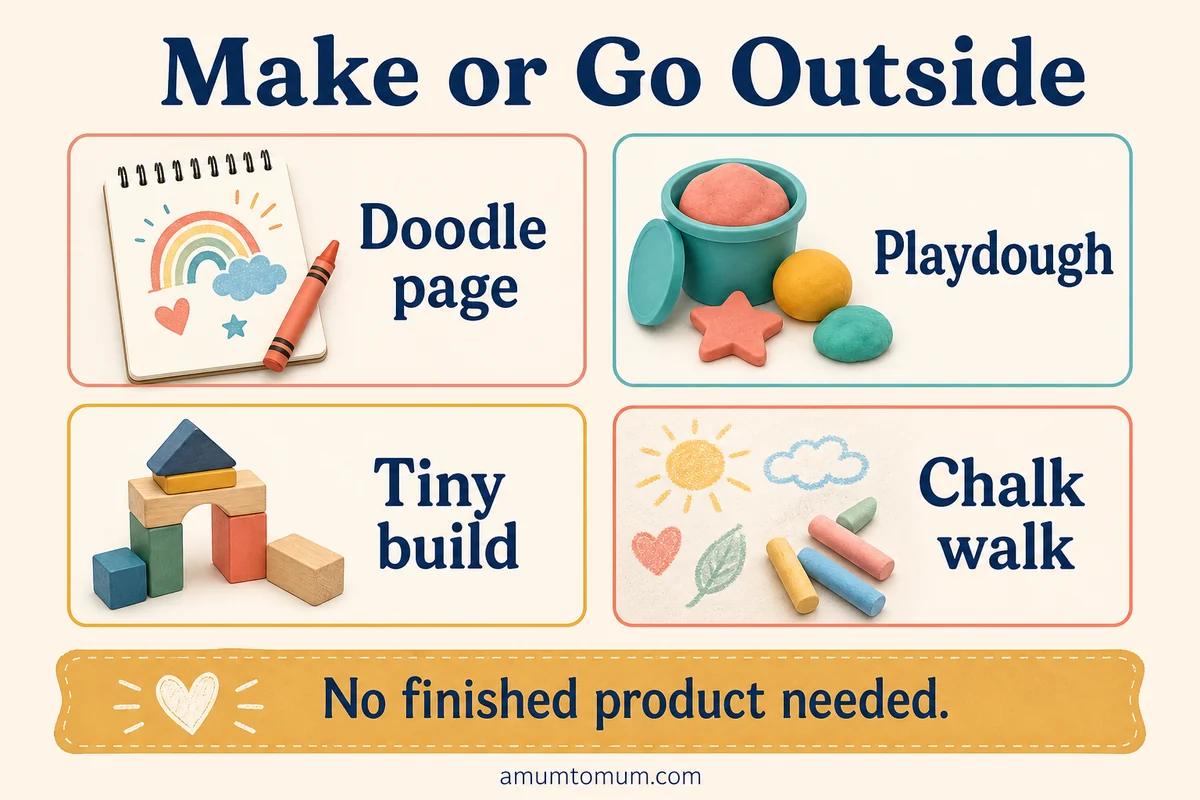
- Doodle page: Leave out blank paper, a sketchbook, colored pencils, washable markers, or stencils.
- Small playdough setup: Use one small piece of playdough and one or two tools. Less cleanup makes it easier to say yes.
- Tiny building challenge: Use blocks, magnetic tiles, craft sticks, or boxes. "Build a bridge between two books" is enough.
- Scrap-paper collage: Keep paper scraps, stickers, precut shapes, and child-safe glue in one envelope.
- Snack outside: Sit on a porch, step, balcony, bench, driveway, or picnic blanket. No planned game needed.
- Chalk or a short collecting walk: Draw a line to follow, make a hop path, or look for leaves, stones, colors, textures, or signs of the season.
These easy after school activities for kids work because they are familiar. They do not need to become a lesson.
Build a Small Reset Basket
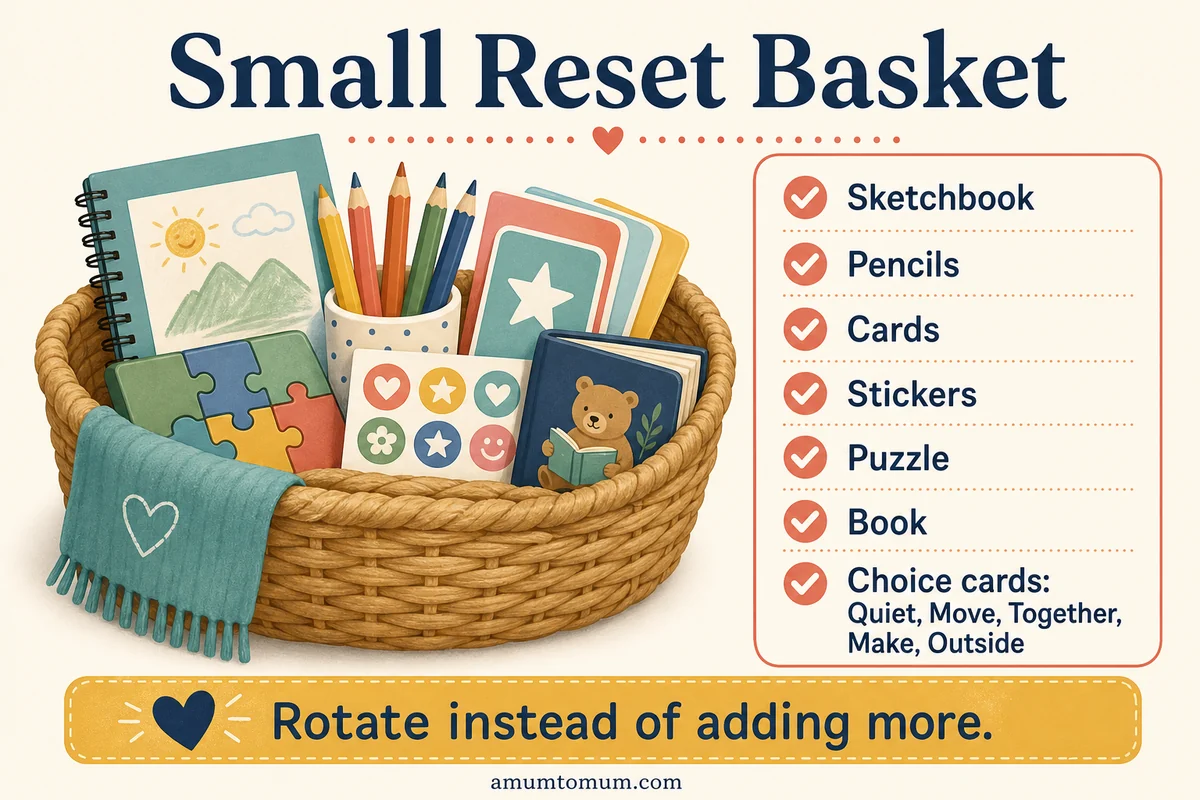
A reset basket is not a toy rotation or a new shopping list. It is a small group of easy options near the place your child arrives home.
Try six to eight items you already own:
- Sketchbook
- Colored pencils
- Mini puzzle
- Small pack of cards
- Stickers
- Playdough
- Favorite book
- Simple fidget
- Reusable activity book
Add five choice cards: Quiet, Move, Together, Make, Outside. Movement and outdoor options do not need to fit inside the basket. A simple card can remind your child that those choices exist.
Rotate two or three items occasionally instead of adding more. The basket should make starting easier, not become another overflowing bin.
If the drawing supplies keep taking over the homework table, use portable art and homework storage so the reset basket stays small.
A Simple After School Routine Schedule
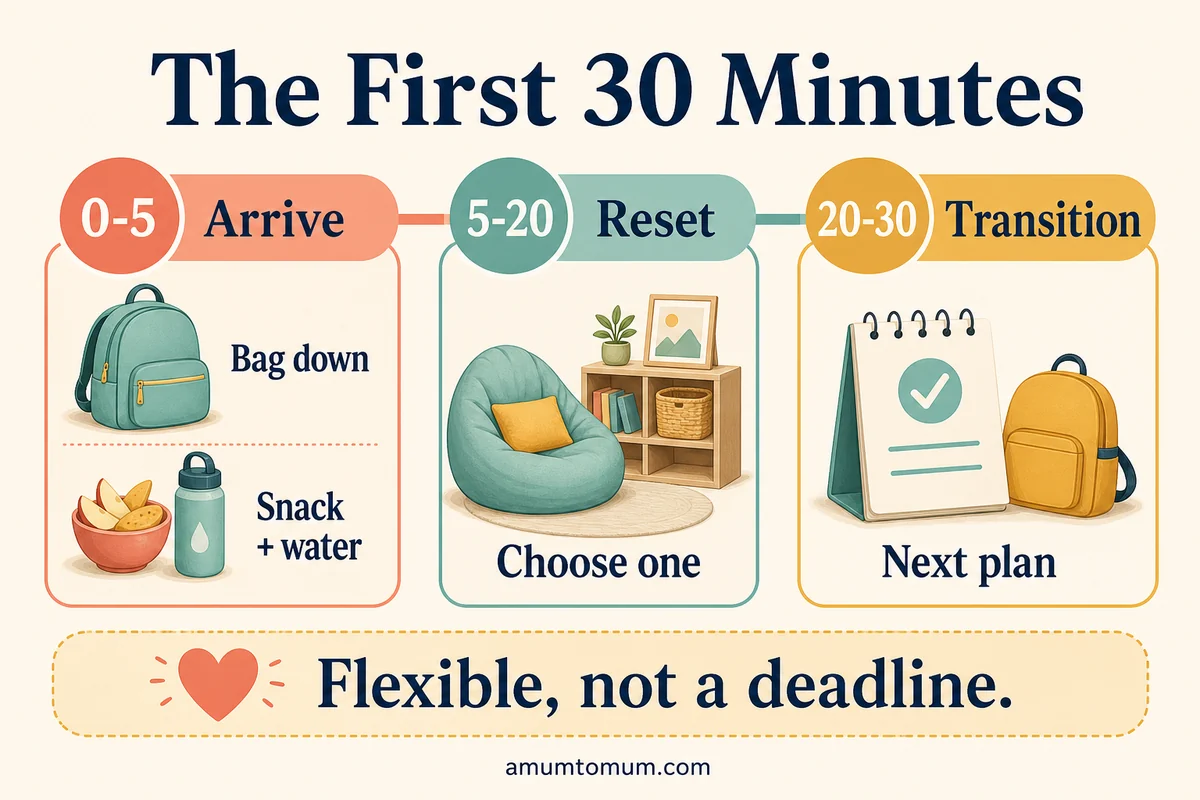
The reset is only one small part of the afternoon. A simple after school routine schedule might look like this:
- Arrive and put belongings away.
- Get water or an after-school snack.
- Choose a short reset.
- Check the afternoon plan.
- Begin homework, play, chores, dinner prep, or activities.
The order can change. This is an example, not a rule. The point is to create a predictable landing place before the next demand.
For a child who needs quiet, try an after-school snack, 10 to 15 minutes of reading or drawing, a quick check of the afternoon plan, and then homework or free play.
For a child who needs movement, try an after-school snack, 10 to 15 minutes outside or moving indoors, a water break, and then homework, chores, or free play.
Some children need a longer pause, especially after a noisy or busy day. Adjust the timing to fit your child, your family schedule, and the homework routine that works in your home.
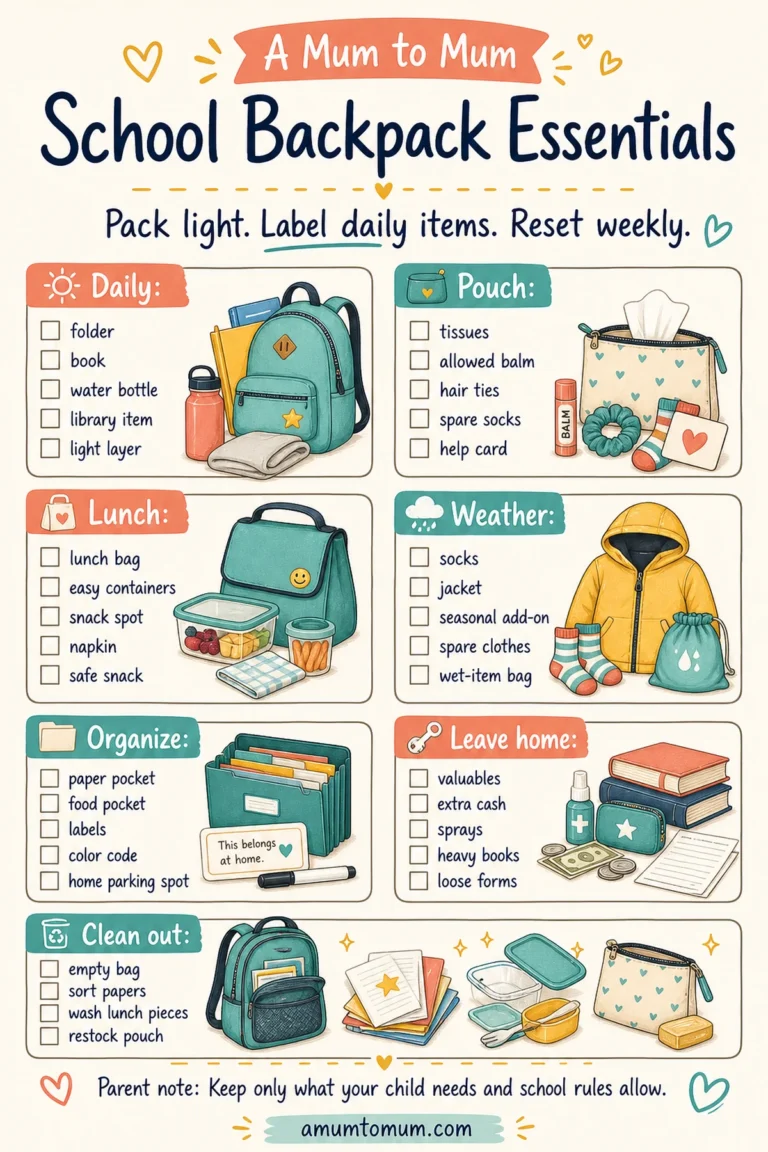
Use a visual routine when it helps: a kitchen timer, one song, a picture card, or a free daily routine chart that helps children see what comes next. If the backpack itself becomes part of the after-school stress, this school backpack essentials checklist can make the daily unpacking and repacking feel easier.
Common Mistakes That Make the Reset Harder
The reset should lower the effort required, not add pressure.
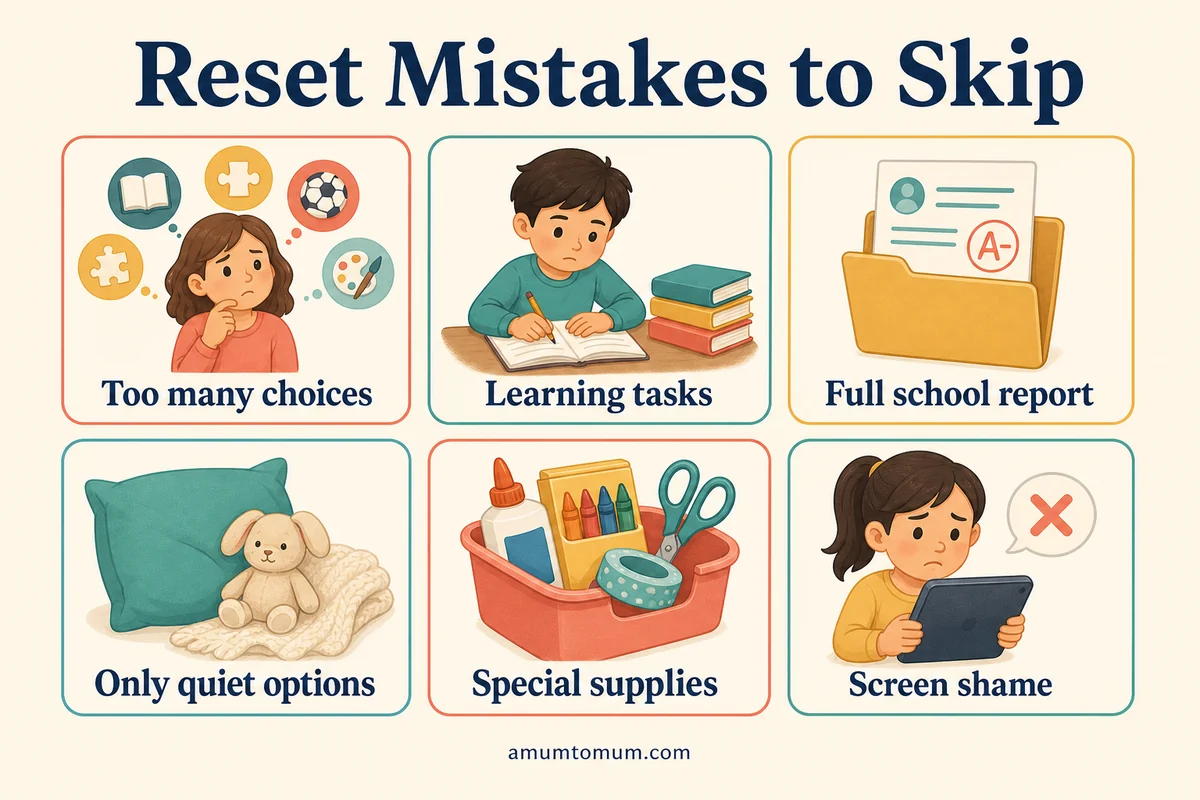
- Offering too many choices: Offer two options or one category at a time.
- Turning it into learning time: Avoid correcting spelling, counting practice, reading questions, or requiring a finished craft.
- Asking for the full school report immediately: Make conversation available without demanding it.
- Choosing only quiet activities: A tired child may still want movement, outside time, or connection.
- Buying special supplies: Start with books, paper, blocks, balls, household objects, and outdoor space.
- Expecting the same activity every day: Use the five-category menu and let the choice change.
- Turning screens into a scorecard: A screen-free reset is one transition option, not a test of good parenting.
For longer weekends, rainy days, or school breaks, save creative after school activities for kids at home or try a simple sidewalk chalk obstacle course when they need movement outside.
After School Routine FAQs
What should kids do first after school?
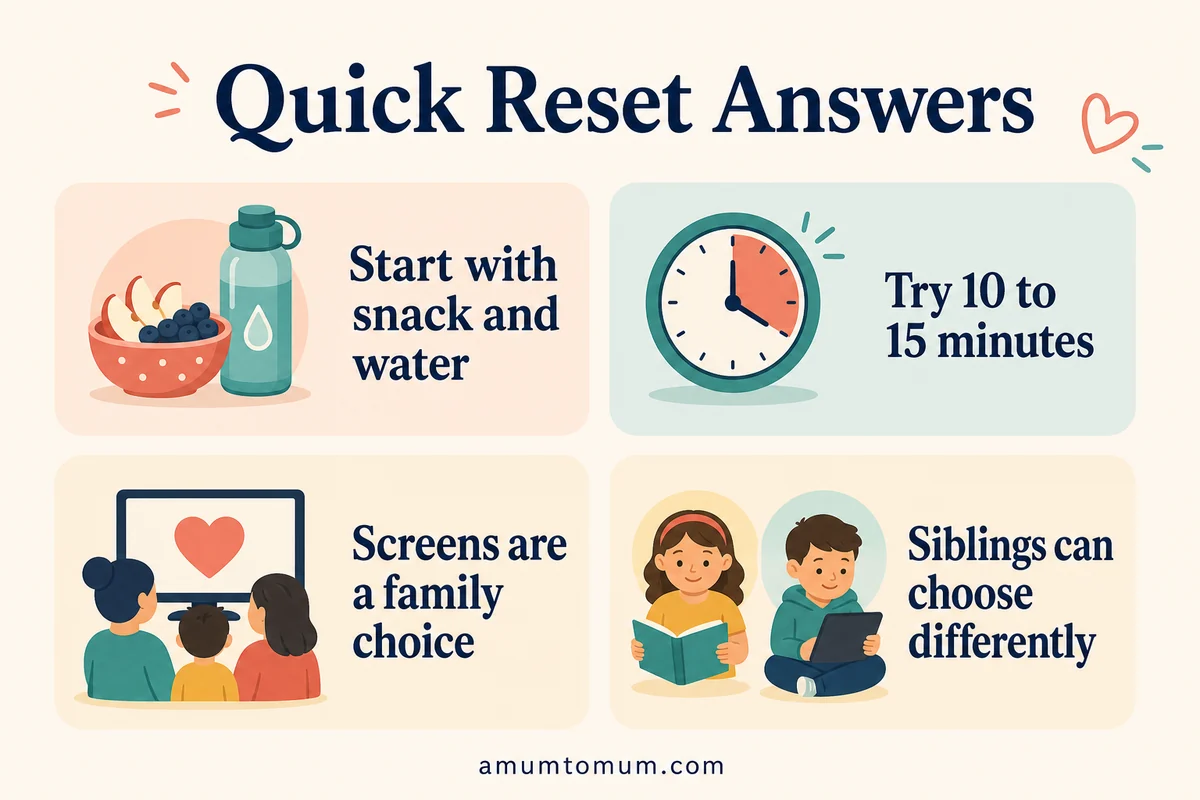
Start with belongings away, water or snack, and one short reset before moving into the rest of the afternoon.
Should children do homework before or after a break?
That depends on your child and your afternoon. Many children do better with a short break first, then homework, chores, or free play.
How long should an after-school break be?
Try 10 to 15 minutes first. Some children need less, and some may need closer to 30 minutes before they are ready for homework, chores, or conversation.
How can I create a screen-free after school routine?
Keep it simple: snack, one reset choice, a quick look at the afternoon plan, and then the next part of the day. Choose from quiet, movement, connection, creativity, or outdoor time.
What if my child only wants a screen after school?
Avoid turning it into a battle. Offer one or two easy alternatives, then explain where screen time fits in your family's plan. If you are rethinking the bigger picture, this guide to screen time for kids can help.
Are audiobooks considered screen-free?
Audiobooks do not require watching a screen, although they may play through a device. Families can call that screen-free or screen-light.
What if my child refuses every activity?
Doing nothing for a few minutes can also be a reset. A snack, quiet corner, or sitting near you may be enough.
Can siblings choose different resets?
Yes. One child may need movement while another wants quiet. Use different rooms, corners, or turns when possible.
The best after school routine is not the one that looks neat on paper. It is the one your child can begin easily that day. Notice if they need quiet, movement, connection, creativity, or outdoor time, then choose one small reset. Once they have had a pause, the rest of the afternoon usually has a better place to start.