Letter Recognition Worksheets for Kindergarten: A-Z Games (Free Printable)
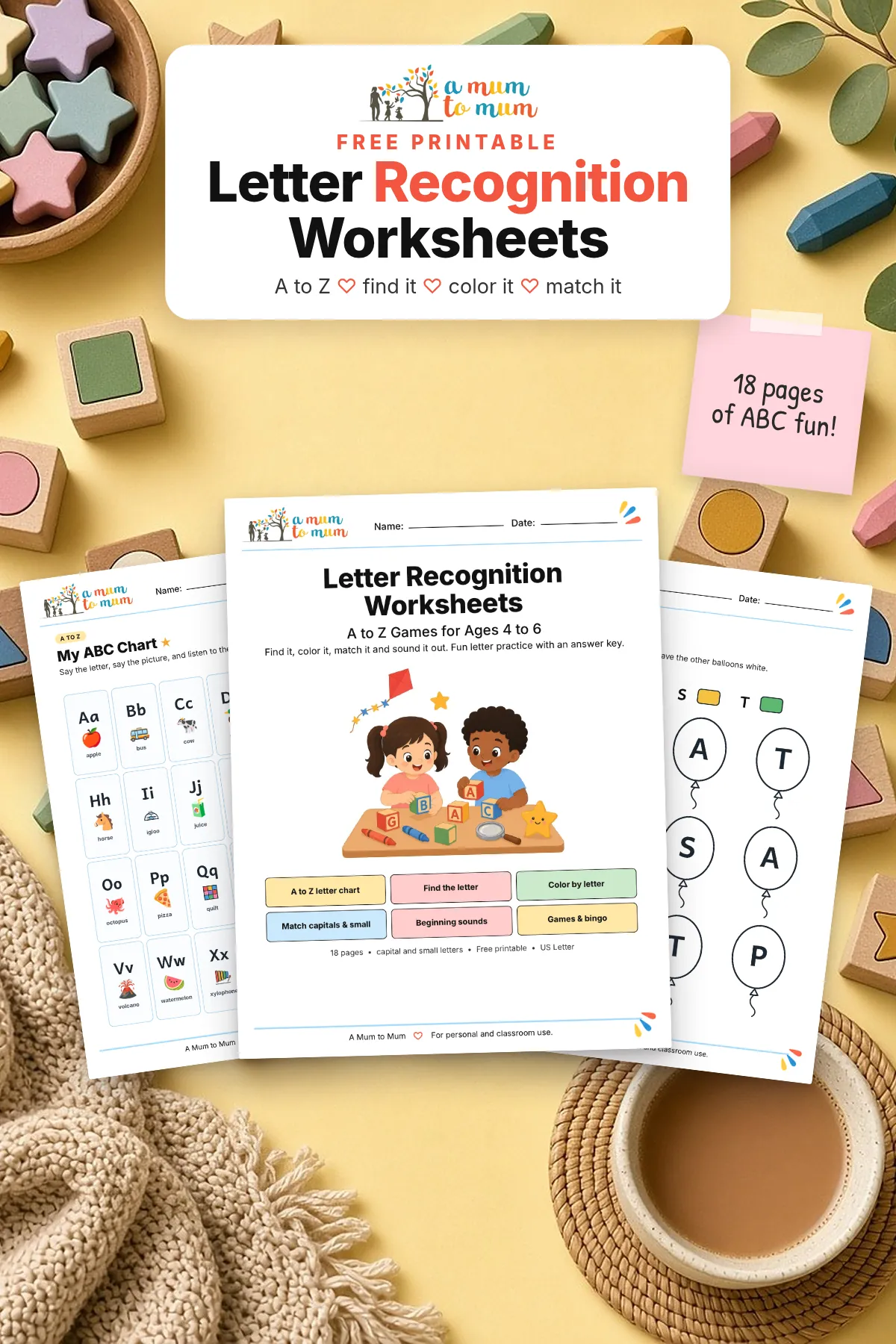
Letters are the first big puzzle of reading, and a bit of play goes a long way. These free letter recognition worksheets turn the alphabet into games for ages 4 to 6: find the letter, color by letter, match capital and small letters, listen for beginning sounds and play bingo. There is an answer key too.
If you want the big picture first, and how letters sit with the other early skills, read my complete guide to getting ready for kindergarten.
Quick Look
- Ages: about 4 to 6; younger children can just play with the chart and the games
- What you get: 18-page printable PDF with an A to Z picture chart, letter hunts, color by letter, matching, beginning sounds, bingo, a tracker and an answer key
- Best for: children who are learning to name letters, and their grown-ups
- Time: about 10 minutes per sitting, a page or two at a time
- You need: a pencil, crayons and a few counters for bingo
- Format: printable PDF, US Letter, easy on the ink
What’s Included in the Free Letter Recognition Worksheets
- How to use it (1 page): a note from me and a simple order to follow.
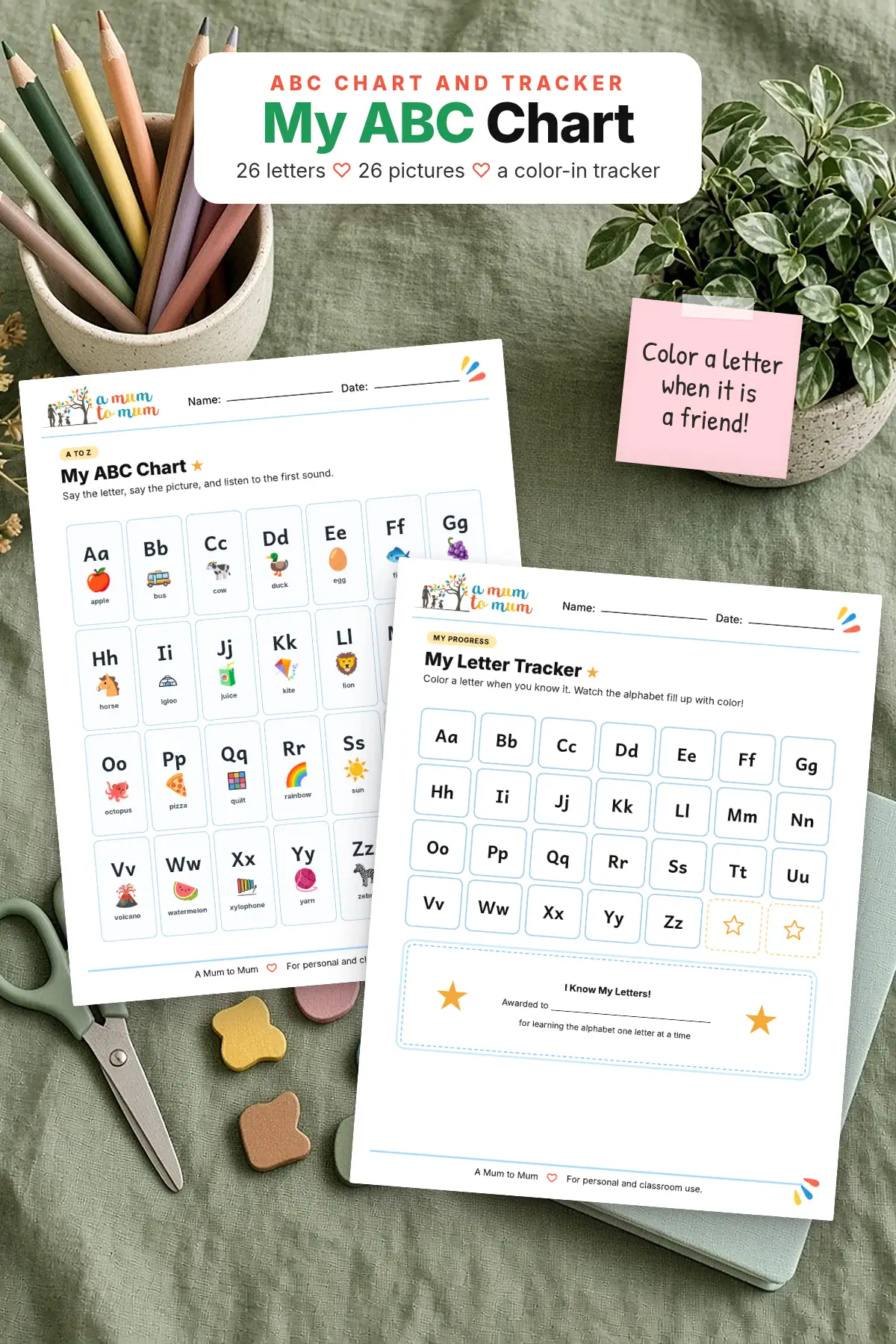
- My ABC Chart (1 page): all 26 letters, capital and small, with a clear picture for each.
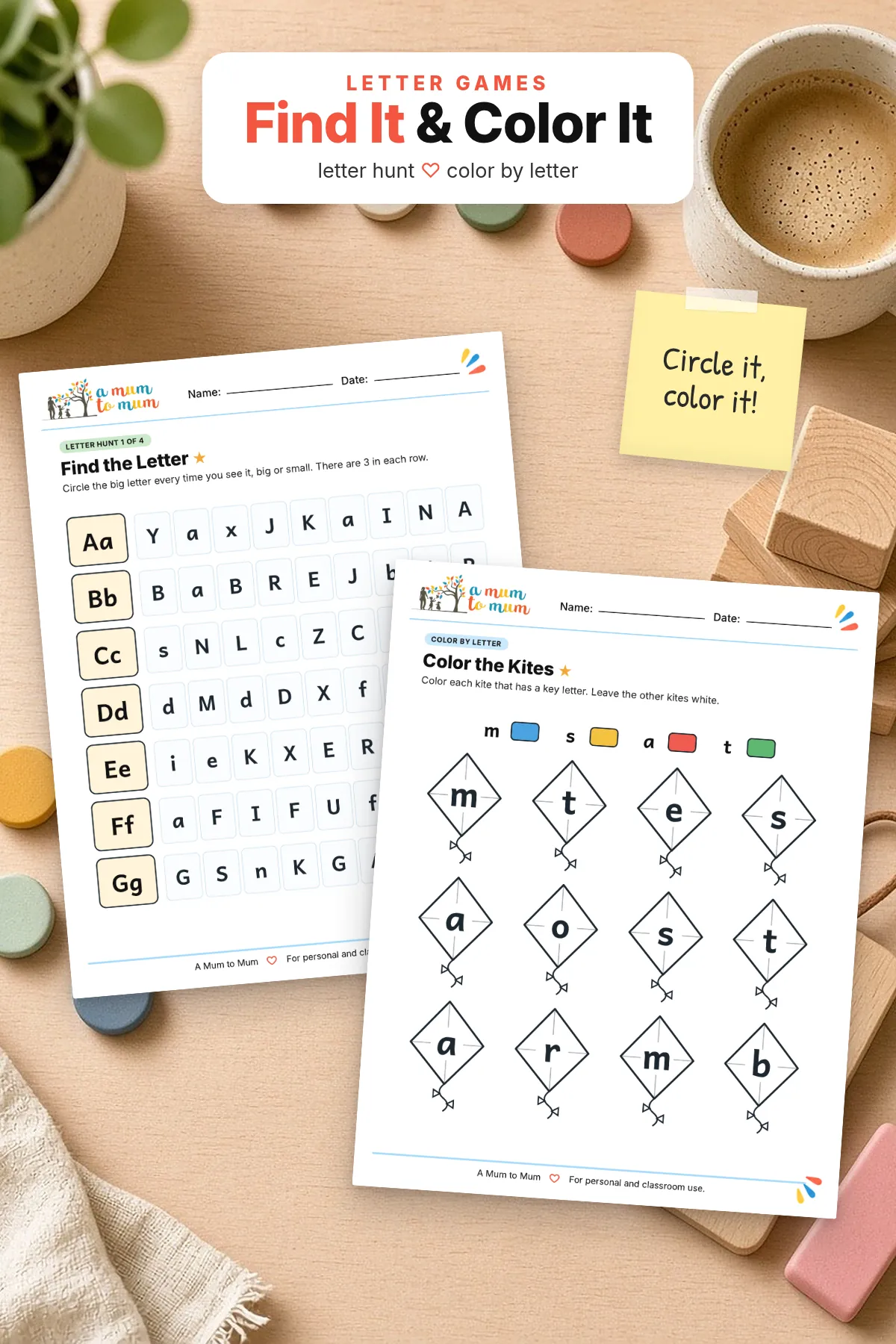
- Find the Letter (4 pages): find and circle every A to Z in a row of mixed letters.
- Color by Letter (2 pages): balloons with capital letters and kites with small letters.
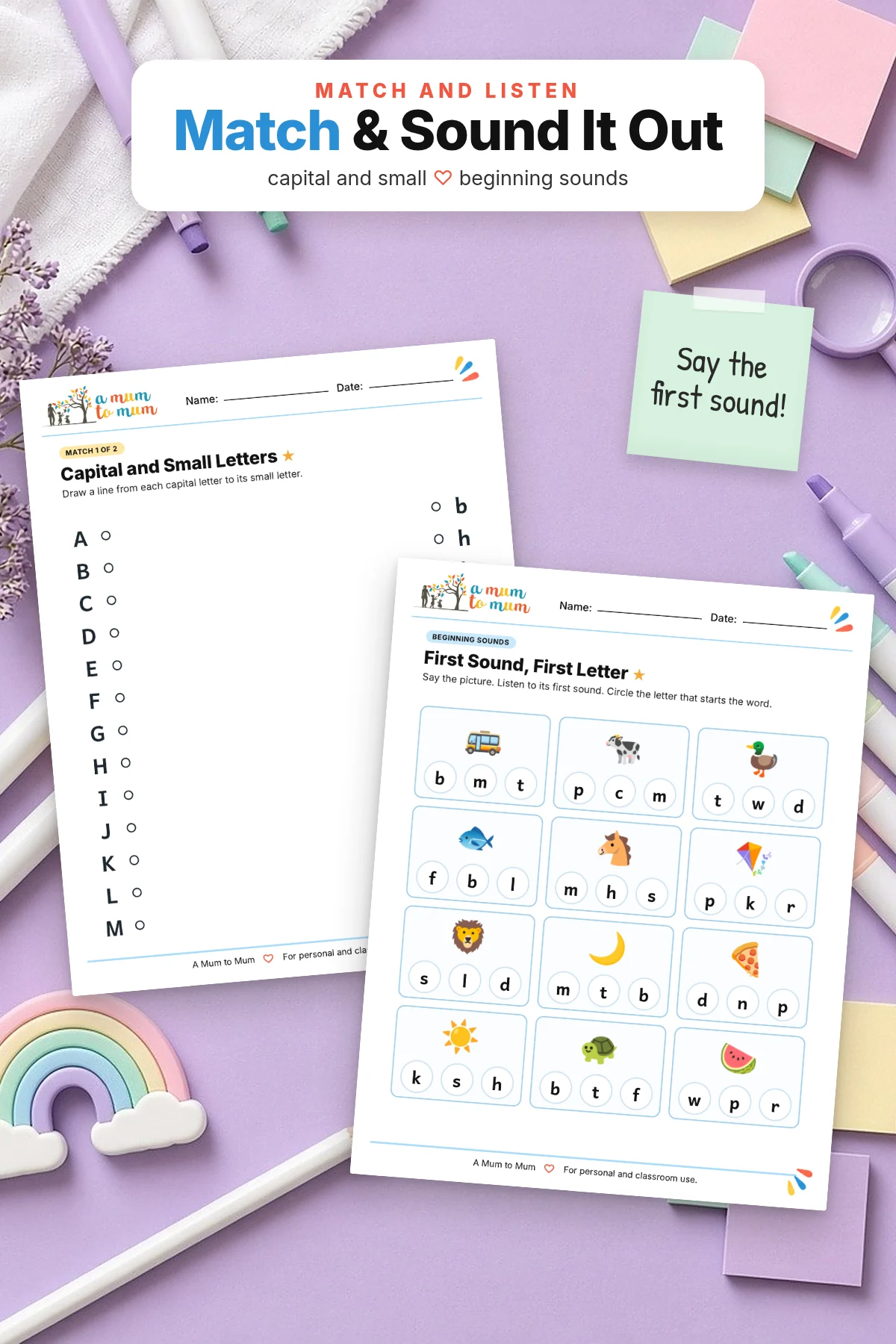
- Capital and Small Letters (2 pages): draw a line from each capital to its small letter.
- Beginning sounds (2 pages): circle the first letter of a picture, and hunt for pictures that start with a sound.
- Letters in My Name (1 page): write your name and find its letters on the alphabet.
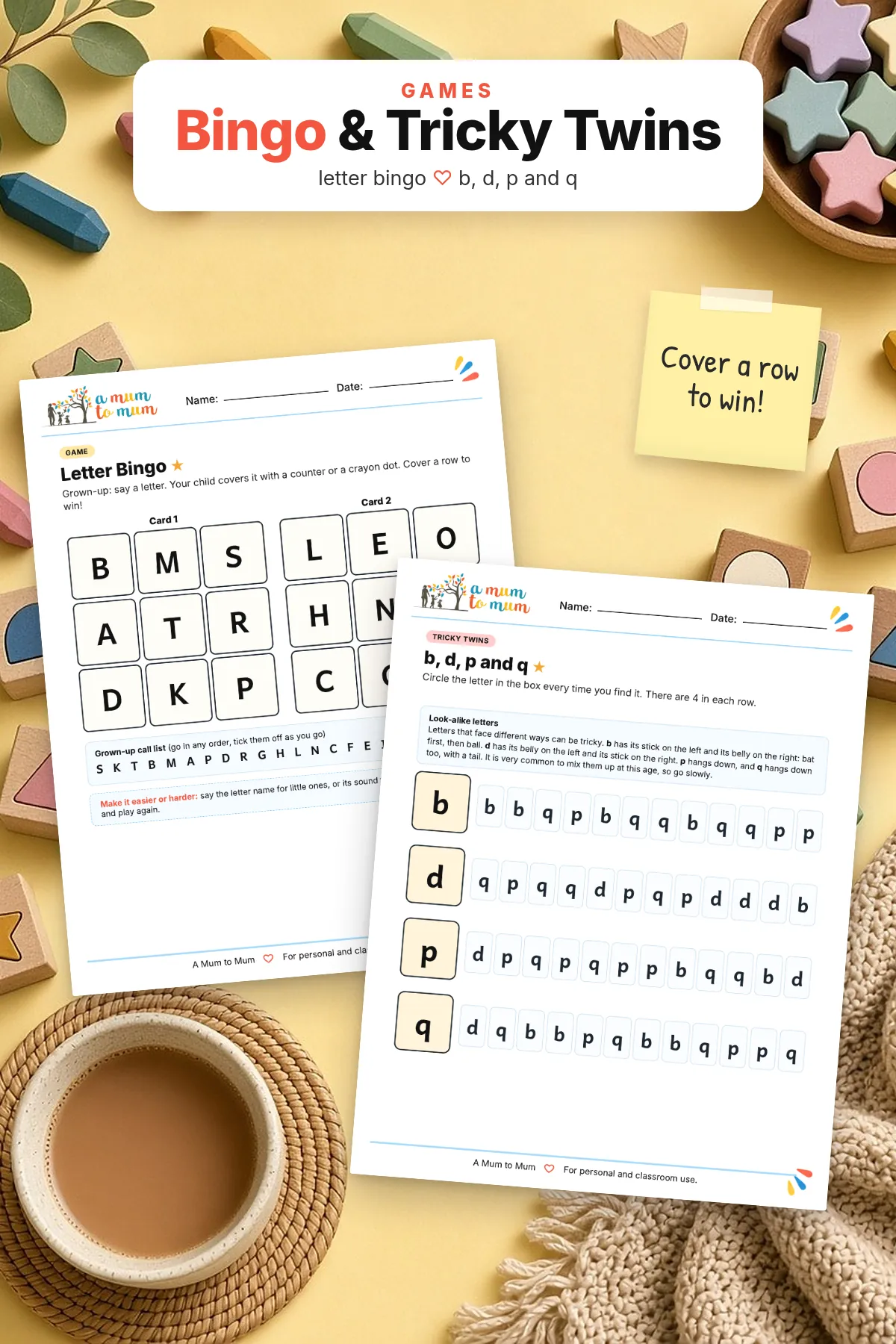
- Tricky Twins, Bingo and Tracker (3 pages): b, d, p and q practice, letter bingo and a color-in progress chart with a certificate.
- Answer key (1 page) and a cover.
When Should Kids Know Their Letters?
Children learn at very different speeds, and there is no single deadline. Many children know a few letters, often the ones in their own name, by age 4, and keep adding more through kindergarten. If you are wondering when should a child recognize letters, I wrote a whole post about the ages and about easy ways to teach them.
If you want to see where your child is right now, my informal at-home check takes about ten minutes and includes a short letter hunt. It is not a test, so please treat it as a way to find games to play.
How to Practice Letter Recognition at Home
- Start small. Pick three to five letters at a time, and add more when those feel easy.
- Start with their name. The letters in a child’s own name are often the first ones they know. You can also practice writing their name on the side.
- Say the name and the sound. “This is B. It says b, like bus.” Pictures help the sound stick.
- Play, do not drill. Ten happy minutes beat thirty cranky ones. Stop while it is still fun.
- Look for letters everywhere. On cereal boxes, street signs and book covers. Let your child be the letter detective.
- Try both kinds. Capital and small letters can look quite different, so the matching pages help children connect each pair.
Find the Letter and Color by Letter
The Find the Letter pages are a letter hunt. Each row has a big letter in a box and nine mixed letters. Your child circles every match, capital or small, and there are always three to find. I kept look-alike letters out of the same row, so it is clear what is right.
On the Color by Letter pages, a little key tells your child which color goes with which letter. They color every balloon or kite with a key letter and leave the others white. It is quiet, relaxed and a good one for the end of the day.
Letter Matching Worksheets: Capital and Small Letters
Capital and small letters do not always look alike, so matching is a great next step. I remember telling my daughter that a big B and a small b are almost the same, the small one just has one belly less. On each matching page, your child draws a line from a capital letter on the left to its small letter on the right. The small letters are in a mixed-up order, and the answer key shows every pair.
Letter Sounds Worksheets: Beginning Sounds
Knowing a letter’s name is one thing, and hearing its sound is another. These beginning sounds worksheets have two pages: on the first, your child says the picture and circles the letter it starts with. On the second, a sound hunt, they circle the three pictures in each row that start with the big letter’s sound.
Say the sound, not the letter name, for example “sss” for sun. I chose pictures with clear names, such as bus, sun and turtle. If a picture is called something else in your house, just tell your child the word we use on the page.
Tricky Twins: b, d, p and q
The letters b, d, p and q are made of the same shapes facing different ways, so mixing them up is very common at this age. The Tricky Twins page has a short tip for each one and four rows to hunt through. Remember bat first, then ball for b, and keep the practice light. If reversals do not settle down as your child gets older, mention it to their teacher.
What to Do Next
Once letters feel friendly, pick the next small step. My free readiness pack shows how letters fit with the other early skills, and the free school name tags and labels are a fun way to spot your child’s name in real life. For a little extra letter play, my free ABC activity book and letter games has more ideas, and my post on coloring and activity books for kids has more quiet activities.
Letter Recognition Worksheets FAQs
What are letter recognition worksheets?
They are printable pages that help children learn to spot and name the letters of the alphabet, usually with games like finding a letter, matching capital and small letters, or coloring by letter.
What age are these letter recognition worksheets for?
They are made for children around 4 to 6, the preschool and kindergarten years. Younger children can just look at the chart and play bingo, and older ones can work on the sounds and look-alike letters.
How many letters should my child learn at a time?
Three to five is a gentle number for most children. Add new ones when the first few feel easy, and keep going back to the old ones in games.
Should I teach capital or small letters first?
There is more than one good way. Many families start with the letters in the child’s name, which are often capitals, and add the small letters as they go. The matching pages help connect the two.
How do I teach letter sounds?
Say the sound, not the name, and pair it with a picture, such as “sss” for sun. Keep each sound short, and play a game where you hunt for objects at home that start with it. The Sound Detectives page is built for this.
My child mixes up b and d. Is that normal?
Yes, it is very common for young children. Try the tip on the Tricky Twins page, and go slowly. If it does not improve as they get older, talk to your child’s teacher.
Is it free for classroom use?
Yes, the PDF is free for personal and classroom use.
Download the Free Letter Recognition Worksheets
Sign up below and you will get the Letter Recognition Worksheets PDF, plus the whole Kindergarten Ready series: free printables for names, pre-writing, numbers and more, sent to your inbox over the coming weeks.
Get the Free Letter Recognition Worksheets
Enter your email and I’ll send you the 18-page A to Z letter games kit, with an answer key. You’ll also get the whole Kindergarten Ready series: free printables for names, pre-writing, numbers and more, sent to your inbox over the coming weeks. Unsubscribe any time.
Want to save this article for later?
Pin it!