School Backpack Essentials for Elementary Kids
School backpack essentials are not about filling every pocket. For elementary kids, the best backpack is light, labeled and easy for a child to manage without a parent digging through it every morning. The goal is a simple system: daily items in the main pocket, papers in one folder, food in one lunch spot and tiny backups only when the school allows them.
This list is for busy parents who want a useful backpack packing plan without buying too much. Use it as a starting point, then adjust for your child’s age, teacher rules, allergy restrictions, after-school care and how heavy the bag feels once it is packed.
Daily Items That Belong in the Backpack
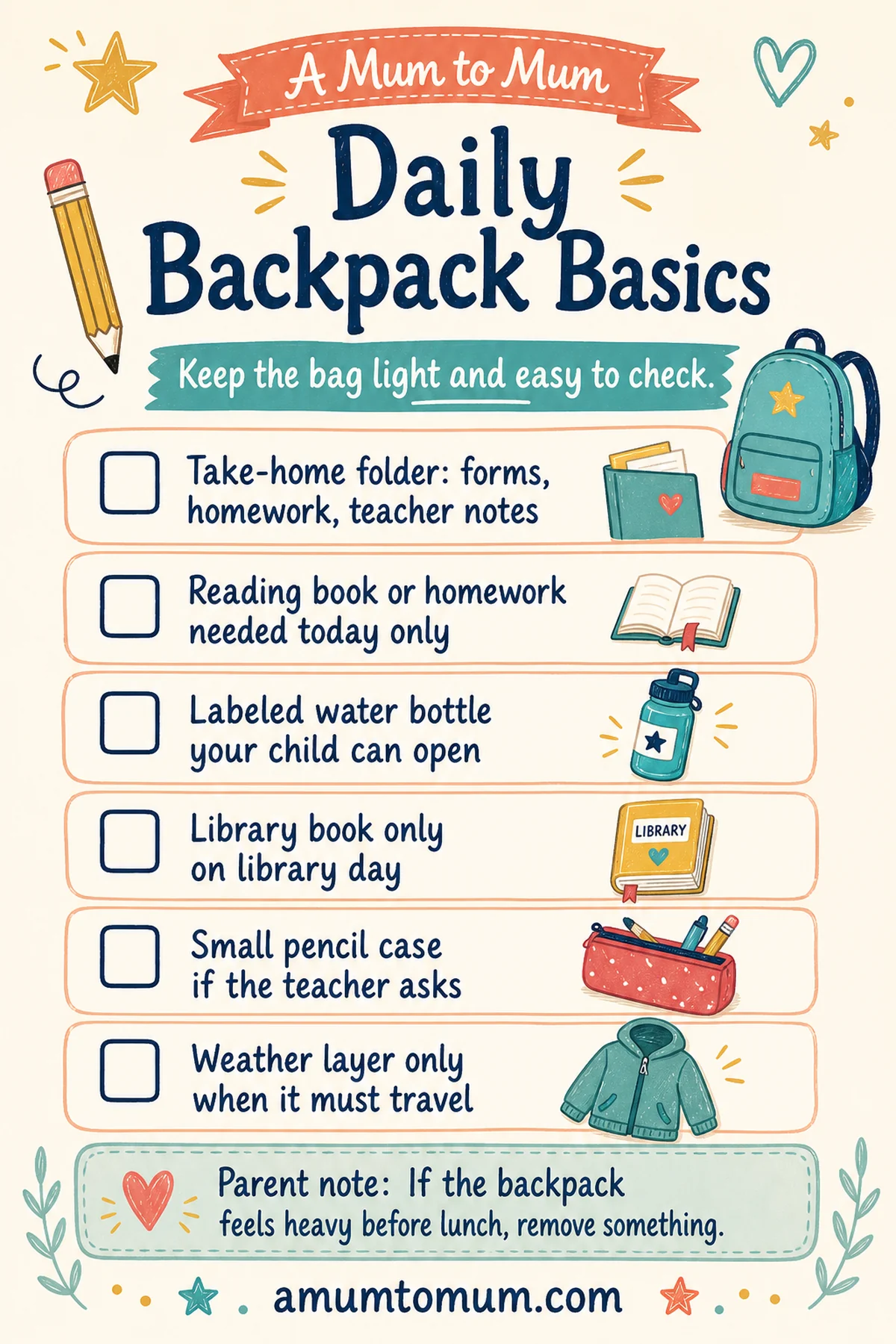
Start with the things your child needs almost every school day. These should be easy to find and light enough for your child to carry.
- Folder or take-home pouch: Use one folder for papers that travel between school and home. Choose a bright color and teach your child that notes, forms and homework all go there.
- Homework or reading book: Pack only what is due or needed that day. If the book is heavy, ask if it can stay at school or travel only on certain days.
- Water bottle: Choose a bottle your child can open, close and refill. Label it clearly, since bottles are one of the first things to wander.
- Library book on library day: Add a calendar reminder instead of keeping library books in the backpack all week. This keeps the bag lighter.
- Small pencil case, only if needed: Some classrooms keep supplies at school. If your child needs one, keep it simple: sharpened pencils, eraser and one or two extras.
- Weather layer if it must travel: A light jacket or hoodie can go in the backpack when the day will change, but bulky coats are better worn or stored at school when possible.
If the backpack feels heavy before lunch, it is time to remove something. Elementary kids do not need to carry every supply every day.
Small Emergency and Hygiene Pouch
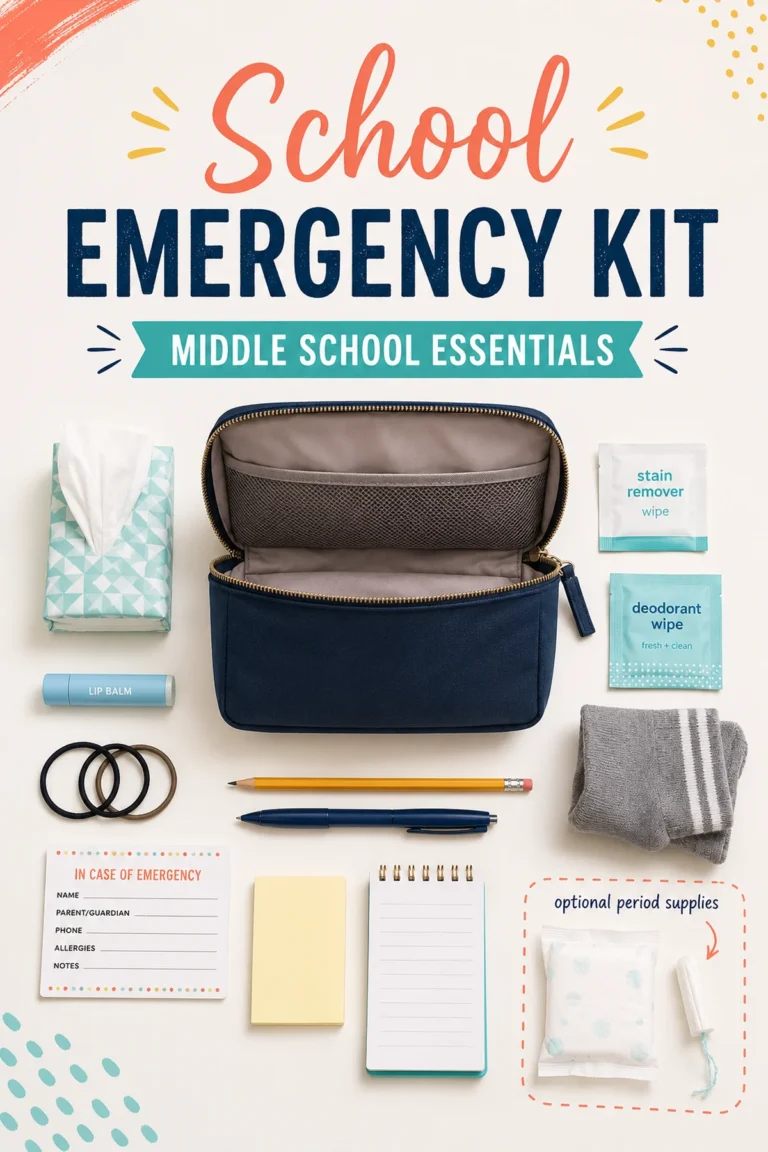
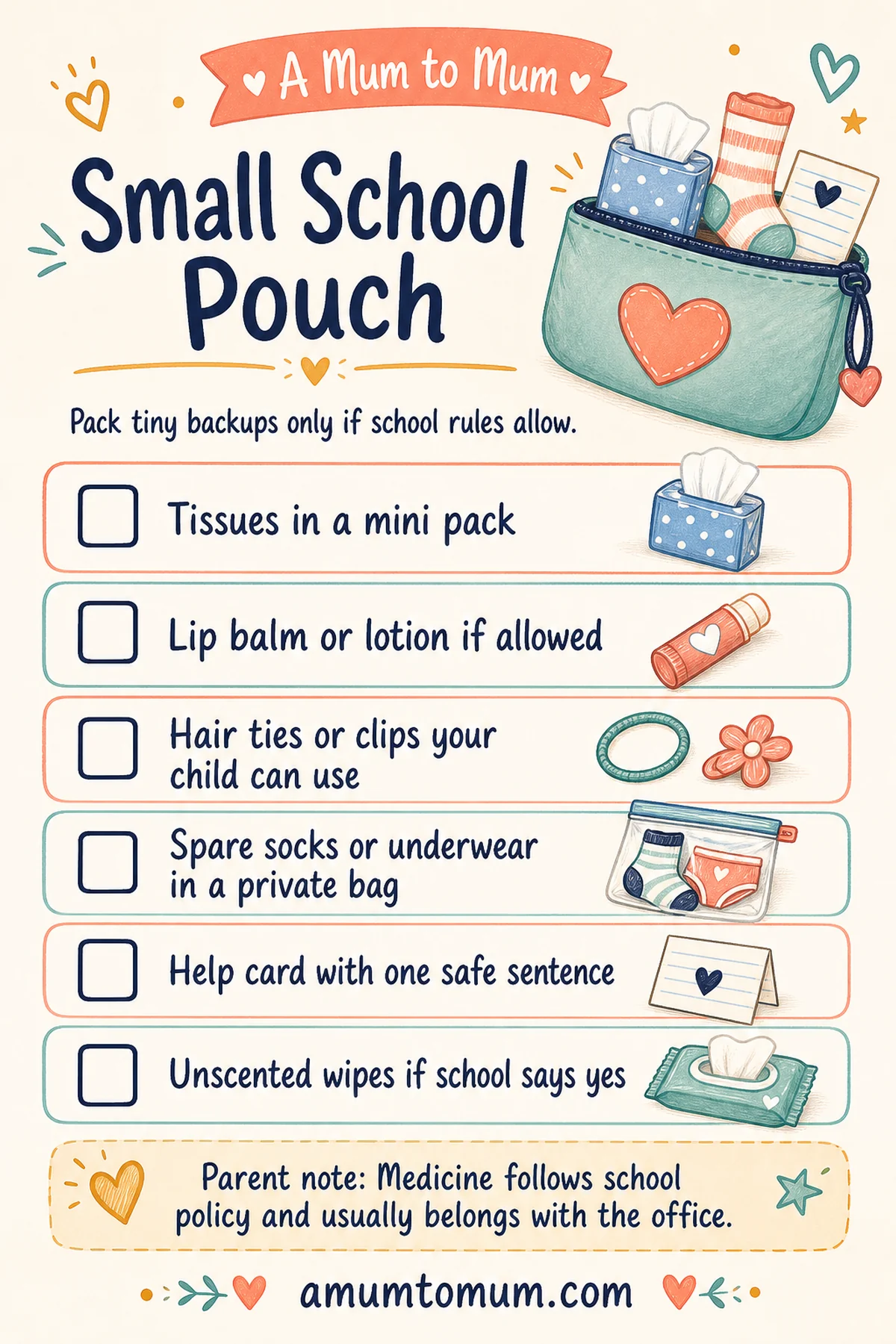
A small pouch can help with everyday school problems, but it should stay age-appropriate and follow school rules. This is not a medicine pouch unless your school has told you exactly how medication must be handled.
- Tissues: A mini pack is useful and light. Replace it when the pouch starts looking flat.
- Lip balm or lotion, if allowed: Check school rules first, especially for younger children.
- Hair ties or clips: Add these only if your child uses them and can manage them alone.
- Spare underwear or socks for younger kids: Pack private clothing in an opaque zip bag with your child’s name inside.
- Simple help card: A small card with one or two sentences can help a shy child ask for the bathroom, pickup help or a spilled lunch.
- Allowed wipes: If your school allows them, pack a few unscented wipes in a sealed bag. Avoid sprays, sanitizer or scented products unless the school says they are okay.
For a bigger personal-care pouch, use the school emergency kit checklist and choose only the items that fit your child and school policy.
Lunch and Water Items
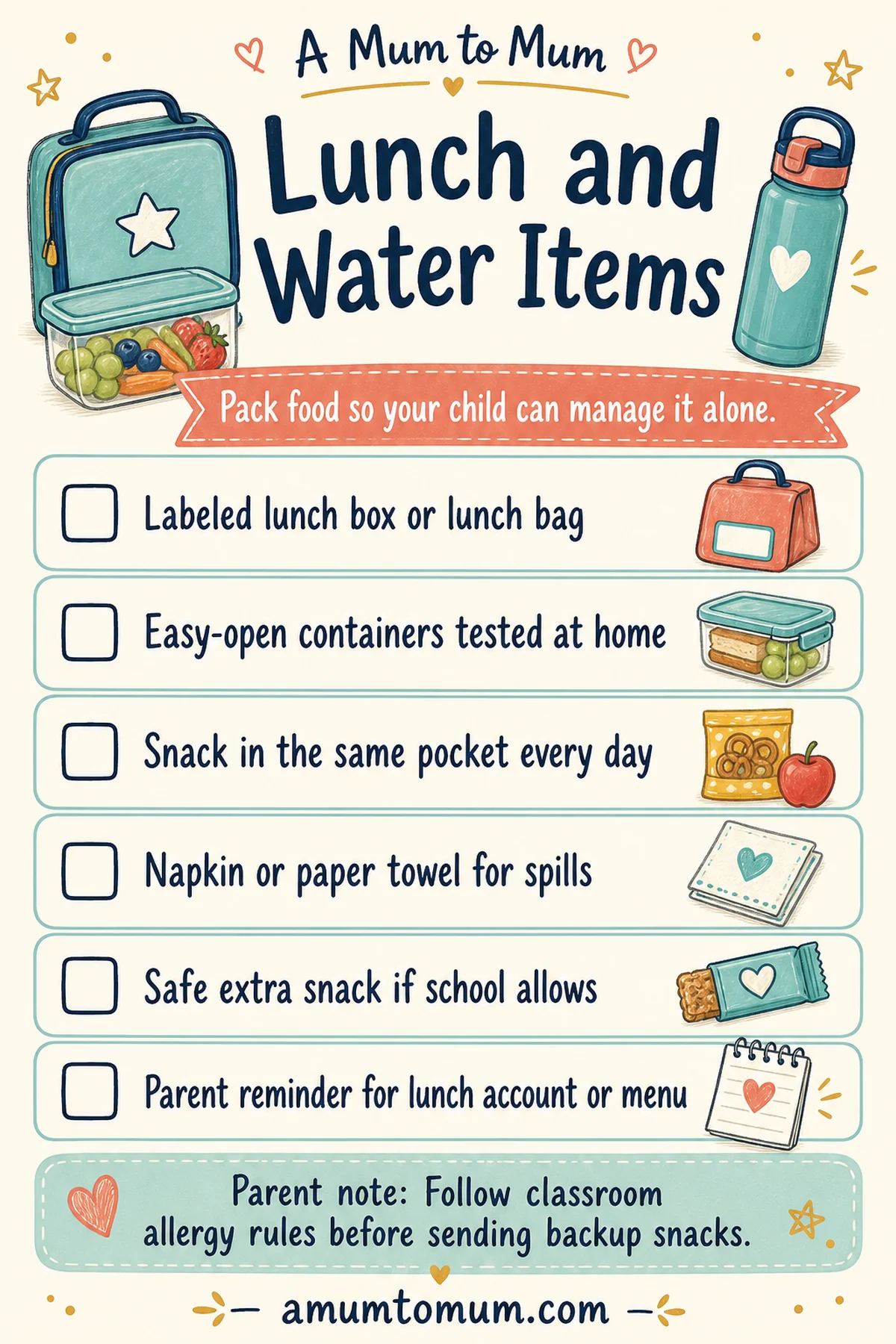
Lunch items should be easy for your child to open and easy for you to clean. A cute lunch setup is not helpful if your child cannot manage it during a short lunch period.
- Lunch box or lunch bag: Pick one that fits inside or clips securely to the backpack. Label the outside and inside.
- Easy-open containers: Test lids at home. If your child struggles, use fewer pieces or a simpler container.
- Snack in a separate spot: Put the snack in the same backpack pocket every day so it does not get eaten with lunch by mistake.
- Reusable napkin or paper towel: This catches spills and gives your child a clean spot for food.
- Extra safe snack, if allowed: Follow allergy rules and teacher guidance. Keep it plain and familiar.
- Lunch account reminder for parents: This belongs in your phone, not your child’s backpack. Add a weekly reminder to check balance or menu choices.
If food leaks often, use one washable pouch or a gallon zip bag around the lunch box until your child gets the hang of carrying it upright.
Weather and Clothing Backups
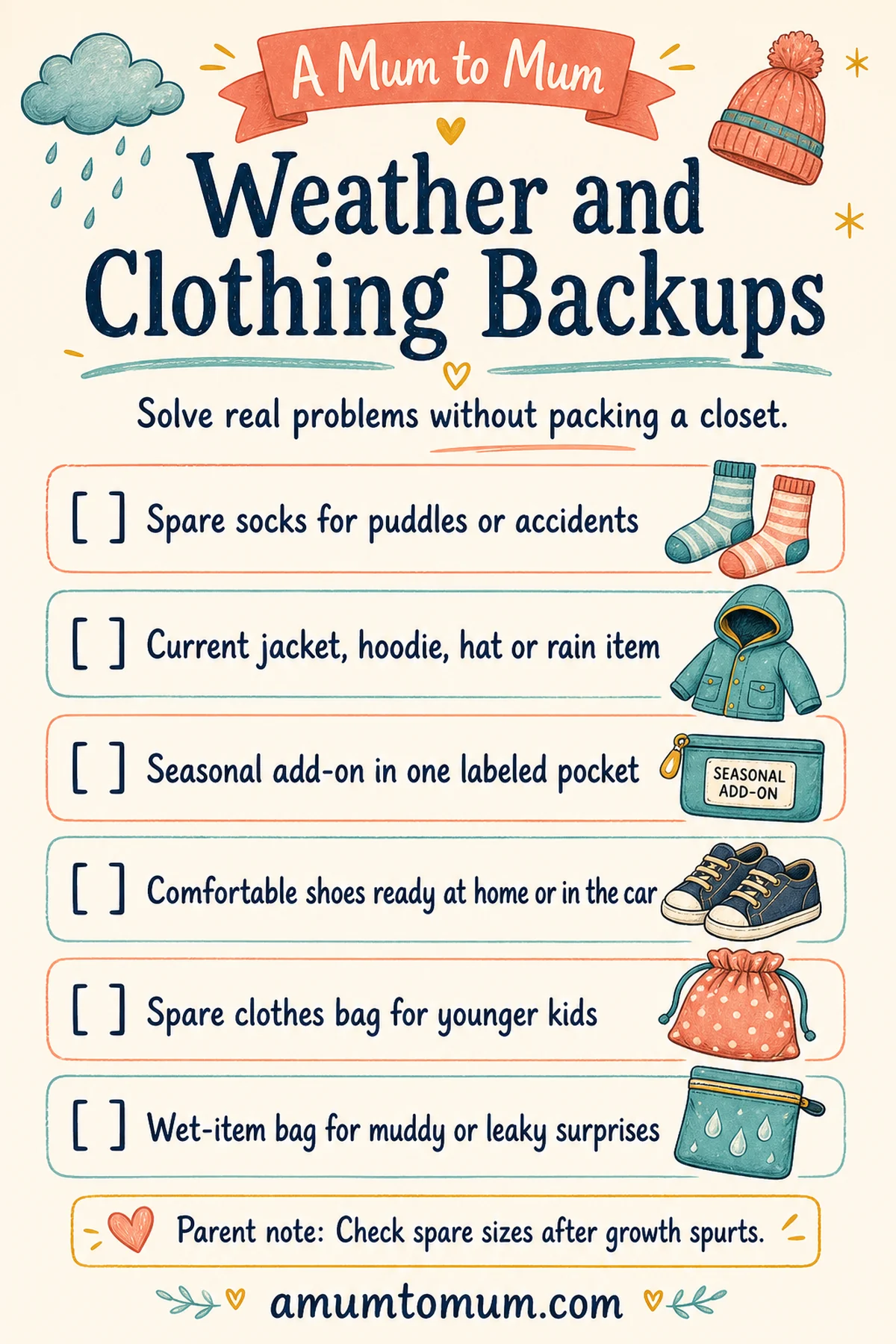
Weather backups should solve real school-day problems without turning the backpack into a closet.
- Spare socks: These are small, light and useful after puddles, bathroom accidents or uncomfortable shoes.
- Weather layer: Keep the current jacket, hoodie, hat or rain item near the door so it actually leaves the house.
- Seasonal add-ons: In colder months, keep gloves or a hat in one labeled pocket. In warm months, check school rules for sunscreen or sun hats.
- Comfortable shoes: New shoes can bother kids after a full school day. Keep a broken-in pair ready at home or in the car.
- Spare clothes bag for younger kids: If your child needs clothes at school, send a labeled zip bag and check sizes after growth spurts.
- Wet-item bag: A reused grocery bag or zip bag can hold muddy socks, wet clothes or a leaky bottle until pickup.
For tight budgets, start with what you already own: one spare pair of socks, a reused bag and last season’s comfortable shoes can solve a lot.
Organization Tools That Help Kids Manage the Bag
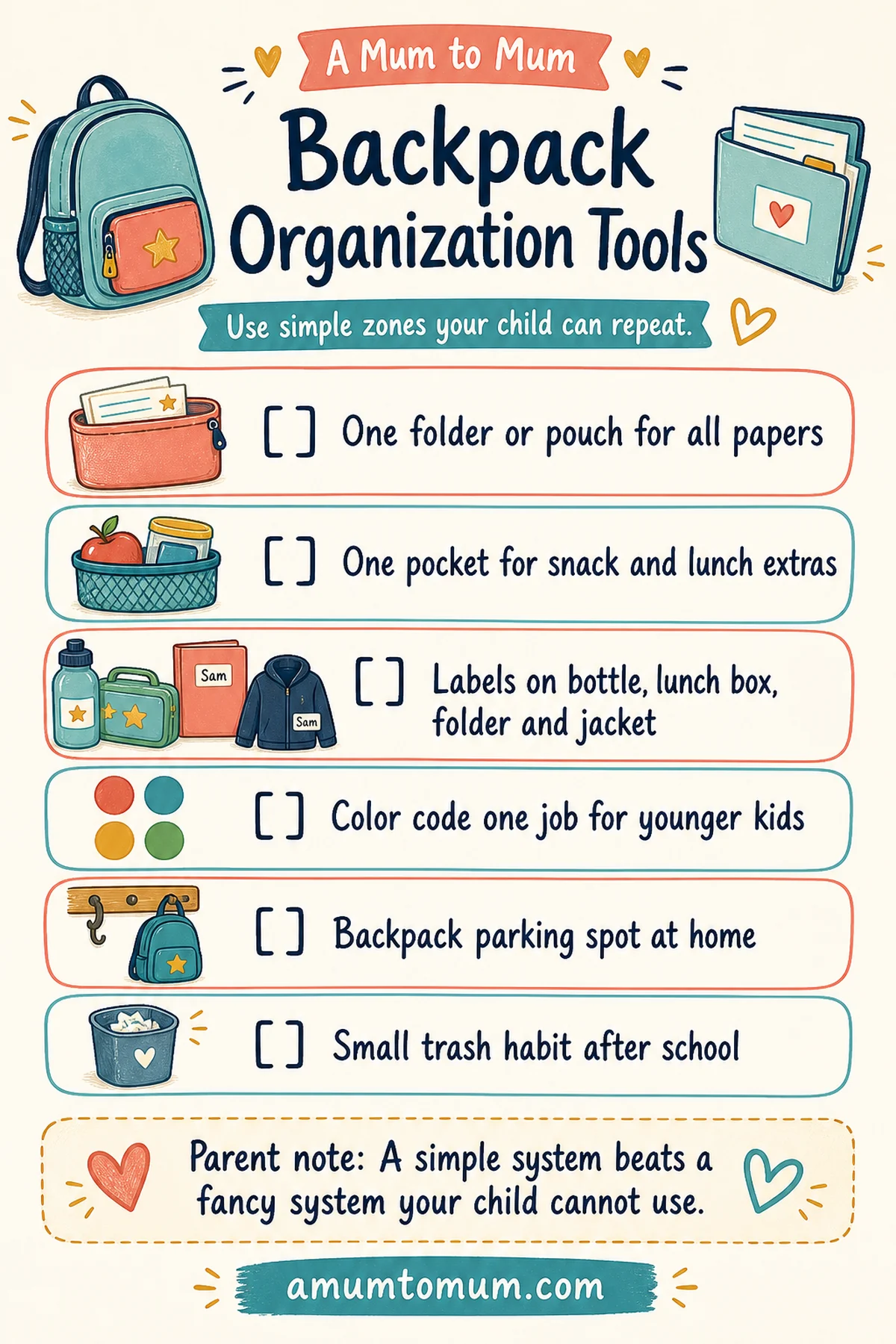
Good school backpack organization should make the bag easier for your child, not harder. Skip complicated systems and use simple zones.
- One pocket for papers: Papers should not float around the backpack. Use the same folder or pouch every day.
- One pocket for food: Snacks and lunch items need a fixed home so crumbs and notes do not mix.
- Labels on daily items: Label the backpack, bottle, lunch box, folder, headphones and jacket. The free printable school name tags and labels are handy for fast back-to-school labeling.
- Color coding for young kids: A red folder for home papers or a blue pouch for library day is easier than a long explanation.
- A backpack parking spot at home: Pick one hook, bin, chair or floor basket. The exact spot matters less than using it every day.
- A small trash habit: Teach your child to throw away wrappers and broken bits before the backpack comes inside or right after homework.
If your child needs more structure, the next step is a simple backpack organization system kids can maintain.
What Not to Put in a Child’s Backpack
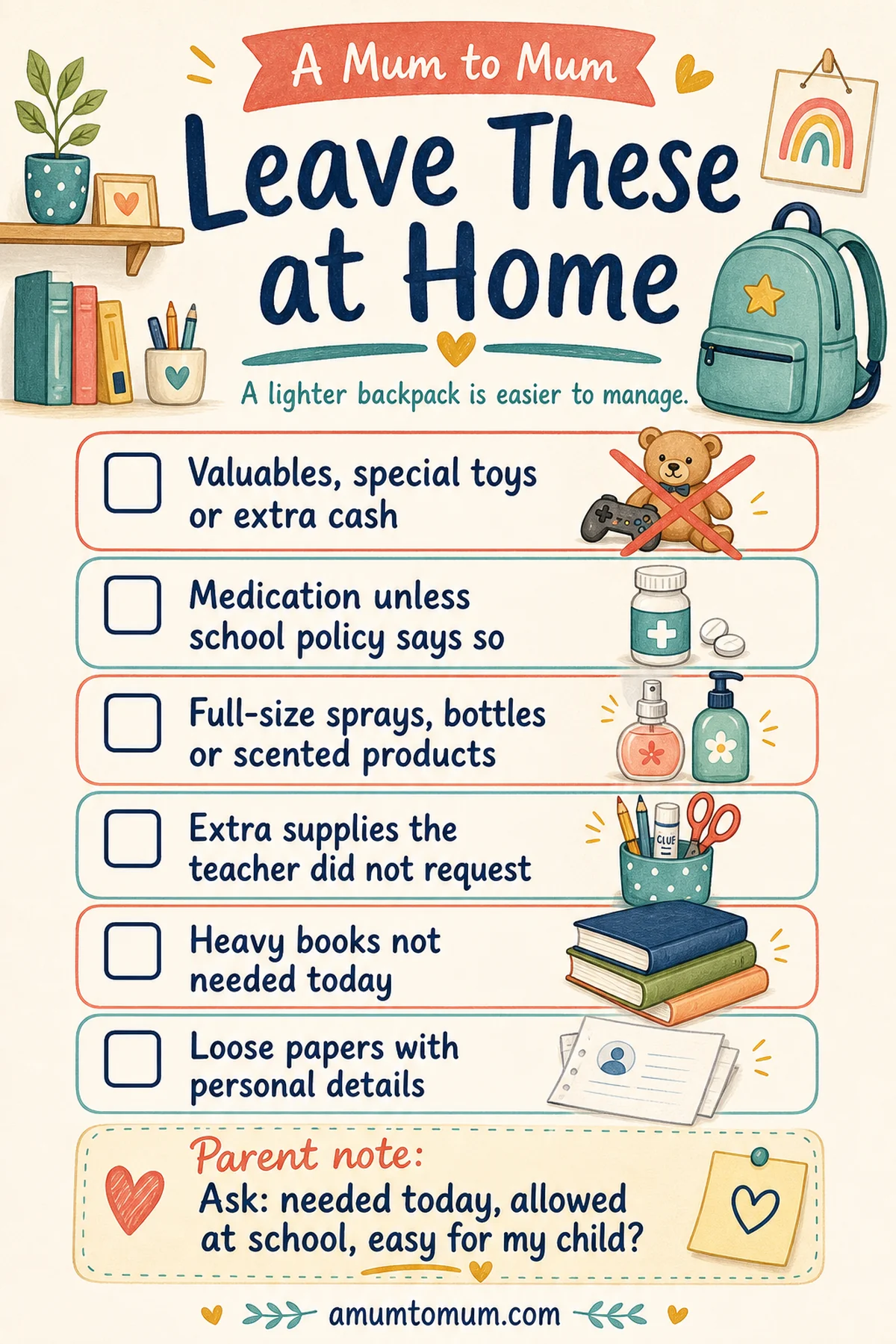
A lighter backpack is easier to carry, easier to search and less likely to become a mess by Friday. These items usually belong at home, in the car or with the school office instead.
- Valuables: Expensive toys, special jewelry, extra cash and electronics can get lost or cause classroom problems.
- Medication without school instructions: Follow your school’s medication policy. Many schools require medication to stay with the nurse or office.
- Full-size hygiene products: Big bottles, sprays and scented products add weight and may break school rules.
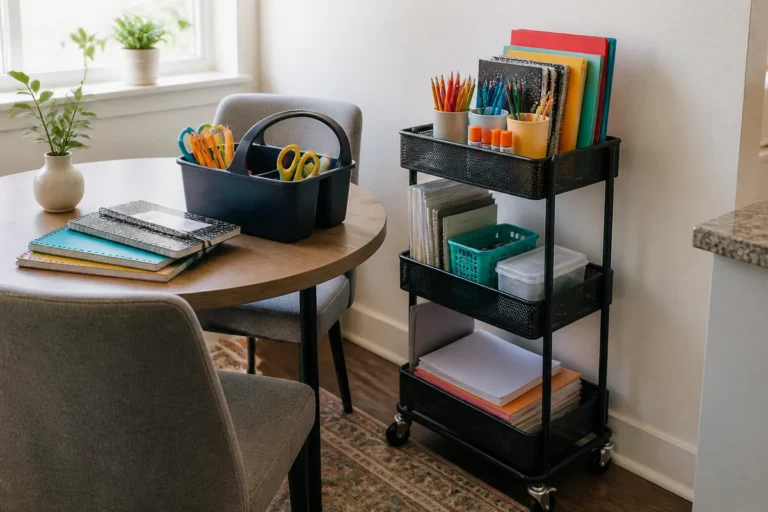
- Too many school supplies: Do not send every pencil, marker or glue stick unless the teacher asks. Keep restocks at home in one easy supply station.
- Heavy books that are not needed: Check the schedule and remove books that do not need to travel that day.
- Loose papers with personal details: Put forms in the folder and send them back quickly instead of leaving them loose in the bag.
When in doubt, ask: does my child need this today, can they manage it alone and does the school allow it?
Weekly Backpack Clean-Out Routine
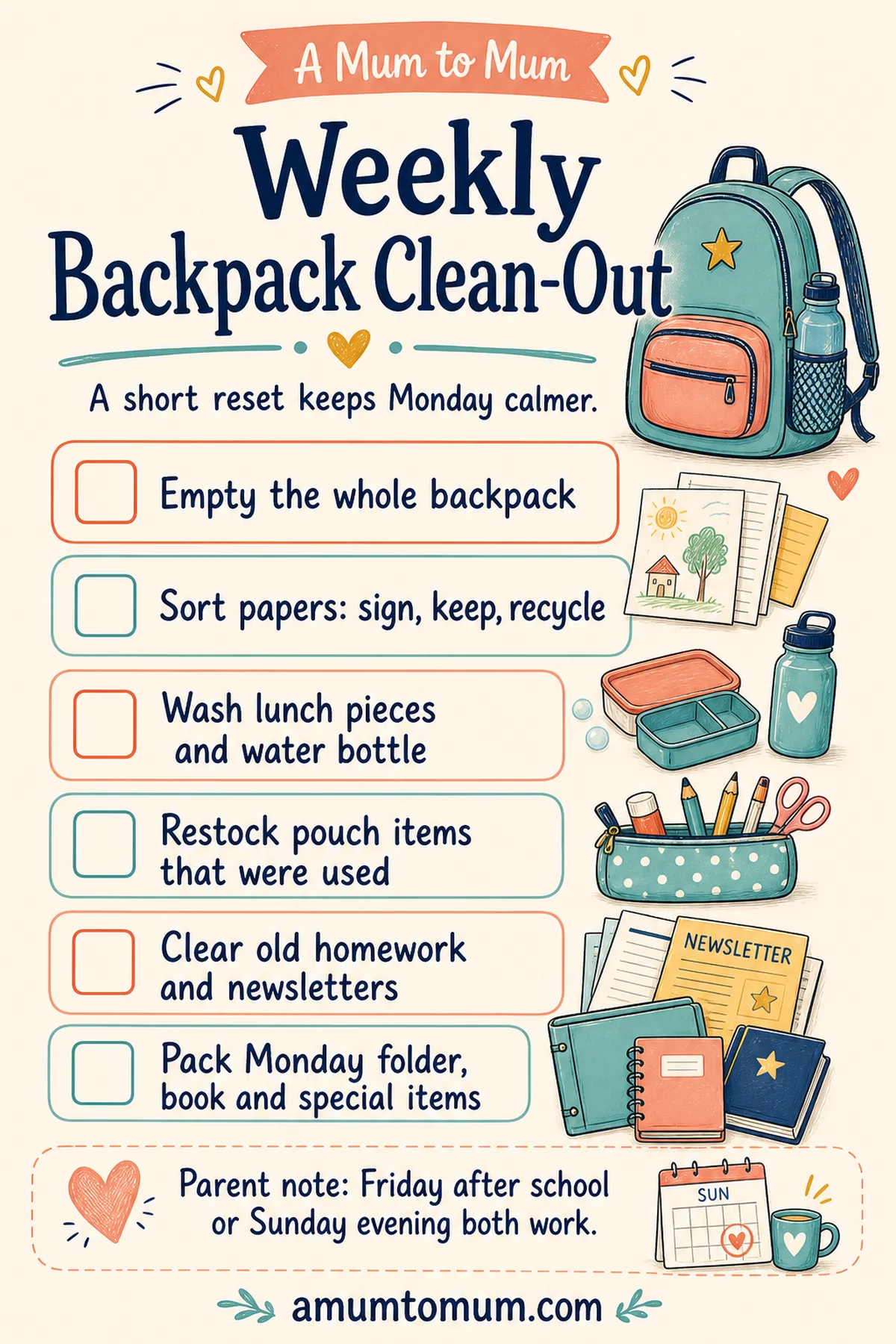
A backpack clean-out routine works best when it is short and predictable. Friday after school or Sunday evening are both good times.
- Empty the whole bag: Take out papers, lunch items, wrappers, wet clothes and mystery objects.
- Sort papers into three piles: Sign or pay, keep or display, recycle. Do not let everything land on the counter.
- Wash lunch pieces and bottle: Check for missing lids before Monday morning.
- Restock the small pouch: Add tissues, socks, wipes or labels only if they were used.
- Check the folder: Remove old homework, newsletters and permission slips that no longer need to travel.
- Pack for Monday: Put the folder, bottle, library book or special-day item back in the right zone.
This routine does not need to be pretty. It just needs to stop the backpack from turning into a week-old paper pile.
Printable School Backpack Essentials Checklist
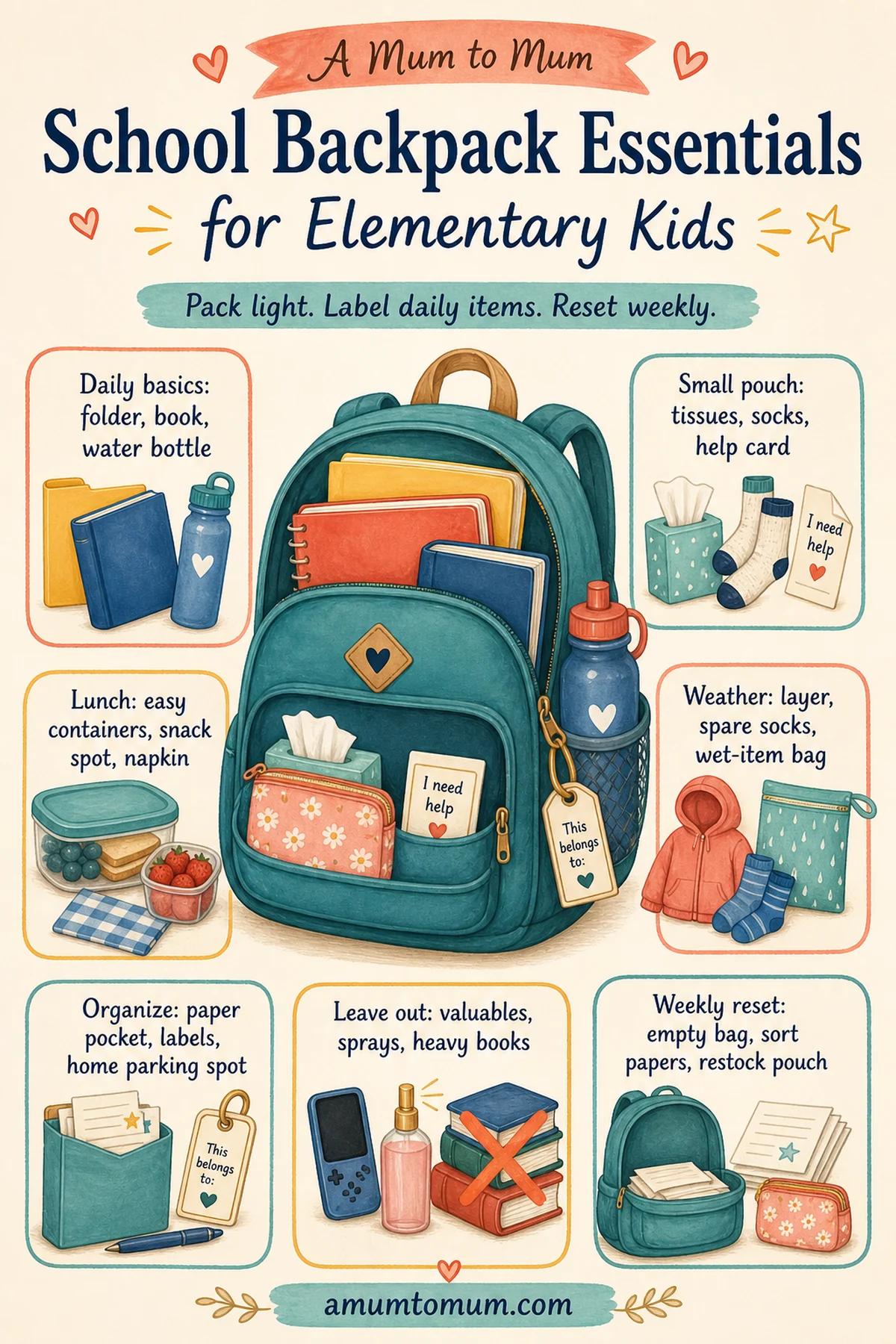
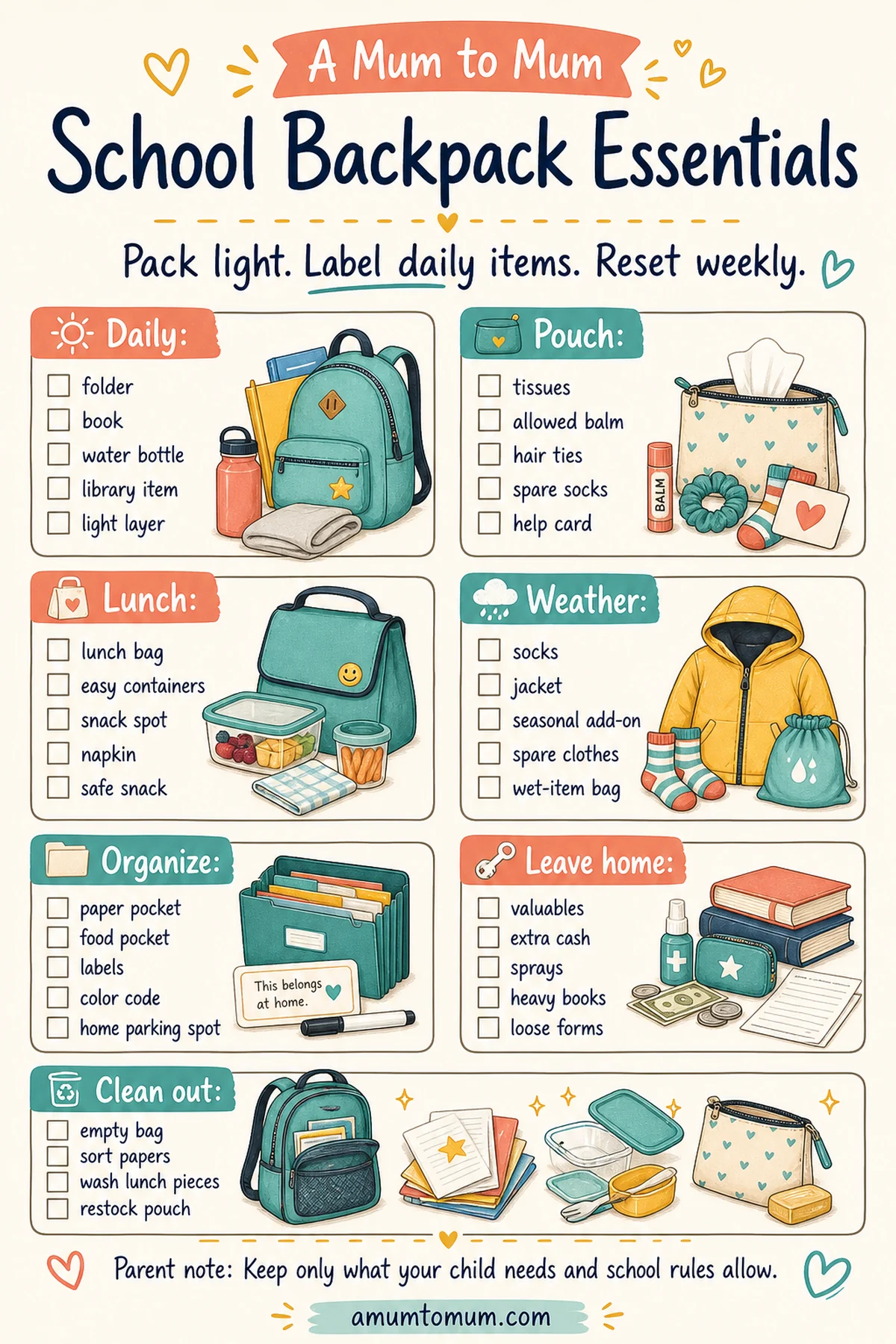
Use the master printable below as a quick fridge reference while you pack or reset your child’s school bag. It keeps the main zones in one place: daily items, pouch, lunch, weather, organization, what to leave out and weekly clean-out.
Final Tip
The best backpack packing list is the one your child can use without a morning search party. Start with the daily basics, add only the small backups your school allows and keep the bag light enough for your child to carry comfortably. Then use the weekly clean-out to catch the mess before Monday.