15+ School Supply Storage Ideas for Small Homes
You will love these school supply storage ideas for small homes! School supplies organization is harder when your home does not have a spare room, big desk, or empty closet. Pencils end up in drawers, paper lands on the kitchen table, glue sticks roll under beds, and art supplies get mixed into backpacks or craft bins.
The best small-home systems are simple, movable, and easy to put away when homework is finished. Use small containers for daily tools, vertical storage for paper, and a separate refill spot so every spare pencil does not end up in the everyday caddy.
If you are still sorting what should travel to school each day, start with what actually belongs in an elementary backpack and keep the extras at home.
| Storage System | Best For | Space Needed | Portable? | Child Can Reset? |
|---|---|---|---|---|
| Homework caddy | Daily pencils, glue, scissors and erasers | One cabinet shelf or closet spot | Yes | Usually yes |
| Rolling cart | Shared supplies for more than one child | A narrow corner or closet space | Yes | With a simple layout |
| Over-door organizer | Markers, flash cards, glue and light extras | Back of a door | No | Older kids can |
| Small drawer unit | Paper, notebooks and backup basics | Under or beside furniture | Some are | Best with labels |
| Wall pockets | Homework, notices and loose paper | A narrow wall | No | Yes, if child-height |
| Individual homework kits | Siblings sharing one table | One bin per child | Yes | Yes |
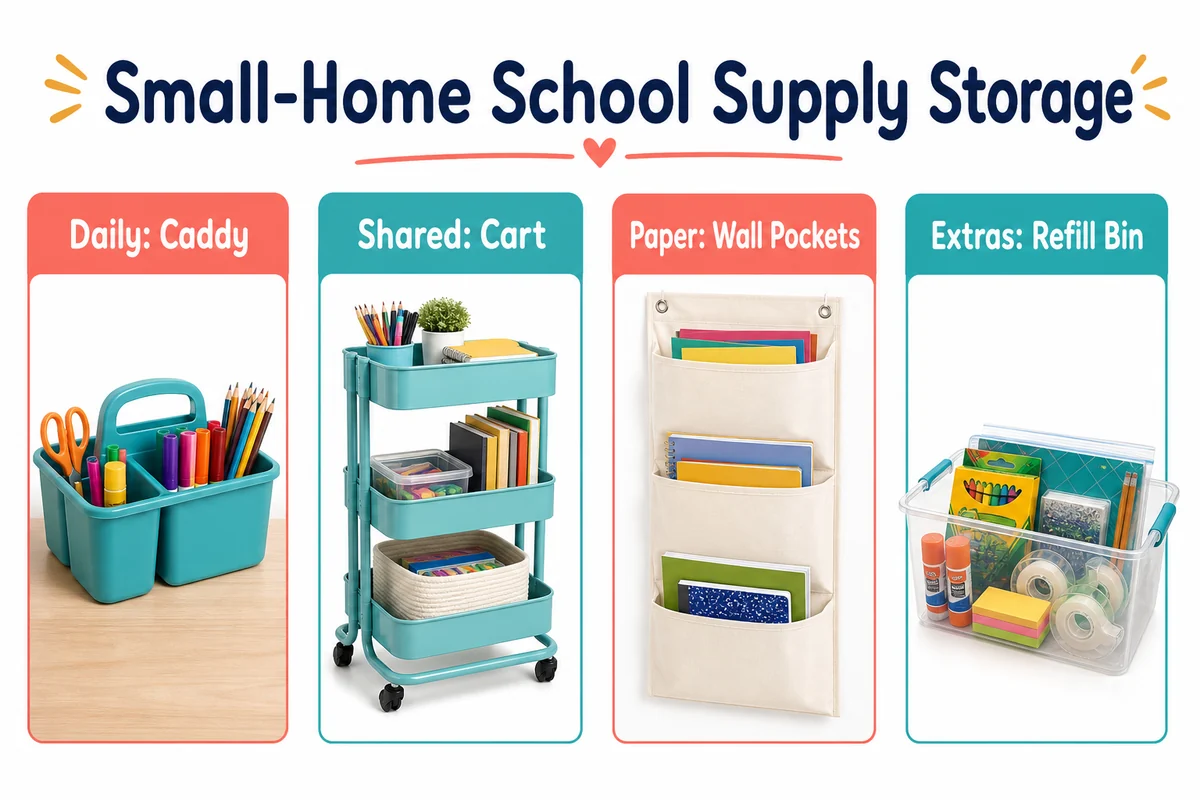
Table of Contents
Portable Homework Caddies That Can Move From Room to Room
1. Divided Homework Caddy
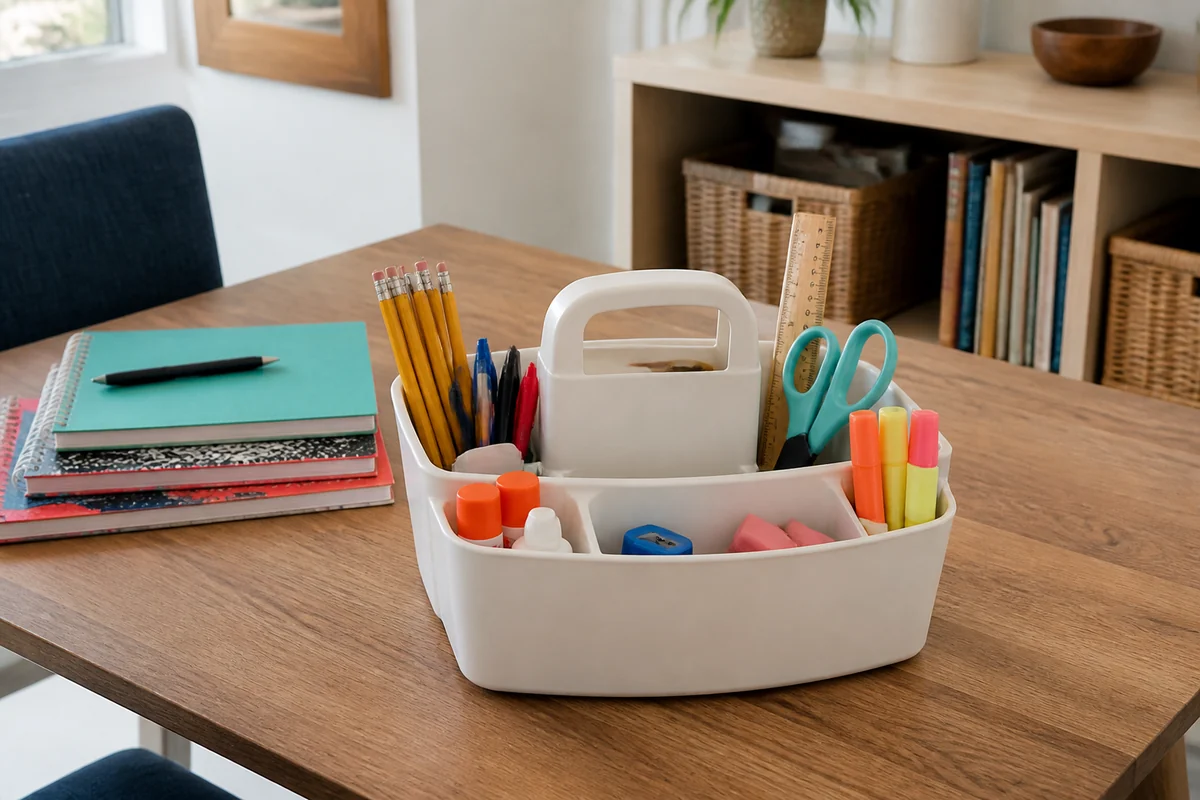
A handled homework caddy is one of the easiest options for families who use the kitchen or dining table for homework because the whole kit can come out and disappear again. Use the divided sections for pencils, pens, erasers, glue sticks, scissors, a ruler, highlighters, a sharpener and sticky notes.
- Best use: Everyday homework supplies.
- Approximate capacity: About 15 to 30 small supplies, depending on the caddy size.
- Who can maintain it: Elementary-age children can usually return supplies to labeled sections.
- Where it can live: A kitchen cabinet, pantry shelf, closet floor, bookcase or sideboard.
2. Individual Homework Kit for Each Child
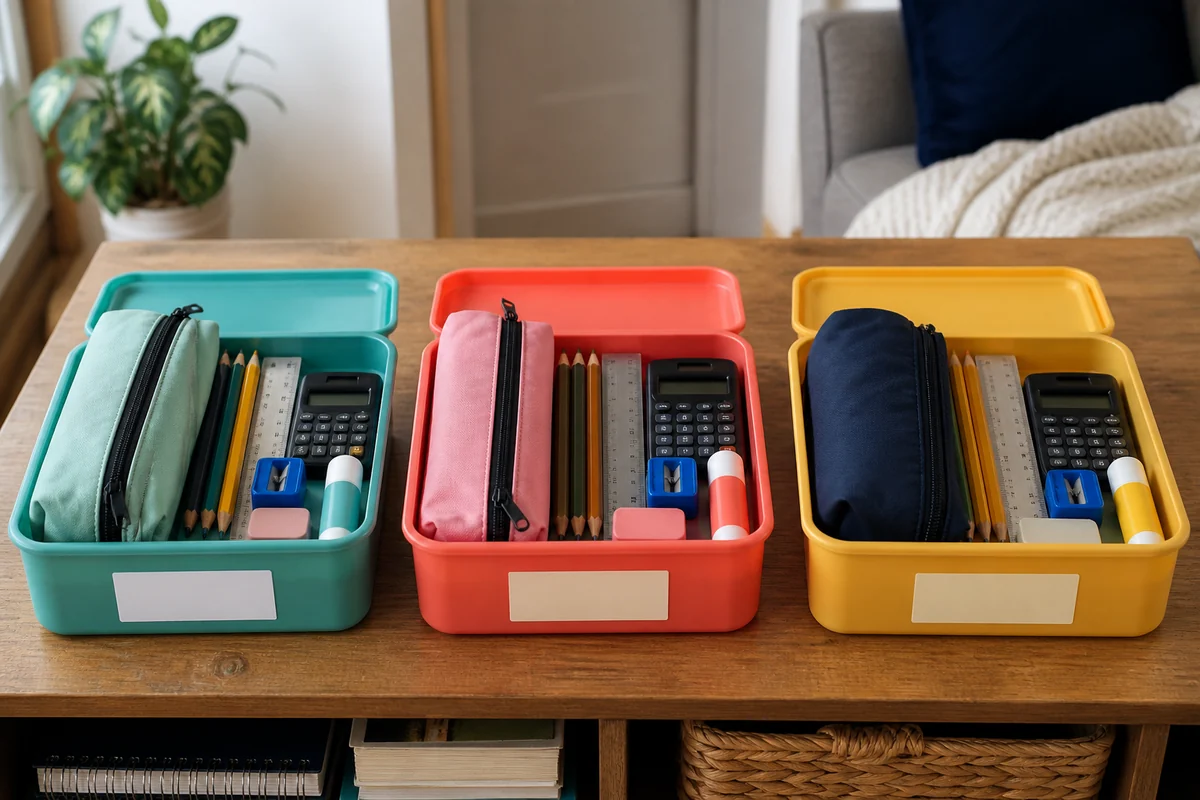
An individual homework kit works well when siblings share one table but need different supplies. Use a pencil box, small lidded bin, or handled container for each child, then add pencils, an eraser, sharpener, glue stick, ruler, and a calculator if it fits their grade. This is also the neatest place for a homework caddy for kids who get distracted by a big shared supply bin.
If you are labeling school supplies with each child’s name, label the outside of the kit too.
- Best use: Siblings, shared tables, and children who need their own supplies.
- Approximate capacity: One small set of daily tools plus a few grade-specific extras.
- Who can maintain it: Most children can reset their own kit if the contents stay small.
- Where it can live: A bedroom shelf, homework basket, dining room cabinet or backpack area.
3. Magazine File Homework Kit
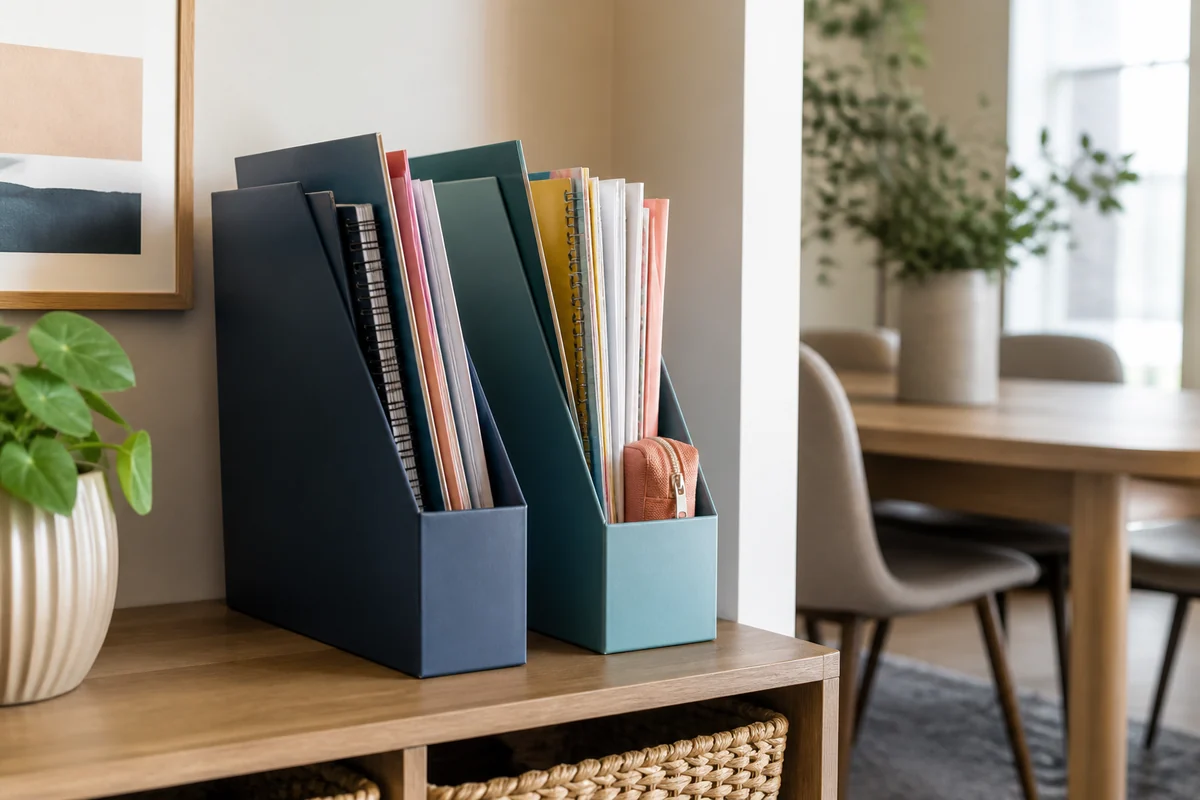
A magazine file homework kit stores schoolwork upright instead of stacked in a pile. It is useful when the homework station for kids is really a corner of the dining room.
- Best use: Keeping paper, notebooks and a pencil pouch together.
- Approximate capacity: Several slim notebooks or folders plus one pouch.
- Who can maintain it: Older elementary children can usually file papers if each slot or folder has a clear job.
- Where it can live: A bookshelf, command center, kitchen shelf, bedroom desk or console table.
Use one file per child if papers are getting mixed up. For one child, use separate folders inside the file for “to do,” “return to school,” and “keep at home.”
Use Vertical Storage When Floor and Counter Space Is Limited
4. Over-the-Door Pocket Organizer
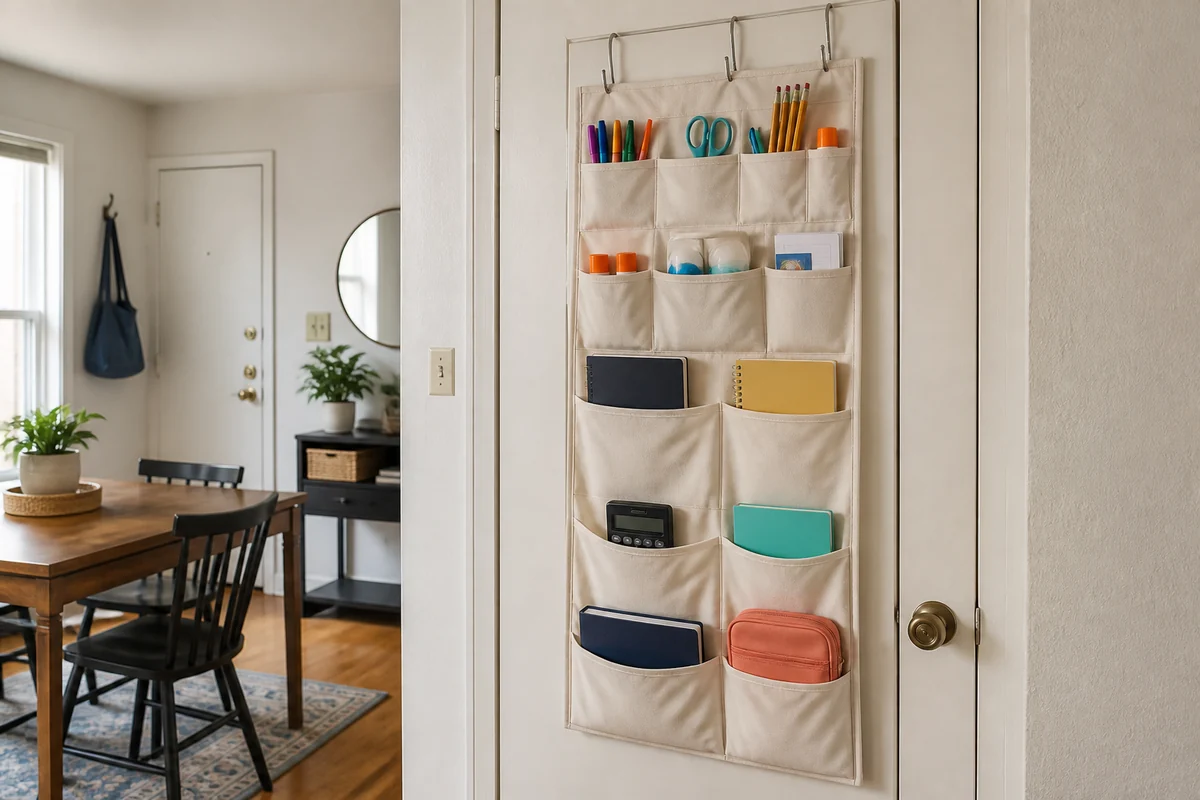
An over-the-door pocket organizer uses a door you already have instead of taking up floor space. It is useful for markers, glue, calculators, flash cards, small notebooks and light art supplies.
For renters, look for over-door hooks or removable hanging options that do not require drilling. Keep heavier items low.
- Best use: Light supplies that need to be visible.
- Approximate capacity: Several small categories, one per pocket or row.
- Who can maintain it: Older children can reset it; younger children may need picture labels.
- Where it can live: A closet door, pantry door, bedroom door or utility-room door.
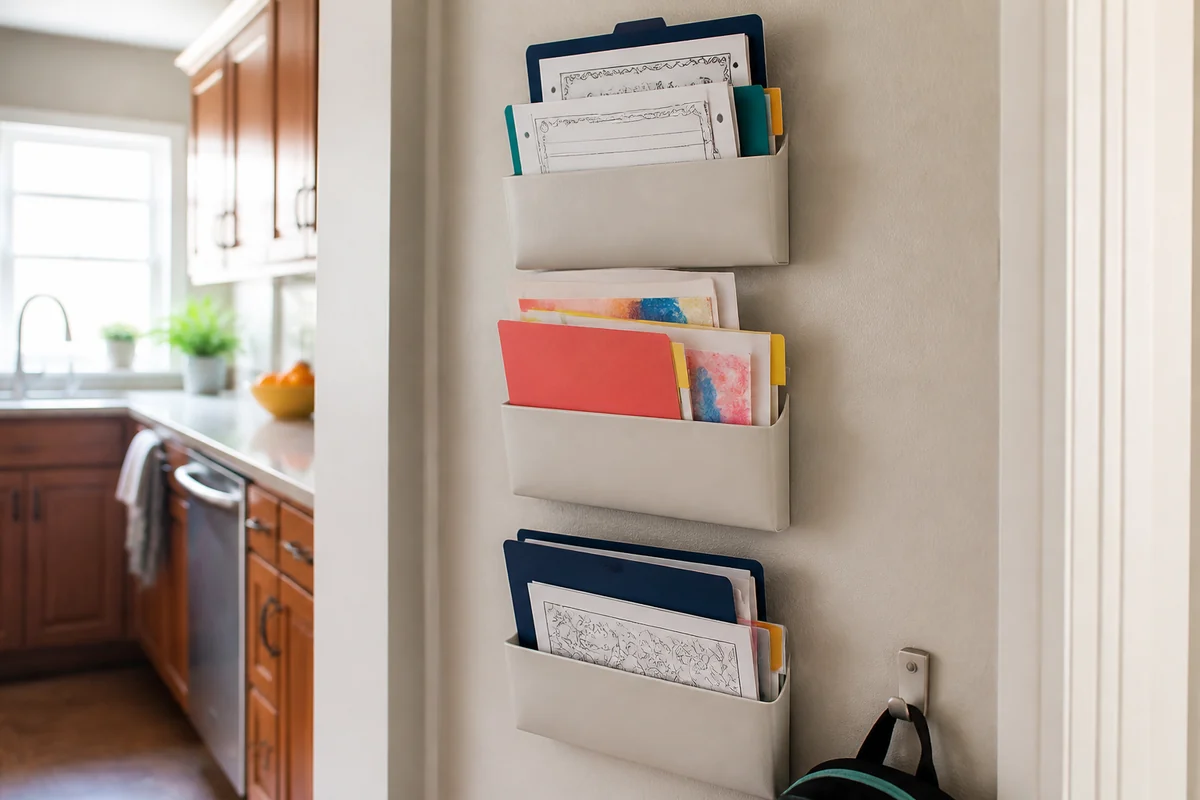
5. Wall-Mounted File Pockets
Wall file pockets give loose papers a landing place before they cover the counter, which makes school paper organization at home much easier.
Use one labeled pocket for each child, or keep three family pockets: “homework to finish,” “return to school,” and “parent papers.”
- Best use: Homework sheets, notices, coloring paper and forms.
- Approximate capacity: A small weekly stack of papers per pocket.
- Who can maintain it: Children can manage it when the categories are simple.
- Where it can live: A narrow kitchen wall, hallway, side of a cabinet, command center or near the entry.
If backpacks and folders also pile up after school, pair the paper pockets with a small drop zone for backpacks and school gear.
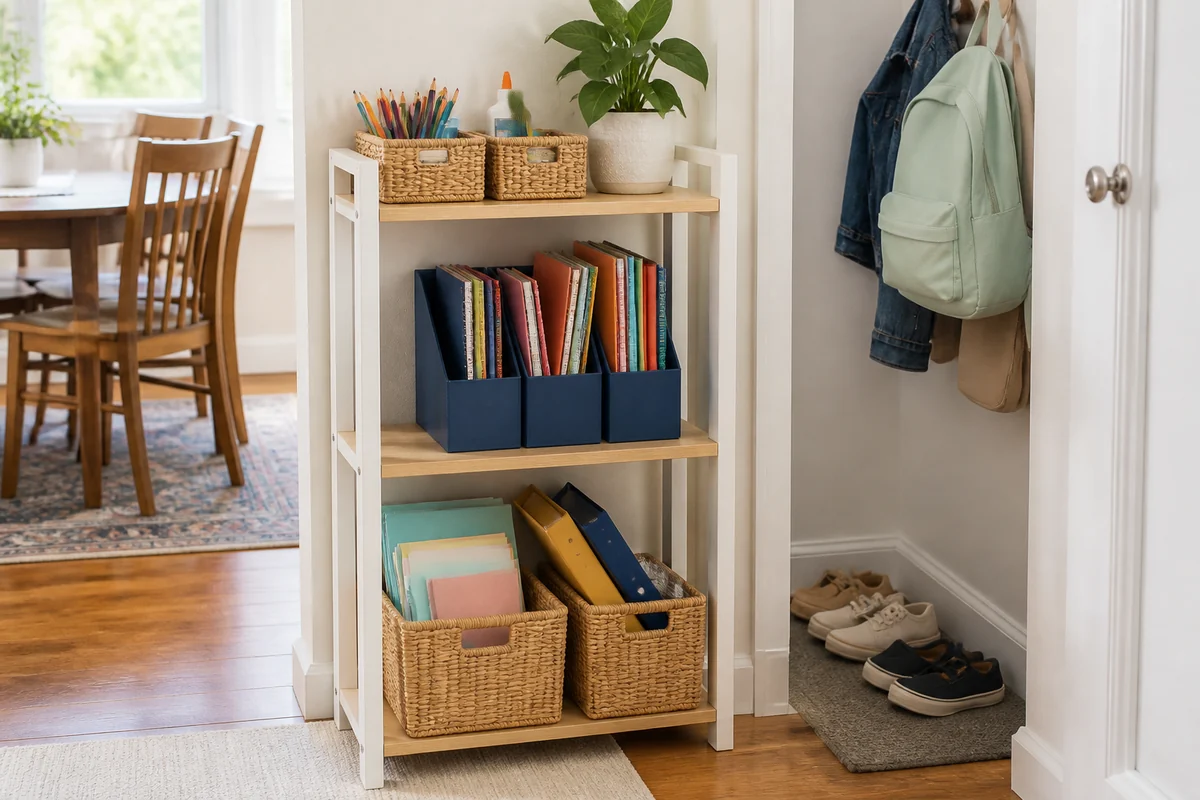
6. Narrow Shelf With Baskets or Magazine Holders
A narrow shelf can turn a small wall into storage without pretending you have a full homework room. Use baskets for loose supplies and magazine holders for notebooks, folders and paper. If you rent, use freestanding shelving or a bookcase instead of permanent built-ins.
- Best use: Small-space storage that keeps surfaces clear.
- Approximate capacity: A few baskets, several folders and a small paper supply.
- Who can maintain it: Parents set the categories; children can return items to labeled baskets.
- Where it can live: Above a desk, inside a closet, on a bookcase, over a console or beside a family cabinet.
Small Drawer Systems for Pencils, Paper and Everyday Supplies
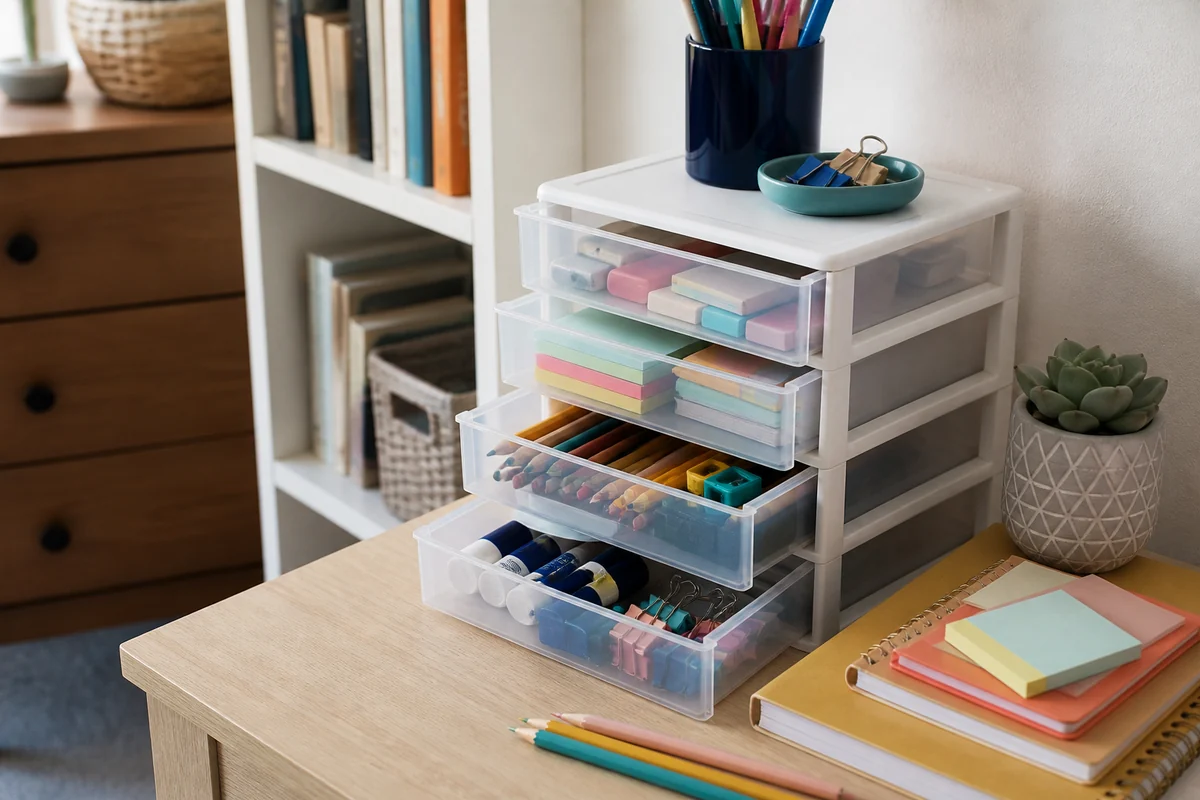
7. Desktop Drawer Organizer
A desktop drawer organizer supports school desk organization when your child has a small desk, bedside table, or family work surface but not much storage.
Use the drawers for narrow categories: pencils, erasers, sticky notes, index cards, glue, clips or sharpeners. Put the most-used drawer at the easiest height.
- Best use: Tiny supplies that disappear in open bins.
- Approximate capacity: Several small categories, depending on drawer depth.
- Who can maintain it: Children can reset it if each drawer holds one clear category.
- Where it can live: On a desk, bookshelf, dresser, console or kitchen shelf.
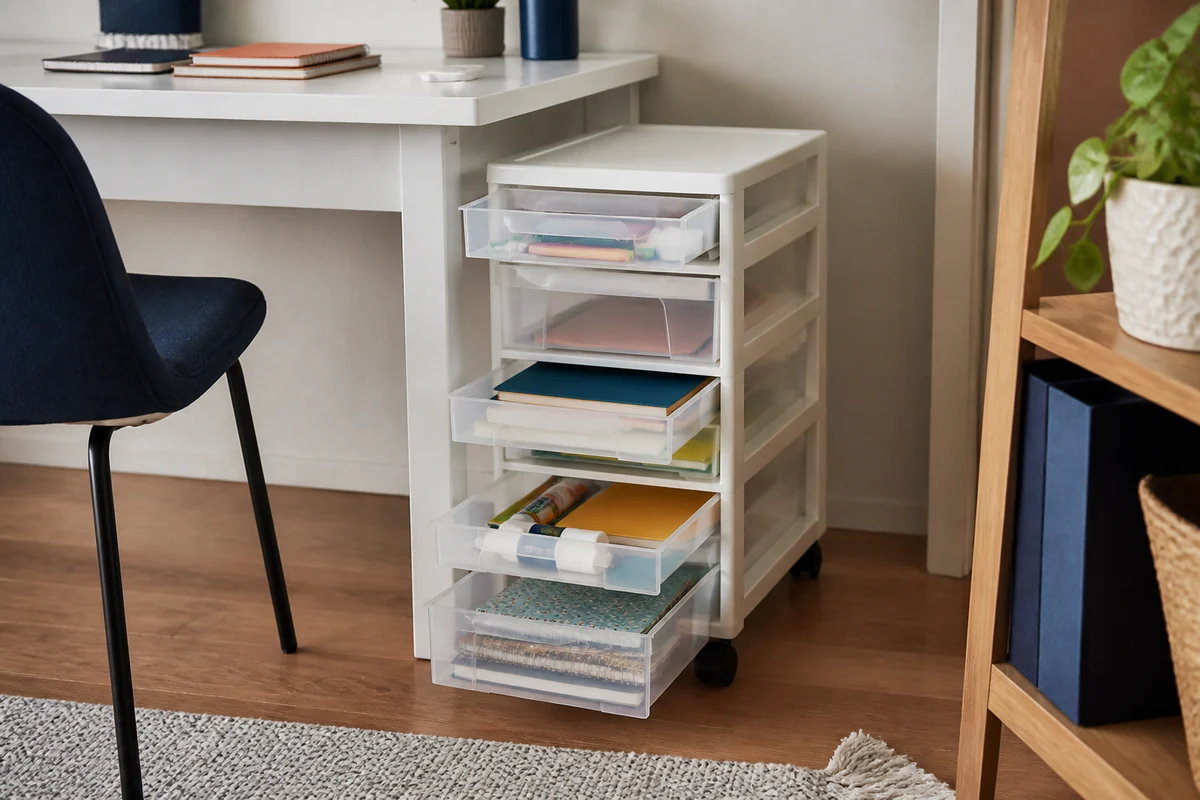
8. Slim Rolling Drawer Unit
A slim rolling drawer unit holds more than a caddy while still fitting under or beside furniture. It is useful when you need school supplies organization at home for more than daily pencils.
Try five simple drawers: writing tools, paper, notebooks, art supplies and refills. Put heavier paper low so the unit is steadier.
- Best use: Families who need more storage than a caddy but still need it movable.
- Approximate capacity: A typical slim unit can usually hold daily tools, several notebooks and light refills.
- Who can maintain it: Older children can manage labeled drawers; parents may need to check refills.
- Where it can live: Under a desk, beside a table, in a closet, next to a bookcase or behind a dining-room chair.
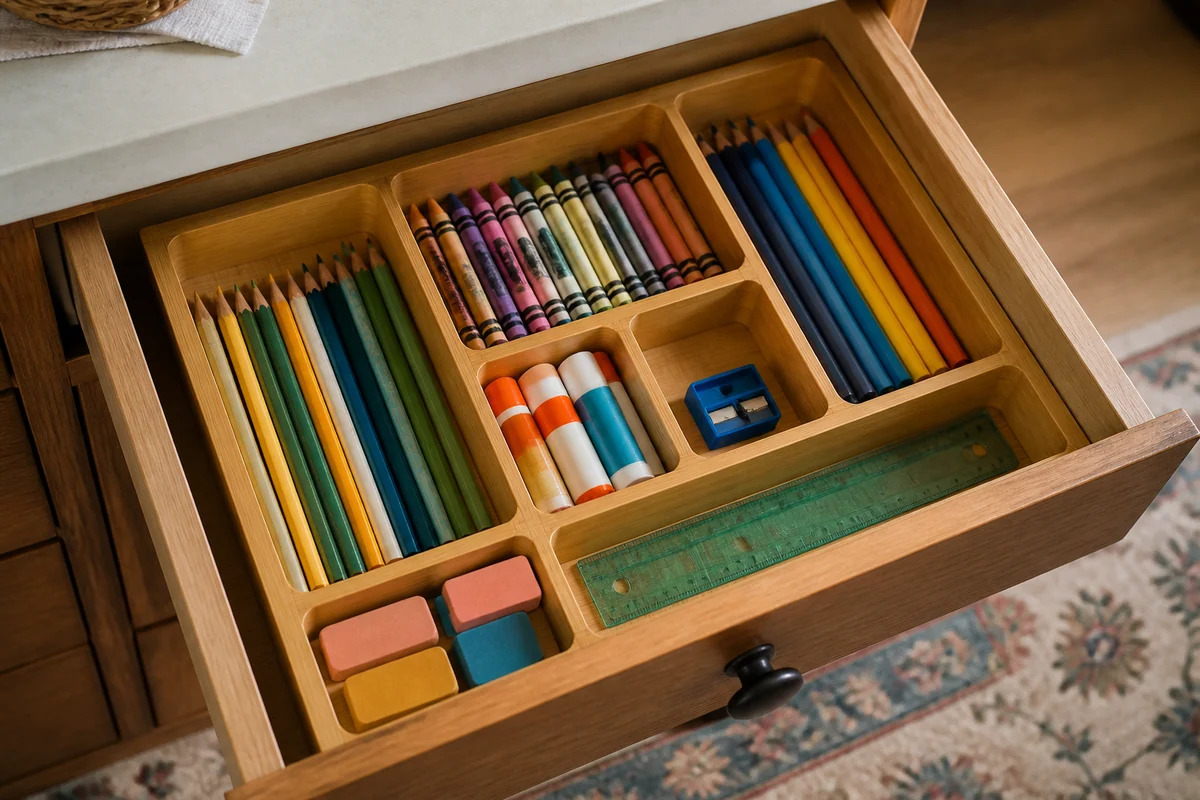
9. Repurposed Small Drawer Organizer
A repurposed drawer organizer is the easiest diy school supplies organization idea because you may already own the container. Try an old utensil tray, makeup organizer, craft drawer insert, tackle box insert or divided kitchen tray.
Use it inside a drawer for pencils, crayons, glue sticks, rulers and erasers. The goal is to stop little supplies from sliding around every time someone opens the drawer.
- Best use: Organizing a drawer you already have.
- Approximate capacity: One shallow drawer of writing and homework tools.
- Who can maintain it: Children can reset it when each section has one obvious job.
- Where it can live: Kitchen drawer, desk drawer, bedroom drawer, sideboard or console.
Create One Shared Family Supply Station
10. Rolling School Supply Cart
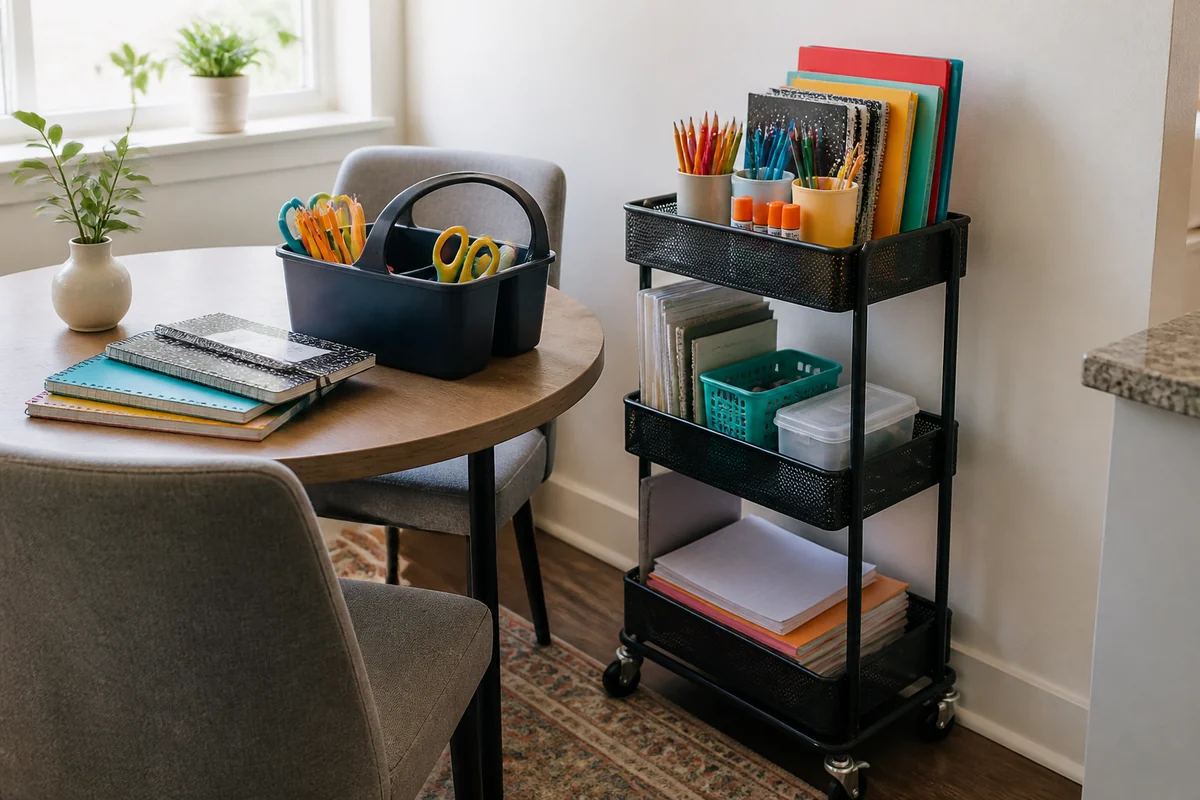
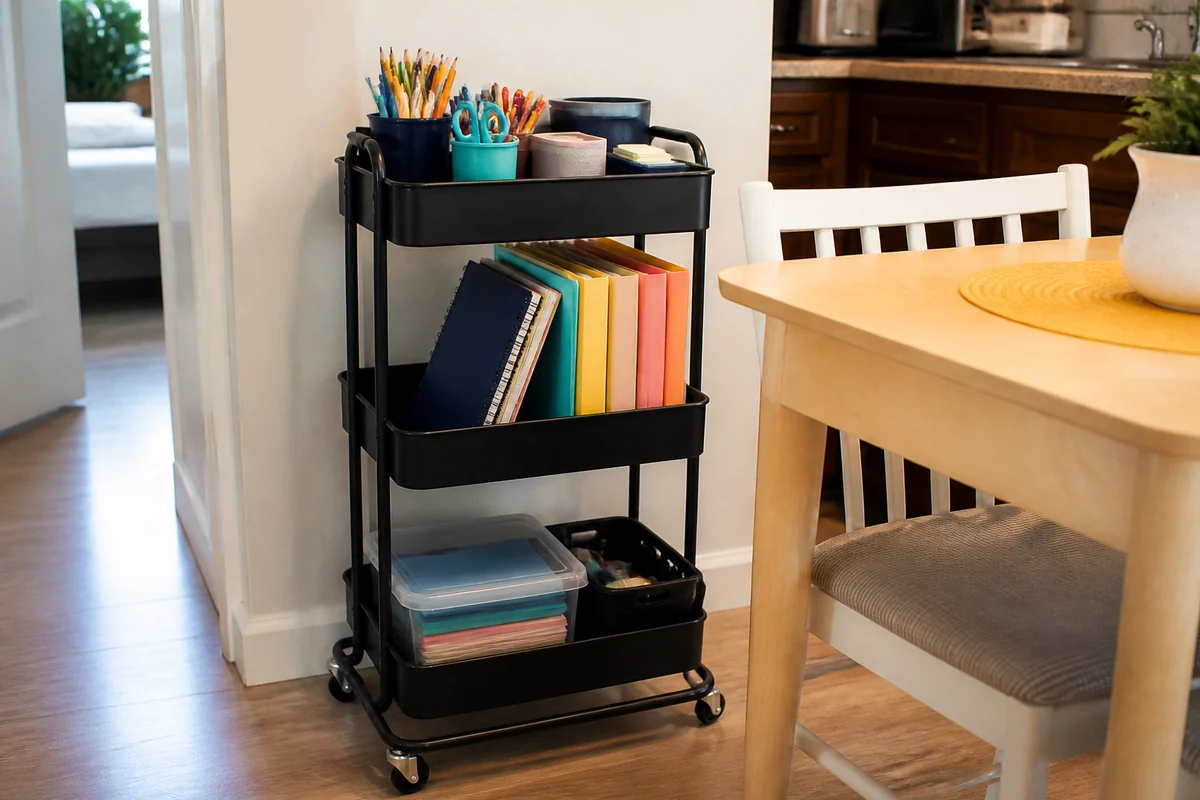
A rolling school supply cart is one of the strongest small-home options because it can move beside the kitchen table during homework and roll away afterward. It is also a natural fit for rolling cart organization.
Try this layout:
- Top: Everyday homework supplies.
- Middle: Paper, folders and notebooks.
- Bottom: Refills and less-used supplies.
A typical three-tier cart can usually hold supplies for roughly two or three children, depending on the cart size. Keep the heaviest supplies on the lower tiers.
- Best use: Families without a permanent homework desk.
- Approximate capacity: Daily tools, paper and light refills for more than one child.
- Who can maintain it: Children return daily tools; a parent manages refills.
- Where it can live: Beside the table, in a closet, near the pantry, in a bedroom corner or next to a console.
Keep the cart focused on student supply organization so it stays useful during busy school nights.
If you are filling the cart before school starts, use a back-to-school shopping plan first so you do not buy duplicates just because the supplies are scattered.
11. Shared Basket-and-Bin Cabinet
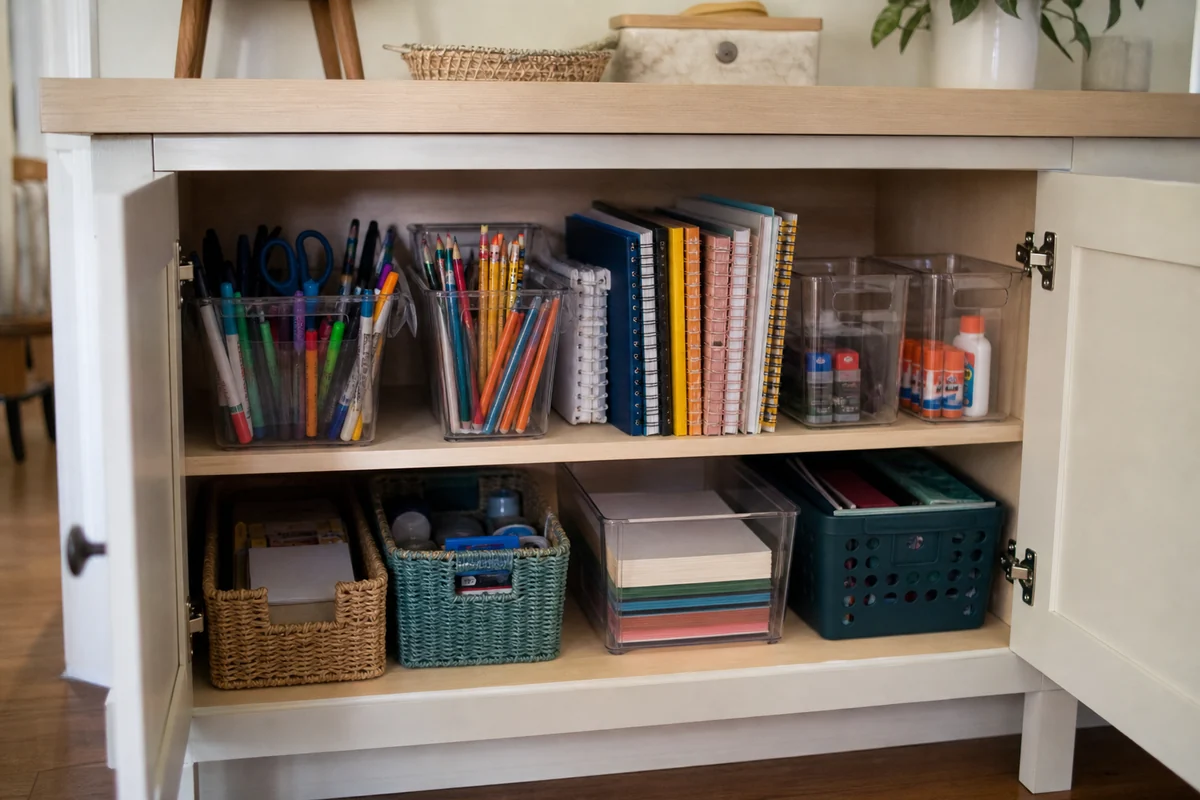
A shared basket-and-bin cabinet works when you already have a cupboard, pantry shelf, console, bookcase or sideboard that can give one section to school supplies.
Use separate bins for writing supplies, notebooks, paper, art materials and refills. Clear bins show what is running low; opaque bins look calmer in open living spaces.
- Best use: Families who want school supplies hidden but easy to reach.
- Approximate capacity: Several bins of daily supplies and extras, depending on the shelf.
- Who can maintain it: Parents set the system; children can return items to labeled bins.
- Where it can live: Kitchen cabinet, pantry, bookcase, closet, console or dining-room sideboard.
Keep Kids’ Art Supplies From Taking Over the House
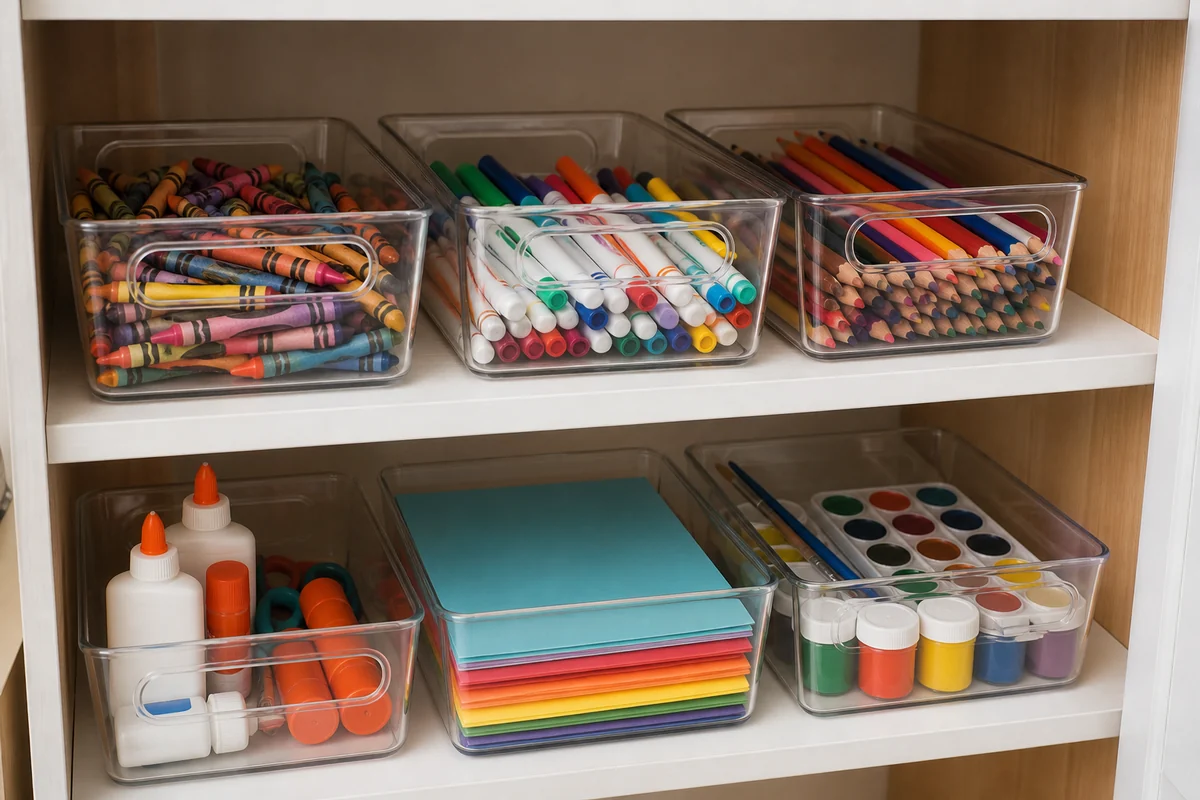
12. Clear Art Supply Bins
Clear bins are useful for art supplies organization because you can see what is inside without opening every container. Separate crayons, markers, colored pencils, paint supplies, glue and paper.
Use small or medium bins, not huge tubs. Large containers hide dried markers and duplicate glue sticks at the bottom.
- Best use: Keeping art supplies separate from homework tools.
- Approximate capacity: One medium category per bin.
- Who can maintain it: Children can help sort; parents may need to check messy materials.
- Where it can live: Closet shelf, cabinet, bookcase, pantry shelf or art corner.
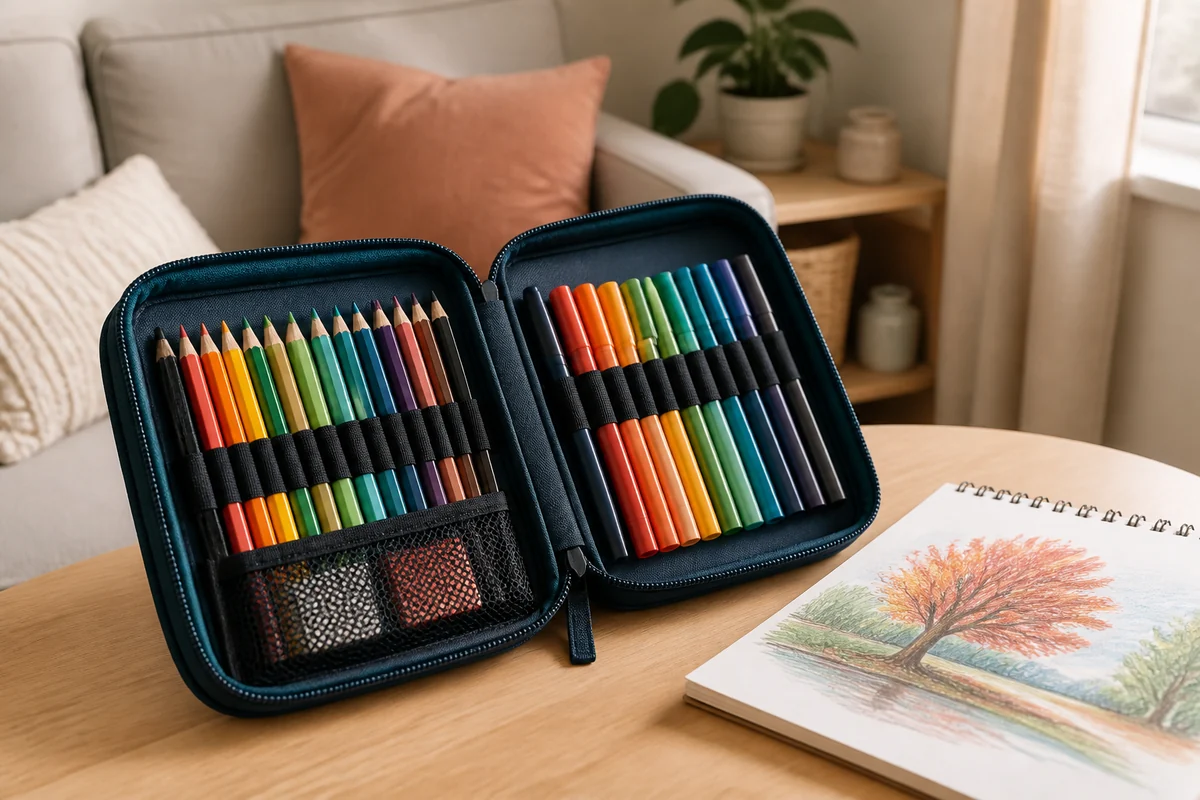
13. Colored Pencil or Marker Case
A colored pencil or marker case is better than a big communal bin when your child likes drawing in different rooms. It supports colored pencil organization by keeping sets together and easy to carry.
Use a zip case, roll-up case, pencil box or divided pouch. It is a good pencil box organization option for children who like choosing colors without dumping every pencil onto the table.
- Best use: Portable drawing supplies and tidy color sets.
- Approximate capacity: One small marker set or one colored-pencil set.
- Who can maintain it: Most children can zip or close it after use.
- Where it can live: Art bin, homework caddy, backpack area, bedroom shelf or living-room basket.
14. Art Supply Caddy for the Kitchen Table
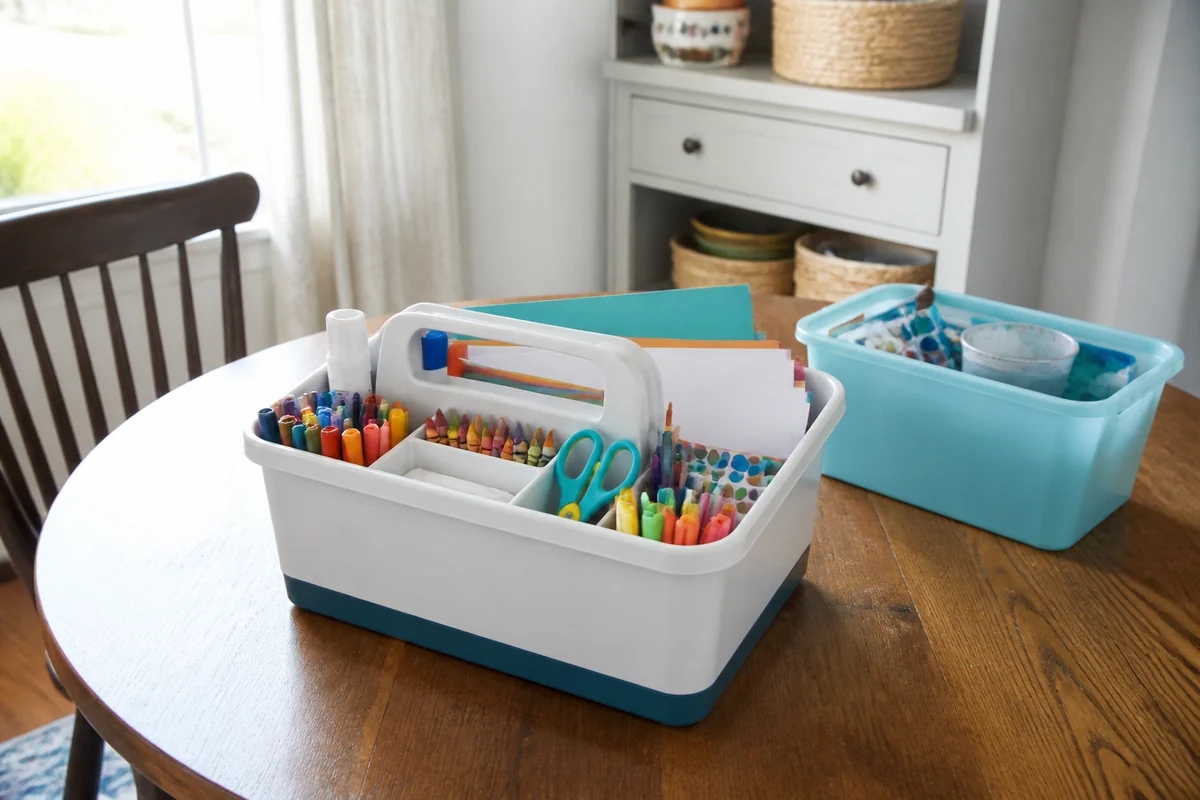
An art supply caddy keeps messy or creative materials separate from everyday homework supplies. This matters in small homes because the same kitchen table may handle spelling practice, dinner, craft time and paperwork.
Use it for markers, crayons, glue, child-safe scissors, stickers and a small stack of paper. Keep messier supplies in a separate wipe-clean bin.
For tired afternoons, keep this separate from a small screen-free reset basket so art supplies do not turn into another pile to sort.
- Best use: Kids art supplies storage for table projects.
- Approximate capacity: A small working set of art supplies, not the whole backstock.
- Who can maintain it: Children can return basic supplies; parents decide what messy items belong.
- Where it can live: Kitchen cabinet, art shelf, sideboard, closet or pantry.
Keep Backup Supplies Separate From Everyday Supplies
15. Backstock Supply Bin
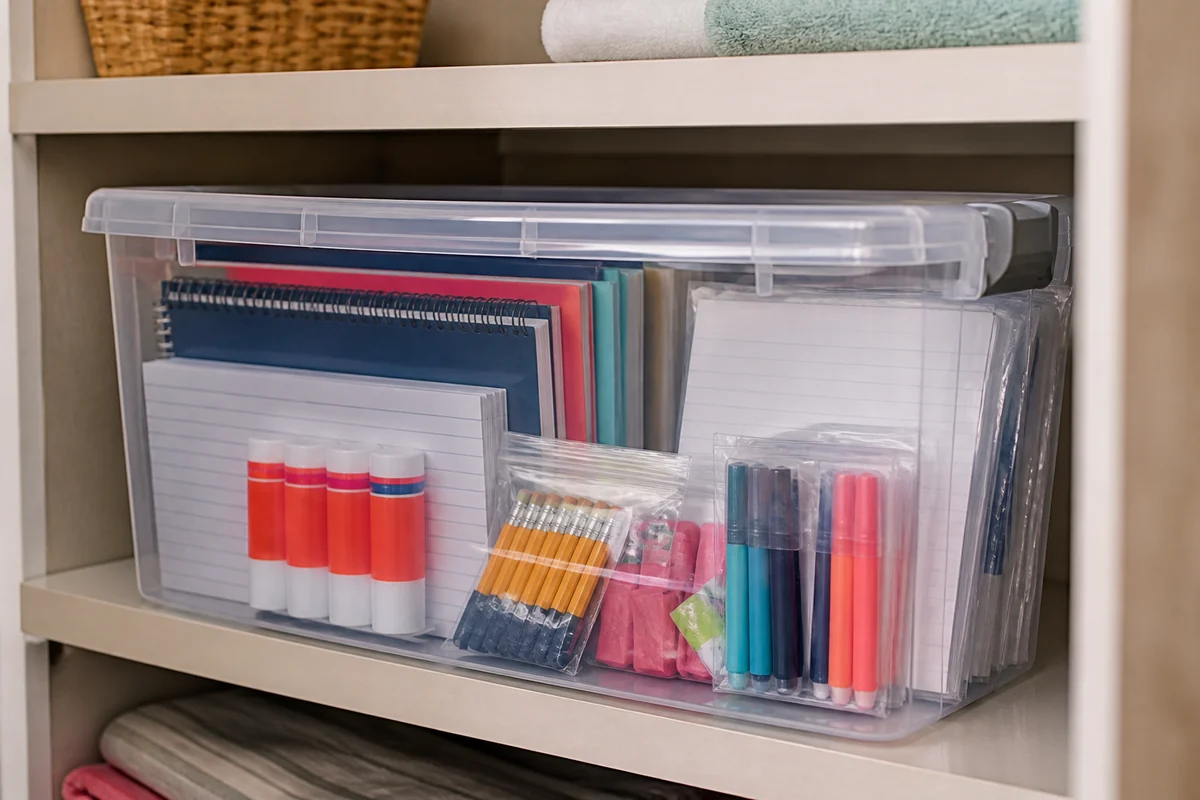
A backstock supply bin holds unopened extras away from the daily station: pencil packs, glue sticks, notebooks, loose-leaf paper, erasers and marker refills. Putting every spare pencil into the everyday caddy makes the caddy harder to use and harder to check.
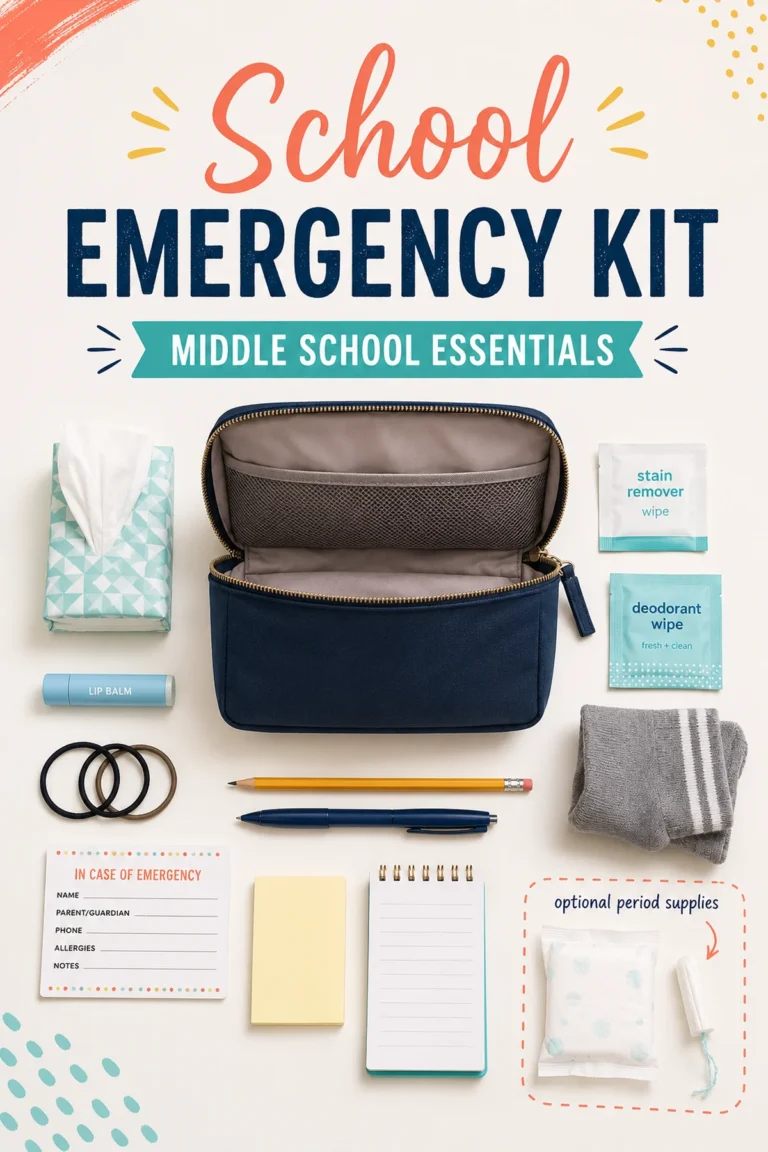
Store comfort items, wipes and personal backups separately; a small school emergency pouch should stay light enough for your child to actually carry.
- Best use: Unopened extras and replacement supplies.
- Approximate capacity: A small seasonal stash, depending on your school list and family size.
- Who can maintain it: A parent or older child should manage it.
- Where it can live: High cabinet, closet shelf, pantry shelf, storage tote or bookcase.
16. Simple Refill Basket or Inventory Bin
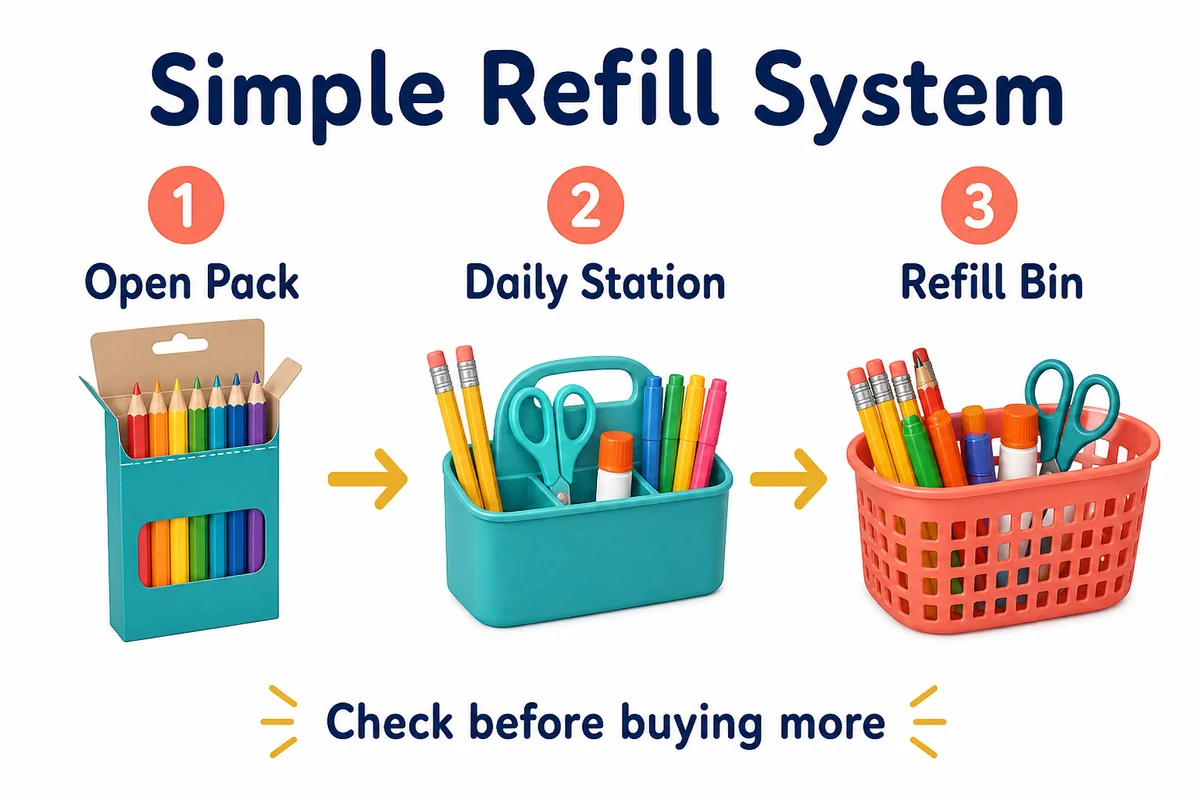
A refill basket keeps your system from getting complicated. Use one open pack in the everyday station and keep unopened extras in the refill basket. When the station runs low, restock from the basket before buying more.
This is also a good place to keep the easy school extras parents remember later until they are needed.
- Best use: Preventing duplicates and last-minute shortages.
- Approximate capacity: A small amount of pencils, glue, erasers, paper and markers.
- Who can maintain it: Parents manage buying; older children can report what is low.
- Where it can live: Near the backstock bin, inside a cabinet, on a closet shelf or in the pantry.
Final Thoughts
Small-home school supplies organization works best when the system can move, reset and disappear. Keep everyday tools easy to reach, store backups separately, and give paper a vertical home before it spreads across the table.
Once pencils, paper and homework supplies have a place, the next step is getting the rest of your back-to-school organization under control, from backpacks and paperwork to mornings and after-school prep.