Things to Do Before School Starts: A Back to School Checklist for Parents
Back-to-school prep can feel like one long pile of forms, supplies, shoes, lunch plans, and tiny details everyone remembers at bedtime. This back to school checklist keeps it manageable by sorting the jobs by timing: what to handle about a month before school, what to finish two weeks out, what to do during the final week, and what can wait until the night before.
You do not need forty perfect tasks. You need the few things that stop the first week from feeling scrambled. Use the list below for preschool, kindergarten, and elementary school, then skip anything that does not fit your school, schedule, or child.
Quick-Start Back-to-School Checklist
If you only have one short pocket of time, start here:
- Confirm the first day, school hours, drop-off rules, and pickup plan.
- Finish required forms, emergency contacts, medication notes, and app logins.
- Check shoes, clothes, backpack, lunch box, and water bottle.
- Label the things that leave the house every day.
- Move bedtime and wake-up time earlier in small steps.
Those five jobs remove most of the first-week panic. Everything else below makes the routine smoother.
One Month Before School
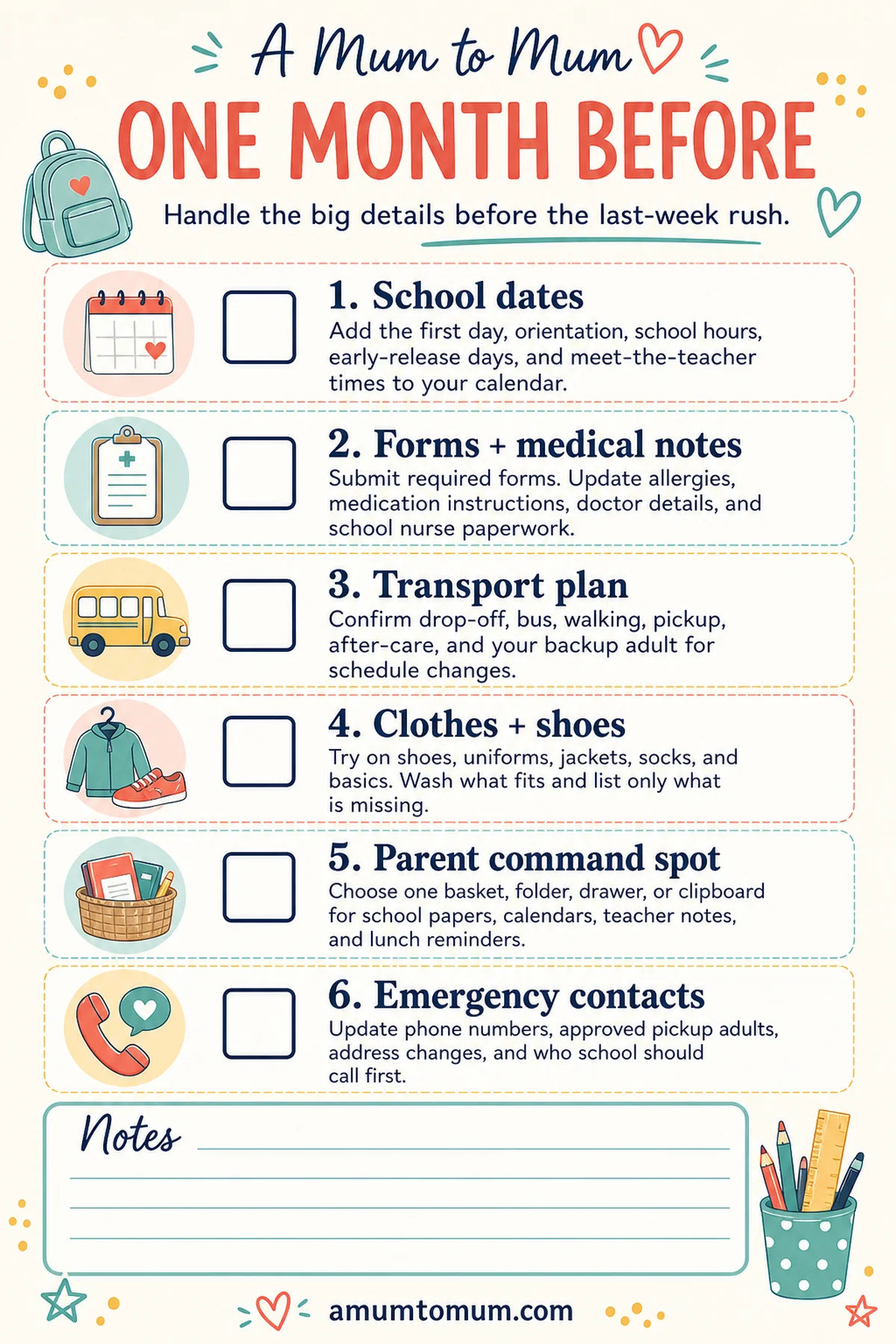
Confirm dates, times, and school rules
Check the first day, orientation date, school hours, early release days, supply list, dress code, lunch rules, and transportation details. Put anything time-sensitive into your calendar now. If your school uses a parent portal or app, make sure you can log in before the busy week starts.
Make one parent command spot
Choose one place for school papers, forms, calendars, lunch notes, and teacher emails. It can be a folder, a clipboard, a basket, or one drawer near the door. The goal is simple: school information should have one home so it does not spread across counters, bags, and car seats.
Update medical details and emergency contacts
Review phone numbers, approved pickup adults, allergy notes, medication forms, and doctor details. Do not send medicine in a backpack unless the school has clearly allowed it. If your child needs health support during the day, contact the school early so there is time to follow the right process.
Decide how your child will get to and from school
Walk through the real plan for drop-off, bus, walking, bike, car line, after-care, or pickup. Write down the backup plan too. This is especially helpful for split households, grandparents, babysitters, and children who worry when plans change.
Check clothes, shoes, and weather gear
Try on school shoes, uniforms, jackets, rain gear, socks, and basic clothes before the final week. Kids can grow out of shoes quietly and then announce it at 7:20 a.m. Keep this check practical: wash what still fits, donate what does not, and buy only what is truly missing.
Two Weeks Before School
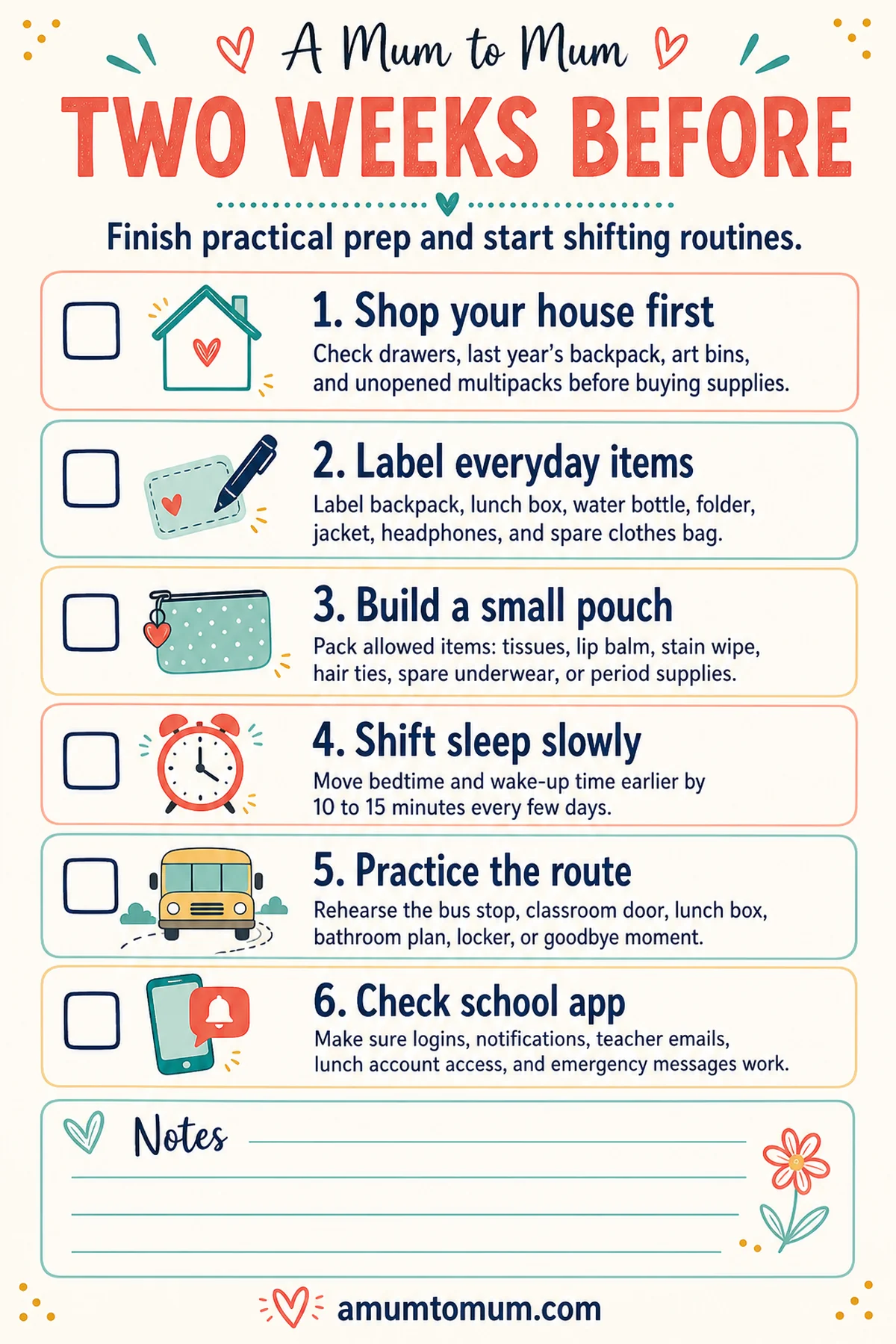
Shop your house before you shop the store
Compare the school supply list with supplies you already own. Check drawers, last year’s backpack, art bins, and unopened multipacks. Buy the must-have classroom items first, then wait on extras until the teacher confirms what will actually be used.
After you sort what you already own, give the extras one home. A simple school-supply storage setup keeps pencils, paper and glue from spreading back into random drawers.
Label the everyday items
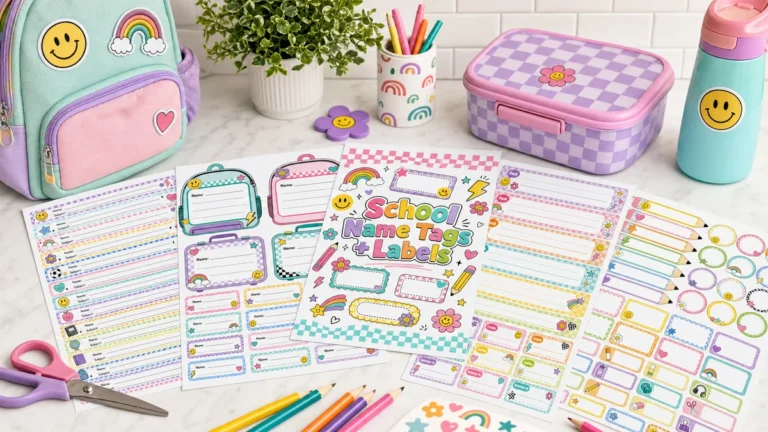
Label the backpack, lunch box, water bottle, folder, jacket, headphones, and spare clothes bag. For small children, use a first name or initials if you do not want a full name showing on the outside of a bag. The free printable school name tags and labels can make this faster.
Build a small school pouch
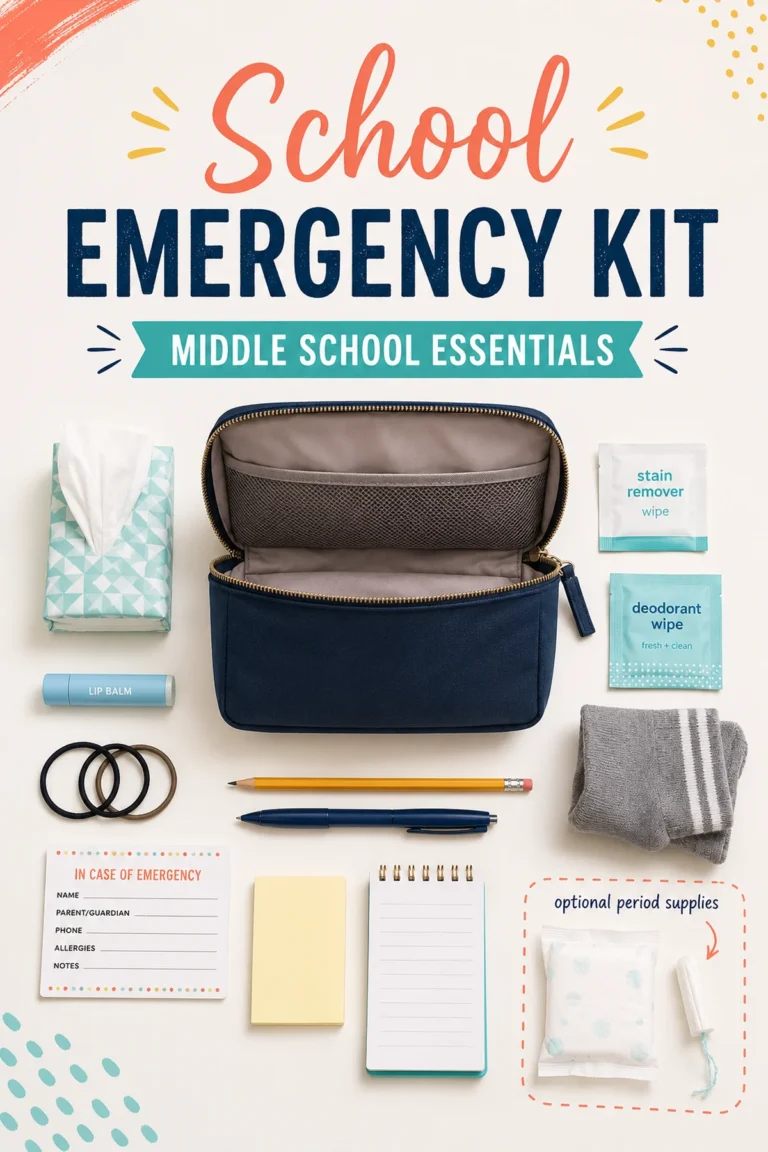
A small pouch can hold tissues, lip balm, a stain wipe, spare underwear, hair ties, or period supplies, depending on your child and school rules. Keep it light and age-appropriate. The school emergency kit checklist has a fuller list if you want help choosing what belongs in the pouch.
Start moving bedtime earlier
Shift bedtime and wake-up time by 10 to 15 minutes every few days. Do the same with dinner, bath, and screen cutoff if those usually run late. You are not trying to create a perfect routine. You are helping the first morning feel less like a sudden shock.
Practice the route or arrival routine
For younger children, practice walking to the bus stop, finding the classroom door, opening the lunch box, hanging a backpack, or saying goodbye. Older kids may need to review their schedule, locker basics, or where to go after school. Short rehearsals make the unknown feel smaller.
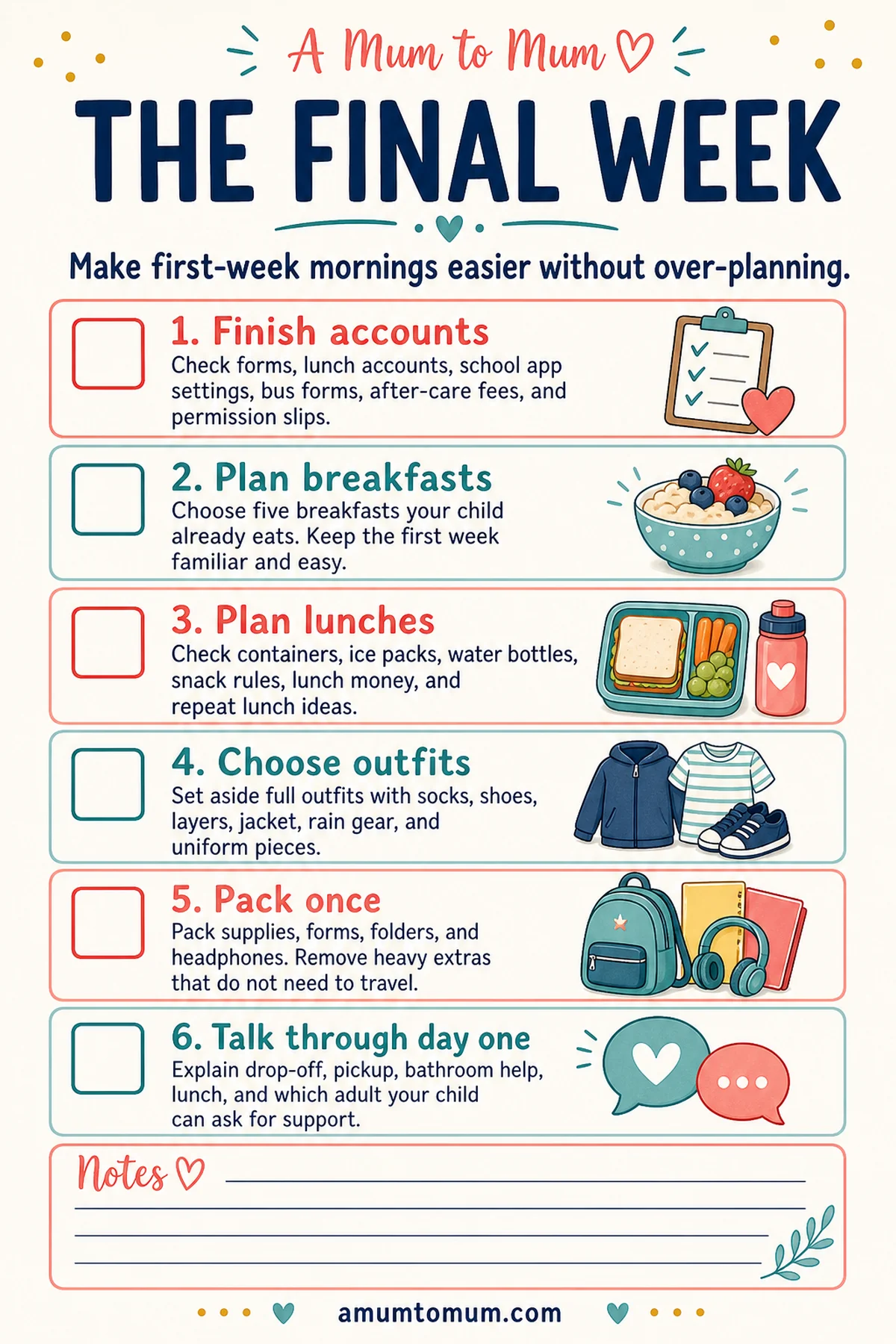
The Final Week
Finish forms, accounts, and payments
Check for permission slips, emergency cards, lunch accounts, school app updates, bus forms, after-care payments, and classroom supply fees. Do this before the night before school, when every form seems to need a password reset.
Plan five easy breakfasts
Choose breakfasts your child already eats. Keep the first week simple: toast and fruit, yogurt and granola, eggs, cereal, oatmeal, or a freezer option. If breakfast is usually a battle, set out two choices the night before so the morning has fewer decisions.
Make a lunch and snack plan
Check lunch box parts, ice packs, water bottles, containers, and school snack rules. Plan a few safe repeat lunches instead of trying new food during the first week. If your child buys lunch, make sure the account is funded and they know what to do in the cafeteria.
Choose first-week outfits
Pick five outfits, including socks, shoes, layers, and any required uniform pieces. Put them in labeled bins, a hanging organizer, or one drawer. This is one of the easiest ways to remove a morning argument before it starts.
Pack the backpack once
Pack supplies, forms, folders, headphones, and any teacher-requested items. Then take out anything extra. A child’s backpack does not need to carry every spare supply on day one, especially for preschool and younger elementary kids.
Talk through first-day moments
Use calm, concrete language. Talk about how drop-off works, who will pick them up, what they can do if they need the bathroom, and who they can ask for help. Nervous children often need a clear picture of the day more than a long pep talk.
The Night Before School
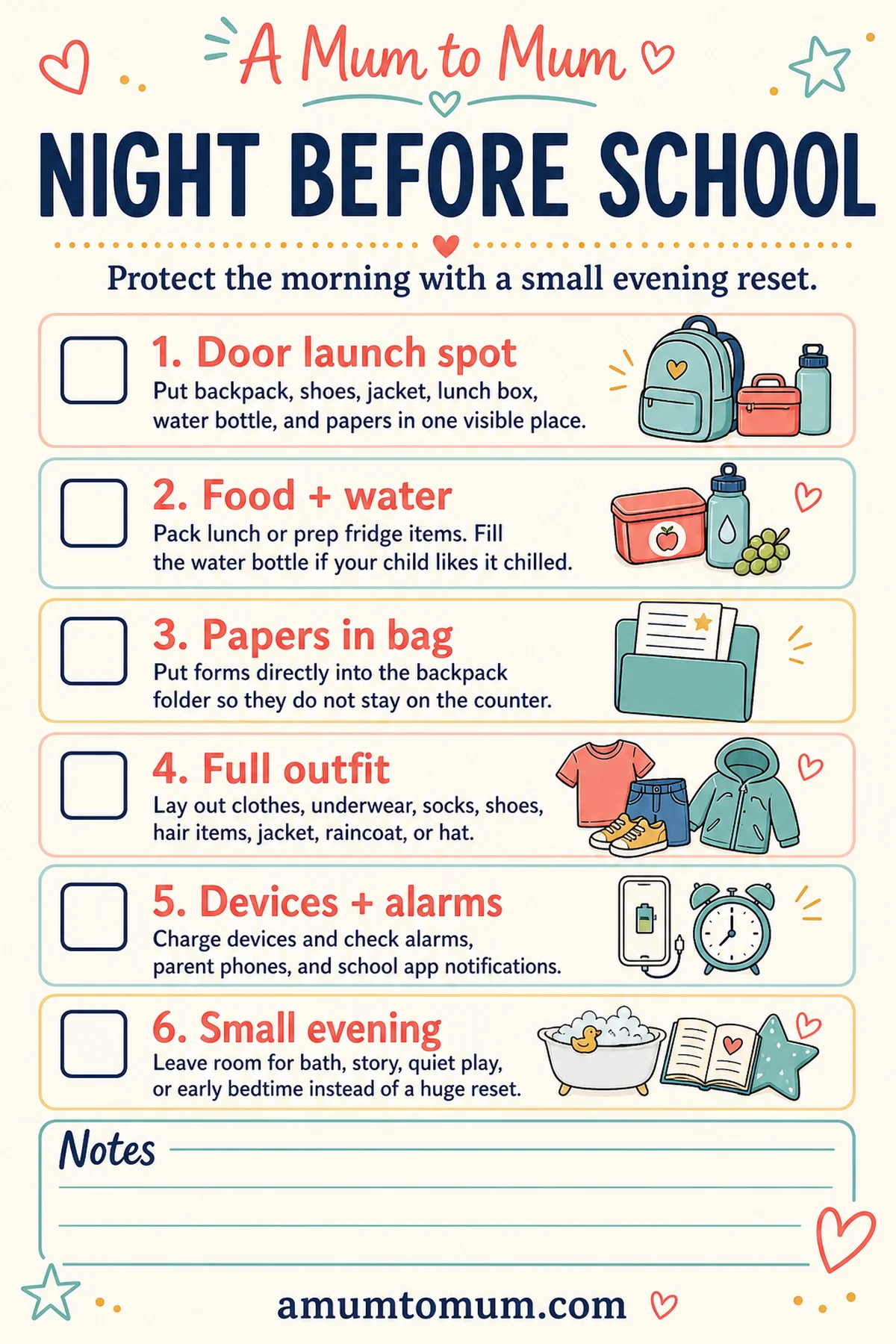
Set up a launch spot by the door
Put the backpack, shoes, jacket, lunch box, water bottle, and any paperwork in one place. If your home is small, use one sturdy bag or basket instead of a whole command center. The best system is the one everyone can see and reach.
Pack food, water, and papers
Load the lunch box or prep the parts that can sit in the fridge overnight. Fill the water bottle if your family likes it chilled. Place forms directly inside the backpack folder so they do not get left on the counter.
Lay out clothes and weather gear
Set out the full outfit, not just the shirt. Add socks, underwear, shoes, hair accessories, jacket, raincoat, or hat. If your child changes their mind often, offer two parent-approved choices instead of opening the whole closet.
Charge devices and set alarms
Charge tablets, school devices, parent phones, smart watches, and anything needed for pickup messages. Set alarms for the grown-ups too. If your school sends last-minute messages through an app, check notifications before bed.
Keep the evening small
The night before school is not the best time for a giant family reset. Do the few jobs that protect the morning, then leave space for a bath, a story, quiet play, or an early bedtime. A calmer night helps more than a perfect checklist.
First-Day Morning Checklist
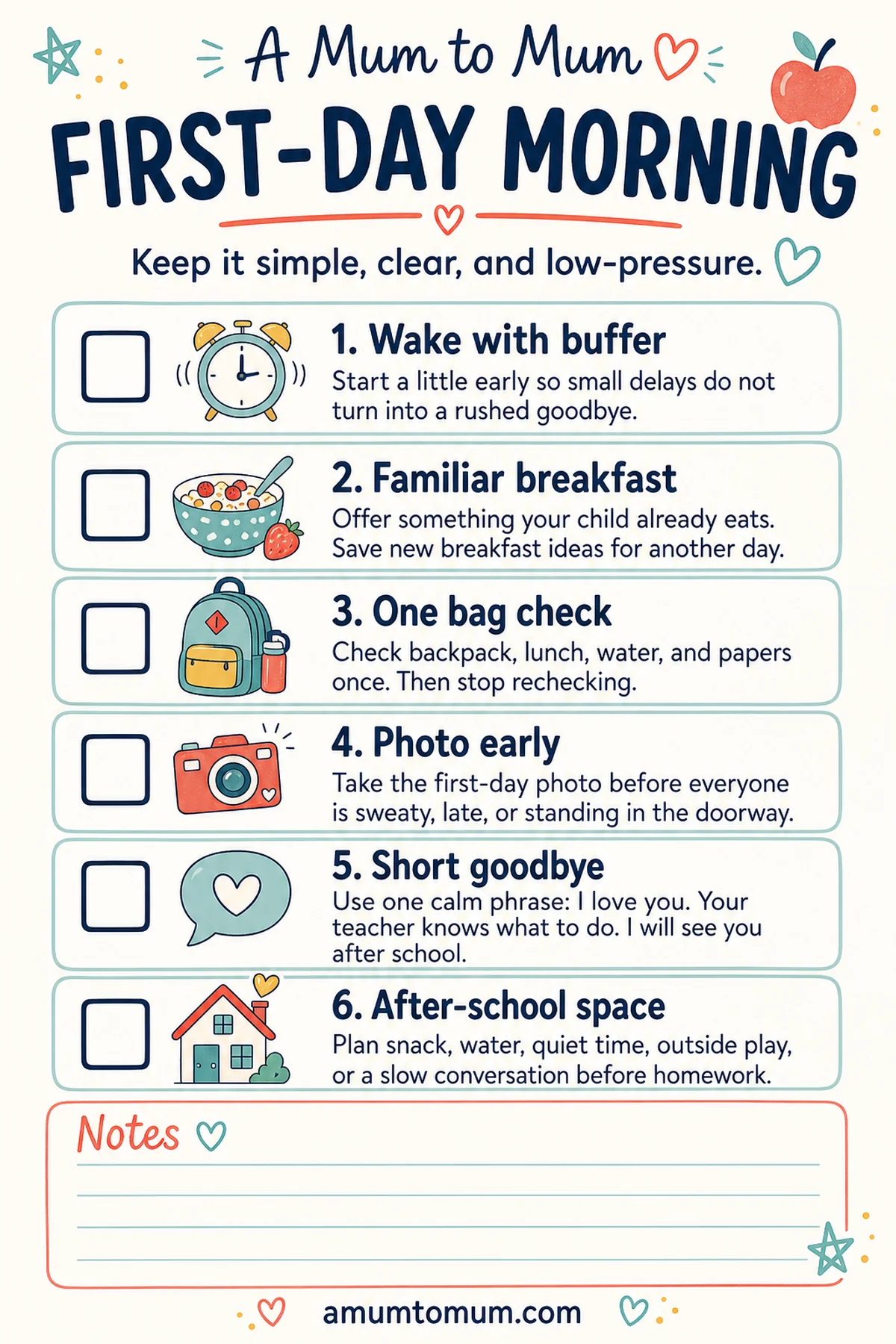
Keep the first morning boring in the best way.
- Wake up with a little buffer.
- Offer a familiar breakfast.
- Check the backpack only once.
- Take any photo before everyone is rushed.
- Use a short goodbye phrase.
- Leave extra talking time for after school.
A simple goodbye might be, “I love you. Your teacher knows what to do. I will see you after school.” Long repeated goodbyes can make the moment feel bigger for a worried child.
What Parents Often Forget
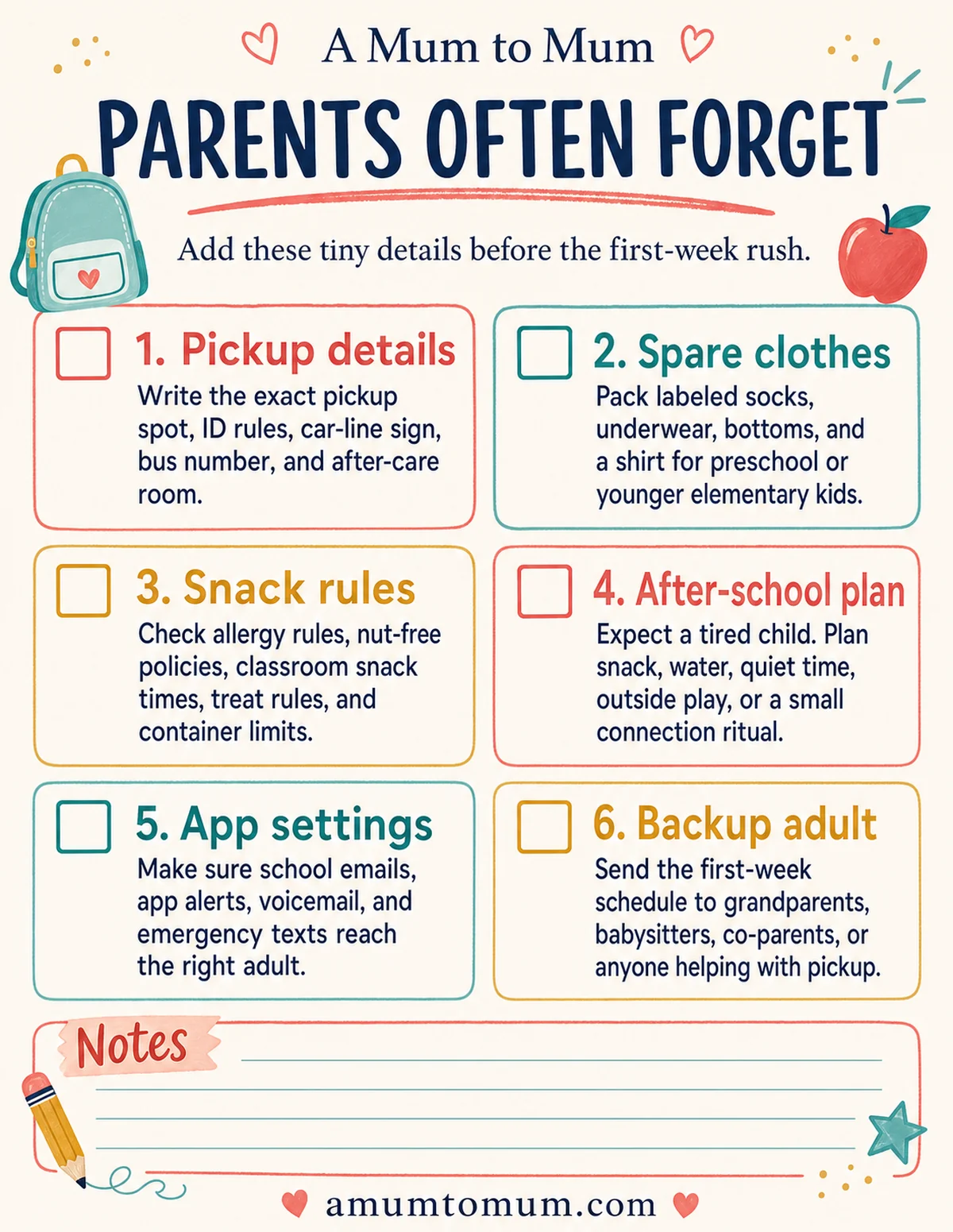
Pickup details
Know the exact pickup spot, ID rules, car-line signs, bus number, after-care room, and who is approved to collect your child. Share the details with any adult who may help during the first week.
Spare clothes
Preschool, kindergarten, and early elementary children often still need a spare clothes bag. Include underwear, socks, bottoms, and a shirt. Label the bag and update the size after growth spurts.
Lunch and snack rules
Check if the classroom has allergy rules, nut-free policies, birthday treat rules, snack times, or container limits. This avoids packing food that has to come back home.
The after-school crash
Some children hold it together all day and fall apart at home. Plan for a snack, water, quiet time, outside play, or a small connection ritual before homework or errands.
Parent contact settings
Make sure teacher emails, school app alerts, voicemail, and emergency texts actually reach you. If two adults share school duties, decide who checks which messages.
Printable Back-to-School Checklist
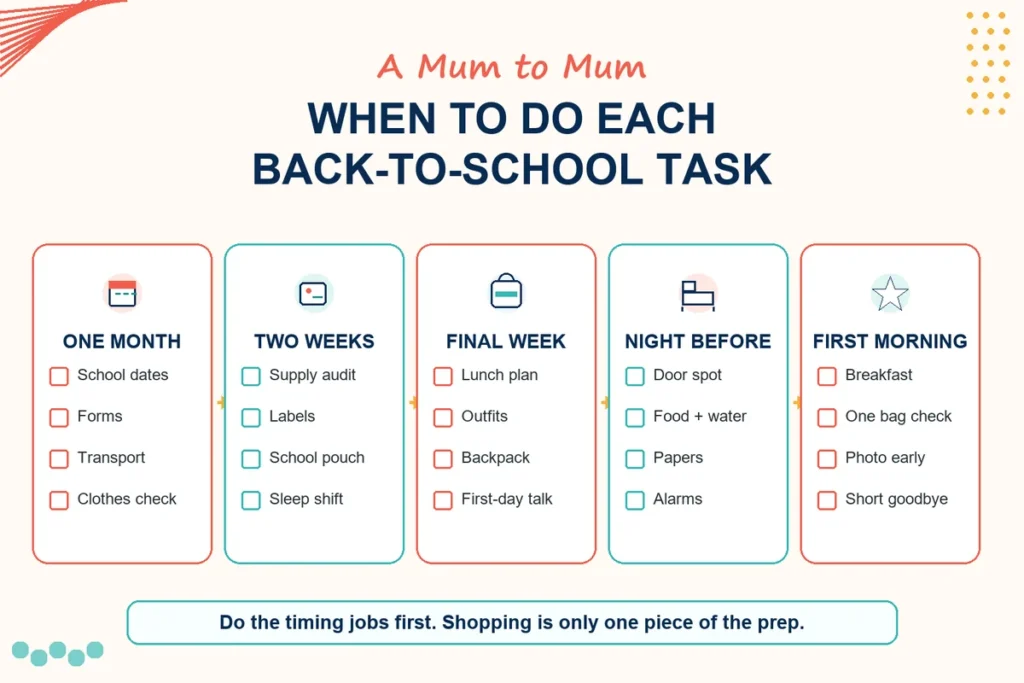
Use the master checklist below as a quick fridge reference. It follows the same order as this article: one month before school, two weeks before school, the final week, the night before, and the first morning.
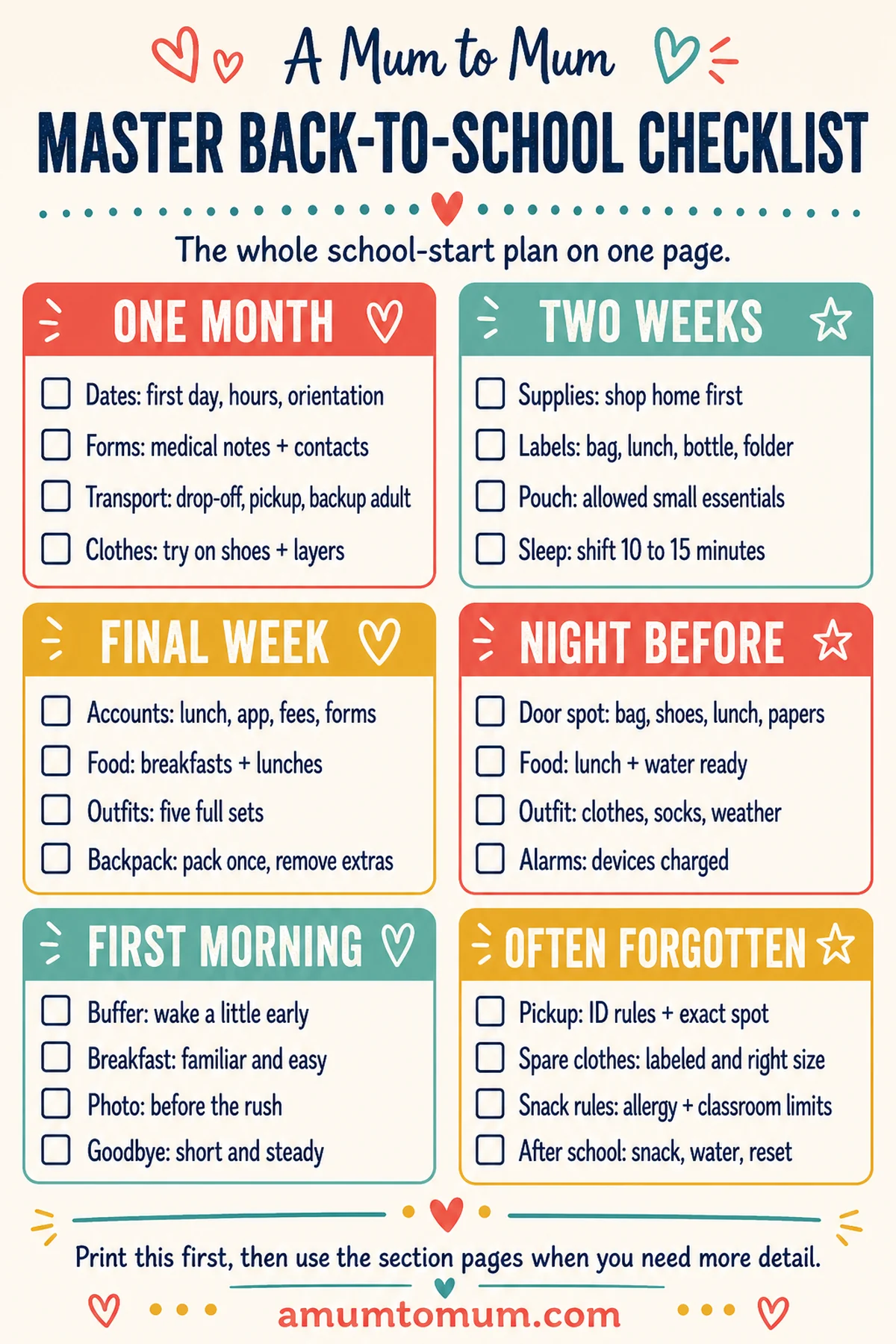
You can also make your own version on one sheet of paper. Write the five timing sections, add only the tasks your family needs, and leave blank space for school-specific details like bus numbers, teacher names, door codes, or lunch account notes.
Make It Work for Your Family
For preschool and kindergarten, focus on clothes, labels, lunch practice, bathroom confidence, and goodbye routines. They need fewer supplies and more rehearsal.
For older elementary kids, hand over small jobs like packing the folder, filling the water bottle, choosing clothes, and checking the backpack. Keep the system simple enough that they can repeat it.
For tight budgets, shop your house first, reuse supplies, buy shoes and clothes only after trying things on, and wait on uncertain classroom extras.
For split households or multiple caregivers, keep a shared note with pickup plans, lunch rules, teacher contacts, and the first-week schedule. The handoff details matter more than a perfect binder.
Final Tip
A good back-to-school preparation checklist should make the first week lighter, not turn August into a second job. Start with forms, transport, sleep, labels, and lunch. Then add the small things that fit your child, your school, and your real mornings.