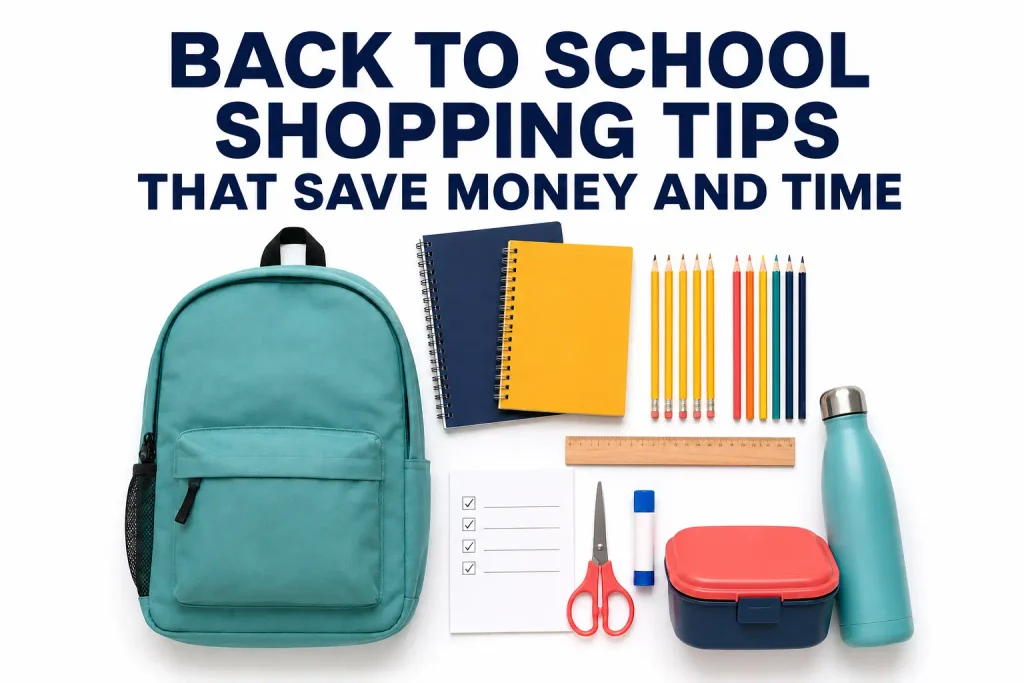
Back to School Shopping Tips That Save Money and Time
Back to school shopping gets expensive fastest when you buy before you know what you truly need. One big trip can feel efficient, but it often leads to duplicate back to school supplies, wrong quantities, unopened extras and clothes your child does not wear.
The easiest fix is a better back to school shopping list, not a longer one. Shop in three simple groups: buy now, wait and confirm. That keeps the first day covered while leaving room for teacher requests, growth spurts and real first-week needs.
Before You Start Back to School Shopping
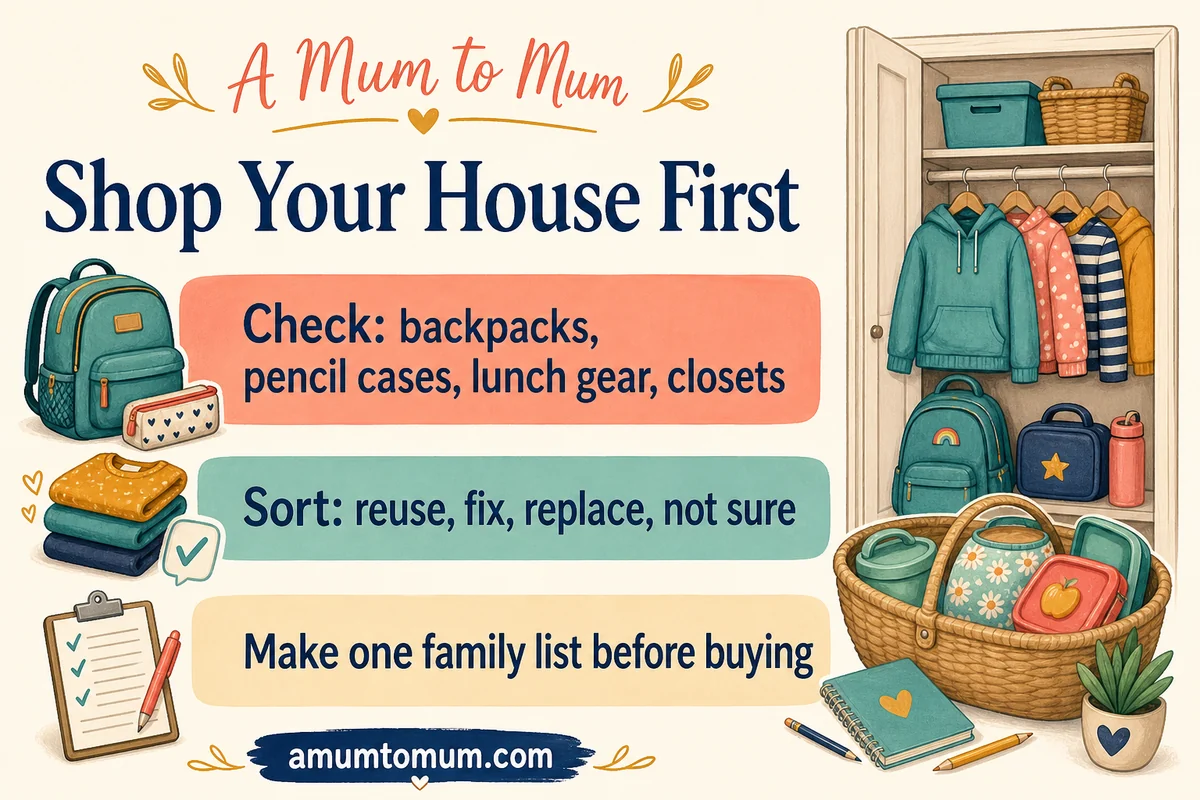
Start at home, not in a store. Empty last year’s backpacks, pencil cases, lunch bins, desk drawers, craft storage, sports bags, closets and shoe areas. Check the condition, not just the category. Three broken crayons and one dried glue stick do not count as a useful stash.
Sort what you find into four piles:
- Ready to reuse: clean, working and school-appropriate.
- Needs a fix: washable, sharpenable, repairable or missing one small part.
- Replace: broken, outgrown, leaking or uncomfortable.
- Not sure yet: may depend on teacher rules, size, color or class setup.
Then make one family master list. Add the official school supply list, clothing needs, shoes, lunch gear, items you already own and questions to confirm.
Use the School Supply List Like a Filter
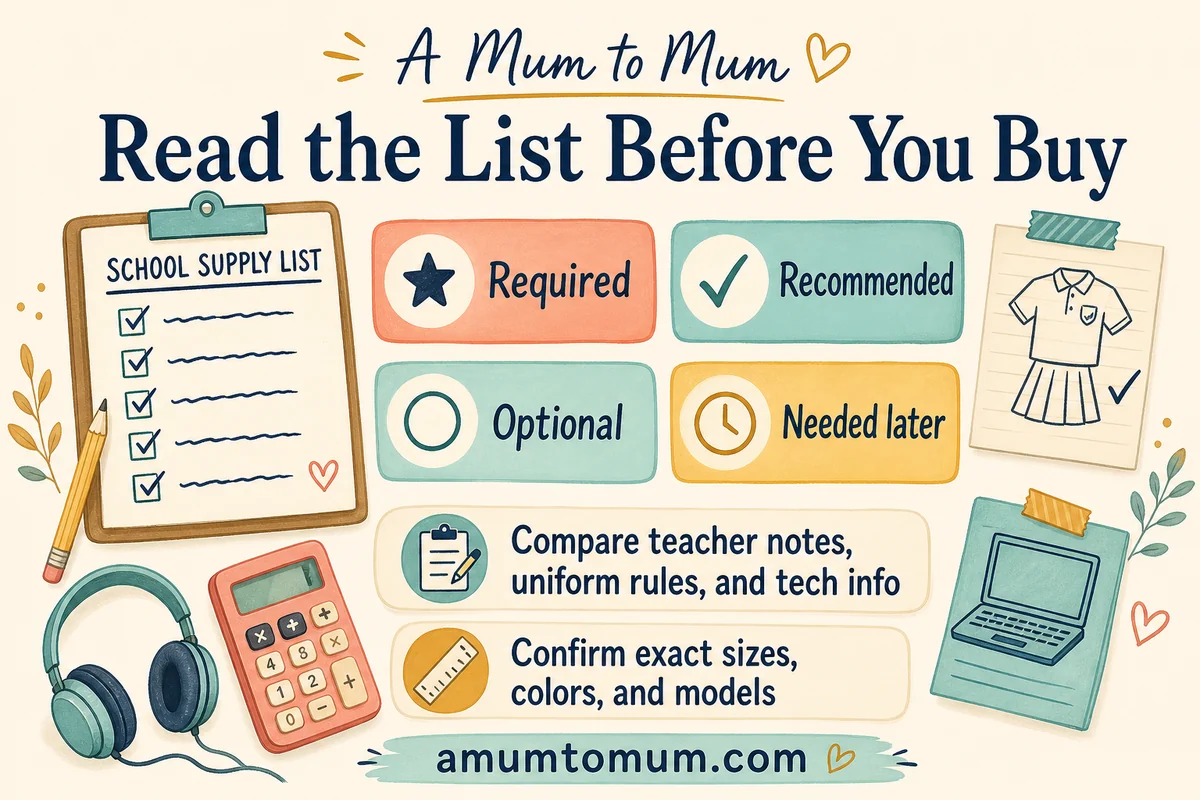
A school list is a starting point, not always a same-day shopping order. Read the wording carefully. Required, recommended, optional, shared classroom supply, first-day item and later-use item do not mean the same thing.
Compare the grade-level list with teacher notes, uniform rules, technology information and activity requirements. If two lists overlap, do not buy both versions until you know which one matters.
Confirm before changing exact items, especially notebook size, folder color, binder width, calculator model, headphone connection, art materials or uniform style. The point is not to ignore the teacher. The point is to avoid paying twice for the wrong thing.
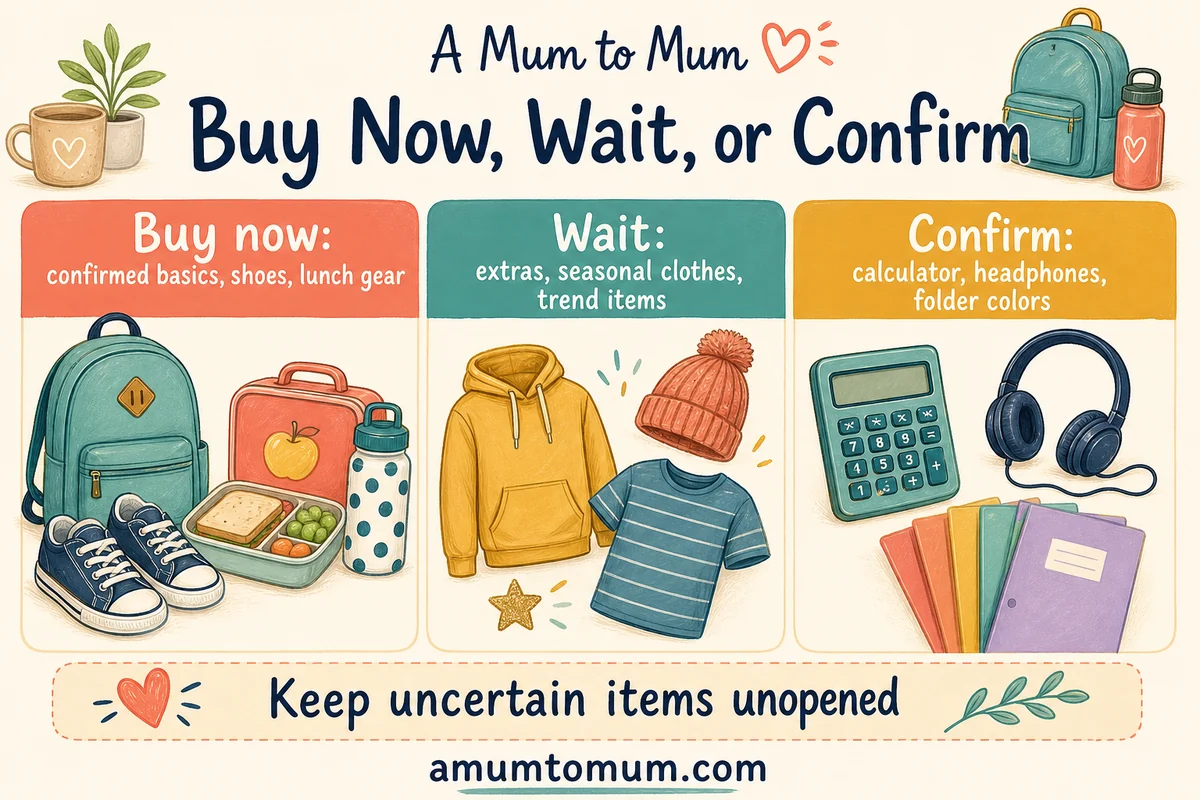
Use the Buy Now, Wait, or Confirm Method
This is the simplest way to stop overspending. Every item on the school shopping list goes into one of three groups.
| Buy now | Wait | Confirm |
|---|---|---|
| Confirmed basics | Extra quantities | Calculator model |
| Backpack replacement | Seasonal clothes | Headphones or earbuds |
| School shoes that fit | Backup shoes | Folder colors |
| Lunch gear | Trend accessories | Shared classroom supplies |
| Water bottle | Specialist equipment | Technology accessories |
Buy now when the need is confirmed, fit matters, the item needs washing or labeling, or your child needs time to test it. Wait on items that are not needed in the first few weeks. Confirm anything teacher-specific before opening the package or writing your child’s name on it.
Set a Budget and Choose What Is Worth Replacing
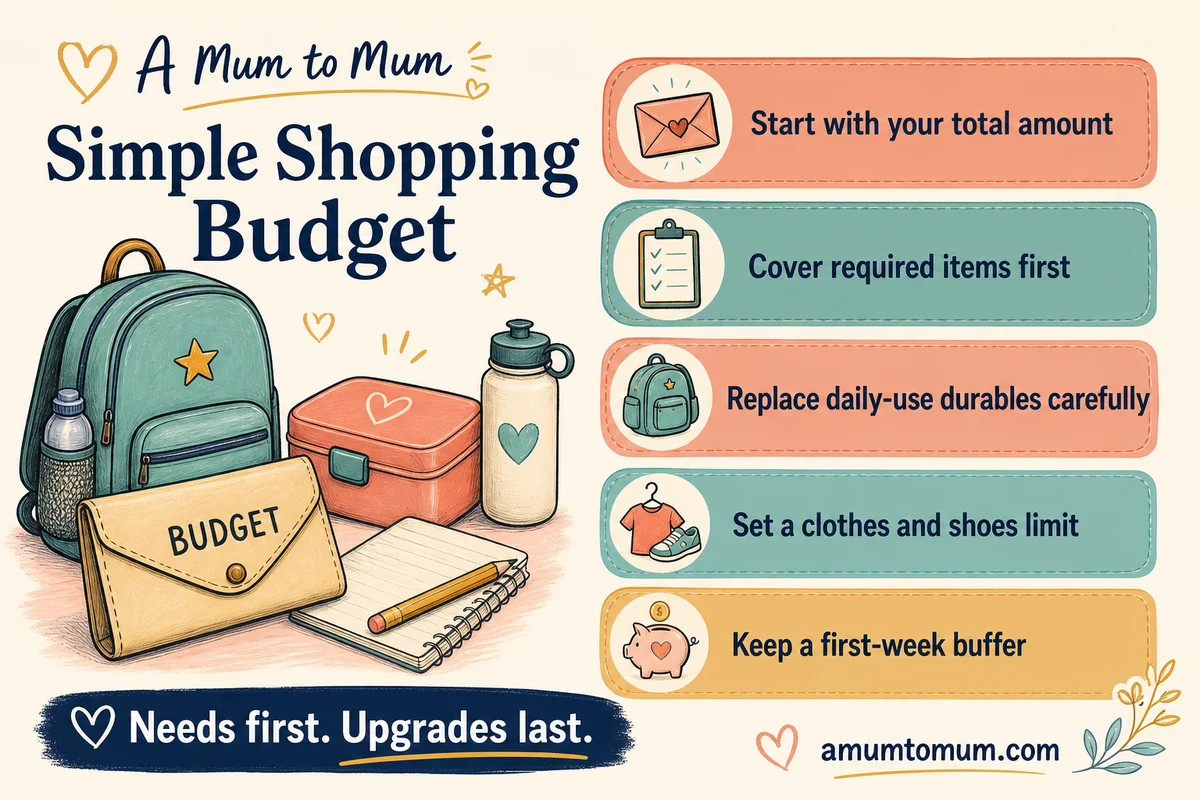
Skip complicated budget rules. Use a simple school shopping budget that matches your family.
- Choose the total amount available.
- Subtract confirmed required purchases.
- Subtract durable items that truly need replacing.
- Set a limit for clothes and shoes.
- Keep a small first-week buffer.
Track categories instead of one messy total: school supplies, backpack and lunch gear, clothing, shoes, technology, activities and first-week buffer.
It also helps to separate consumable supplies from durable supplies. Consumables are pencils, paper, glue, erasers, markers, crayons and tissues. Buy a reasonable starting amount unless the school clearly asks for more. Durable supplies are backpacks, lunch boxes, bottles, scissors, rulers, calculators, headphones and pencil cases. The goal is not to buy the most expensive version. It is to avoid replacing the same daily-use item twice.
For older kids, try a choice budget. You cover the required item. Your child gets a fixed amount for special colors, branded extras or upgrades.
Shop for Clothes and Shoes Without Overbuying
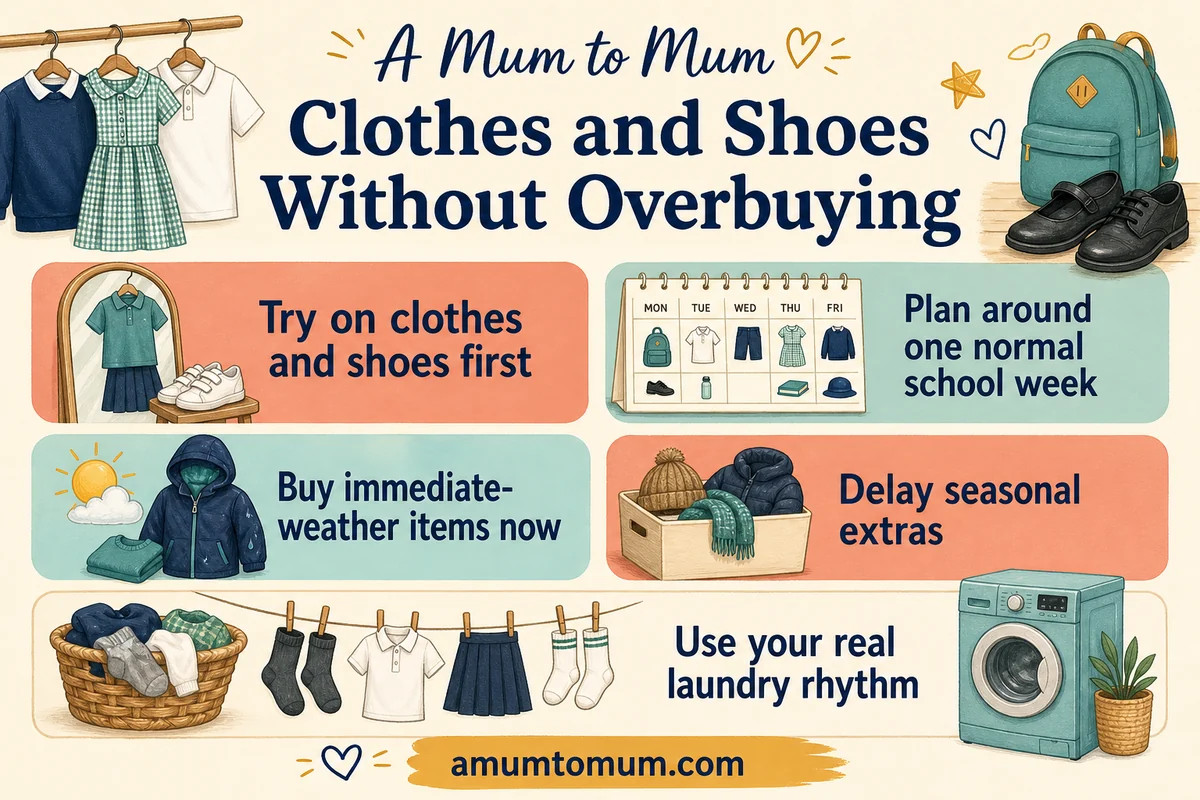
School clothes shopping works best after a real fit check. Have your child try on everyday tops, bottoms, uniform pieces, underwear, socks, jackets, sports clothes and school shoes. Do not trust the size tag by itself.
Build the school clothes shopping list around one normal school week. Think about laundry, uniforms, weather, sports days, messy classroom activities and what your child can manage alone. Some families need more outfits. Some need fewer. The useful number is the one that fits your week.
Buy immediate-weather clothes first. Cold-weather layers can often wait until the season changes and you know your child’s size, routine and school expectations better.
Choose Online or In-Store Shopping on Purpose
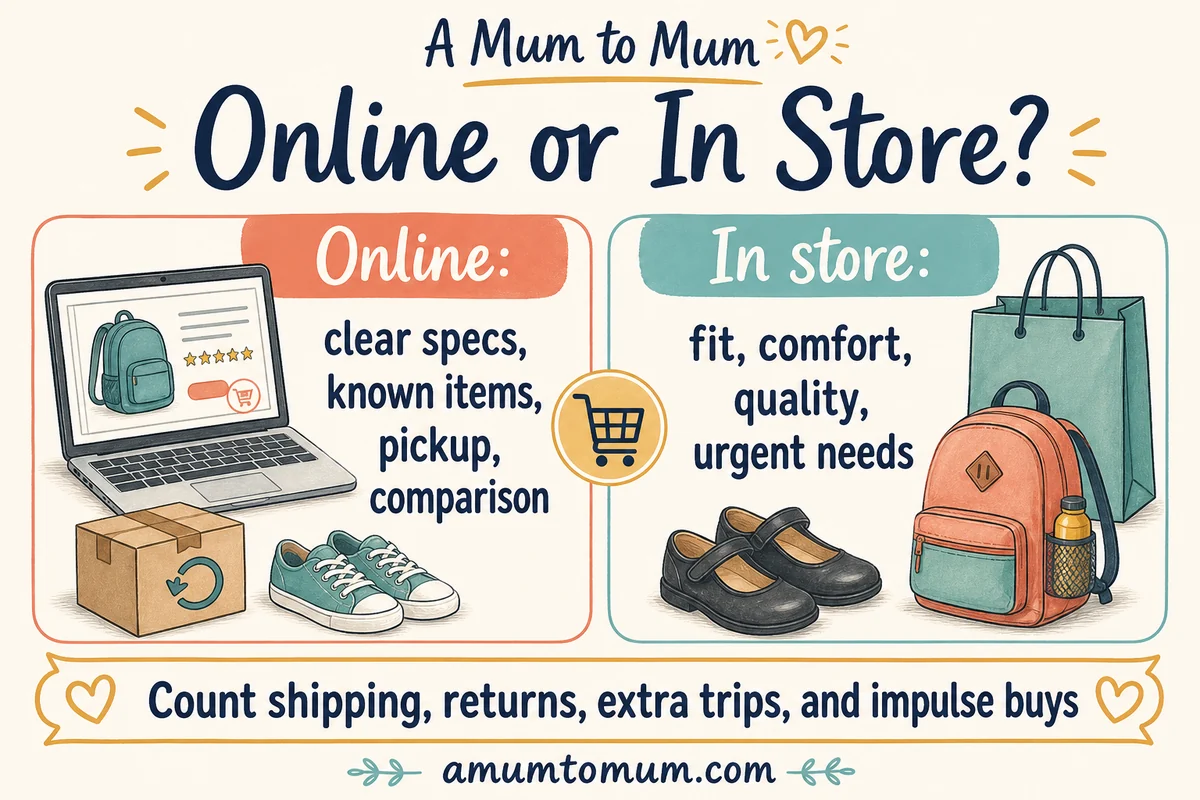
Online shopping is useful when product details are clear, you are replacing something you already know, or pickup stops extra browsing. It can also help you compare options without walking through every aisle.
In-store shopping is better when fit, comfort, color or quality matters. Shoes, uniforms, backpacks and lunch containers are easier to judge in person when your child needs to try, lift, open or carry them.
Compare the full cost, not just the listed price. Shipping, returns, extra trips and impulse add-ons can turn a “deal” into more work and more spending.
Organize, Label, and Store Purchases at the Right Time
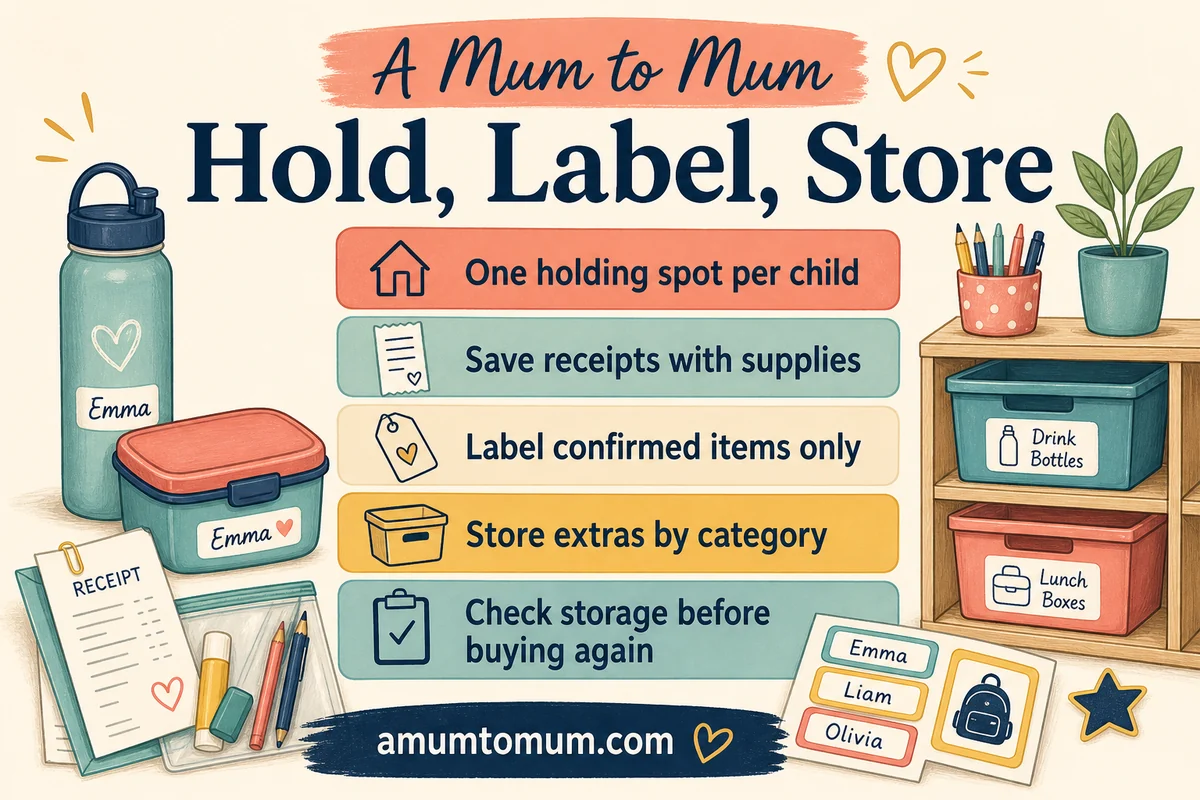
Set up one holding area for each child: a box, shelf, basket or bag. Keep purchased supplies, receipts, packing slips, return items and teacher-confirmation items together. This stops supplies from disappearing into closets before school starts.
Label only what you know you are keeping. Label the confirmed backpack, lunch box, water bottle, uniform, jacket and pencil case. Wait before labeling uncertain folder colors, extra notebooks, electronics, returnable items and clothes or shoes that have not passed the full fit check. For the high-loss items, printable name labels for school supplies, bottles, bags and clothing can save a replacement trip later.
Store extra school supplies in one small restocking spot. Group writing tools, paper, art supplies, lunch supplies, labels and technology accessories. Before the next purchase, check an easy school supply storage system for the new school year instead of buying duplicates.
Avoid the Money-Wasting Mistakes
Most school shopping mistakes are small, but they stack up. The fix is usually simple.
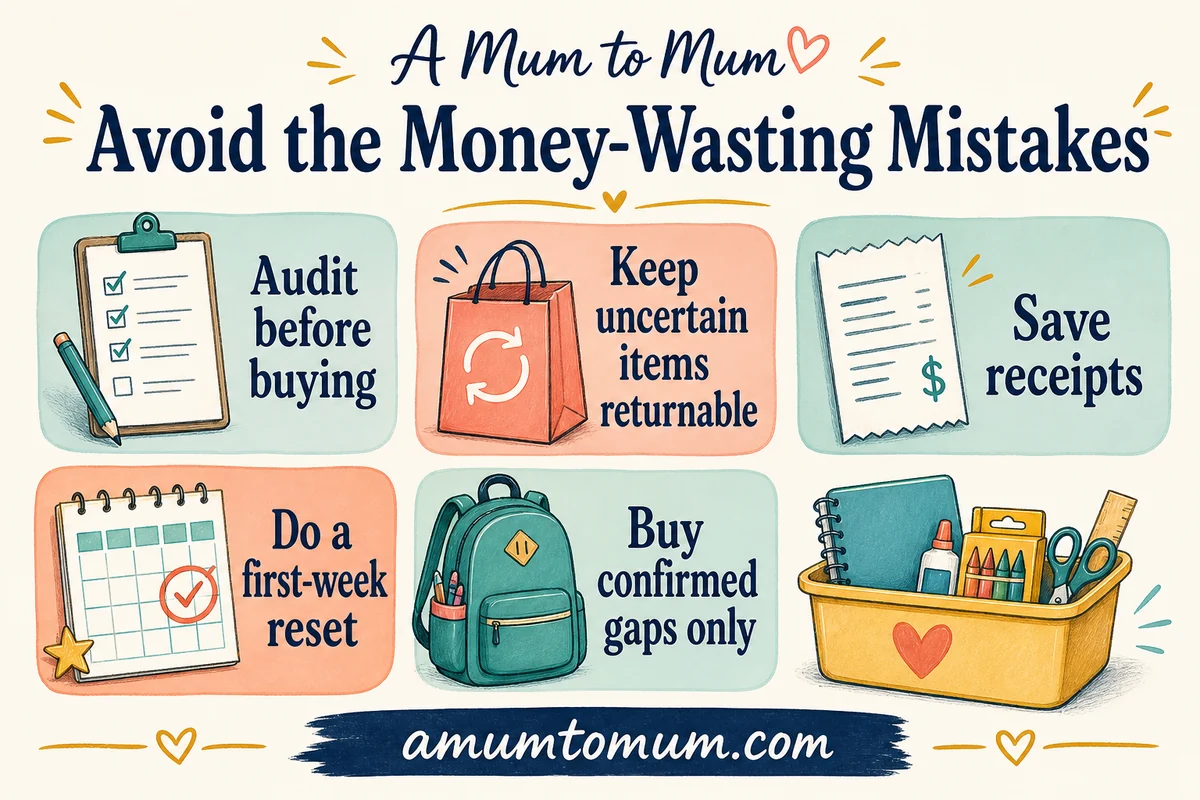
- Shopping before checking the house: audit first, then buy.
- Treating suggestions as requirements: read the wording before checking out.
- Buying the full year’s quantity: start with what is needed now.
- Replacing every durable item: inspect before you replace.
- Buying clothes without a fit check: have your child try things on.
- Shopping future weather too early: wait on seasonal extras.
- Using several scattered lists: keep one family list.
- Opening uncertain purchases: keep them returnable until confirmed.
- Throwing away receipts: store them with the supplies.
After the first few school days, do a quick reset. Return unused uncertain items, buy confirmed missing supplies, adjust clothing needs, restock what was already used and update the master list.
Quick FAQ
When should I start back to school shopping?
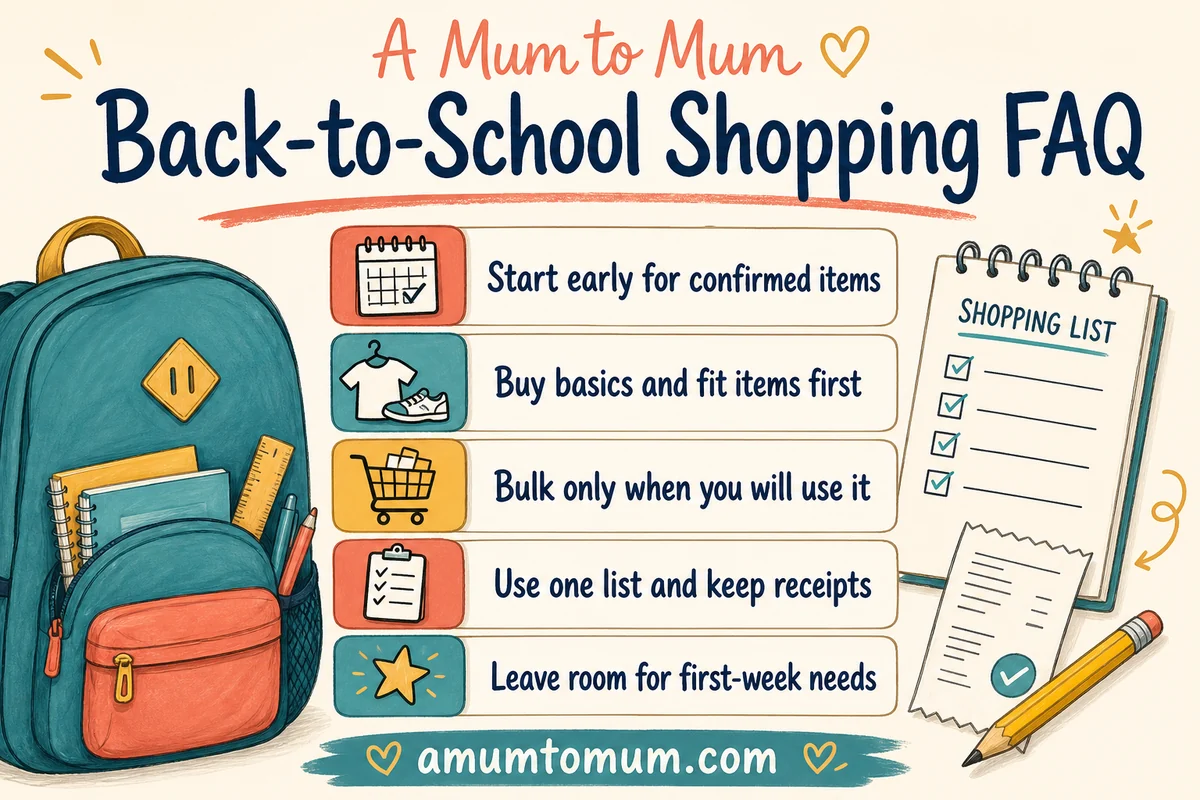
Start early for confirmed durable items, lunch gear, shoes and clothes that need trying on. Wait on teacher-specific supplies until the requirement is clear.
What school supplies should I buy first?
Buy confirmed basics, a usable backpack, lunch gear, a water bottle, first-week clothing and anything the school marks as mandatory.
How can I avoid overspending?
Audit what you own, use one master list, set category limits, separate needs from preferences and leave uncertain purchases off the list for now.
Is online or in-store shopping cheaper?
It depends on shipping, returns, fit, quality checks, extra trips and impulse purchases. Choose the method that lowers the total cost and hassle.
Should I buy school supplies in bulk?
Only buy bulk when the quantity will be used, shared between children or split with another family. A lower unit price does not help when half the pack sits unused.
Successful back to school shopping does not mean buying everything before the first day. It means starting with confirmed essentials, keeping uncertain purchases flexible and leaving enough room in the budget for what becomes clear during the first week.